


“We made a lot of progress on Russia and Ukraine,” U.S. President Donald Trump said on February 3. “We’ll see what happens. We’re going to stop that ridiculous war.”
Then, on February 12, Trump took to social media to announce the outcome of his conversation with Vladimir Putin: "We agreed to work together, very closely, including visiting each other’s Nations."
He went on to say: "We have also agreed to have our respective teams start negotiations immediately, and we will begin by calling President Zelenskyy of Ukraine to inform him of the conversation—something which I will be doing right now. I have asked Secretary of State Marco Rubio, CIA Director John Ratcliffe, National Security Advisor Michael Waltz, and Ambassador and Special Envoy Steve Witkoff to lead the negotiations, which I feel strongly will be successful."
Trump's new Secretary of Defense Pete Hegseth also stated that the U.S. will no longer prioritize European security and expects Europe to take greater responsibility, particularly in supporting Ukraine. He also dismissed Ukraine's NATO membership and the restoration of its pre-2014 borders as "unrealistic" in any negotiated settlement.
Ukrainian President Volodymyr Zelenskyy previously said that any negotiations between the U.S. and Russia that exclude Ukraine would be unacceptable. “They may have their own relations, but talking about Ukraine without us is dangerous for everyone,” Zelenskyy warned.
“Just peace is not a frozen conflict, but security guarantees that make further aggression impossible. If the world fails to ensure this, the only defense option will be nuclear weapons, which we want to avoid,” said Andriy Yermak, Head of the Office of the President of Ukraine.
Frontline soldiers have little hope that Ukraine will secure a truly just peace, as the most likely outcome is a frozen conflict based on the current trajectory and chatter—one that would allow Russia to regroup and launch an even larger war in the future.
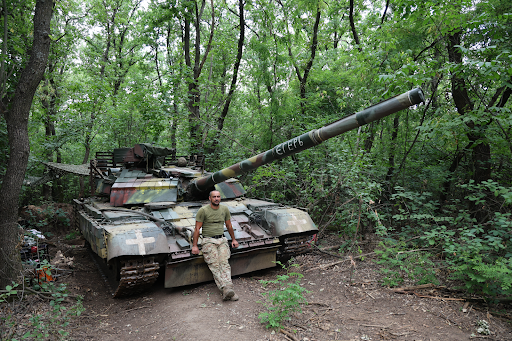
But far removed from diplomatic conversations are the Ukrainian soldiers fighting on the frontlines of Russia’s war against Ukraine. While Zelenskyy has repeatedly emphasized the need for a "just peace" in his messaging around potential negotiations, frontline troops remain focused on the harsh realities of war.
Dmytro Zhluktenko ("Liber"), from the 413th Separate Battalion of Unmanned Systems, expressed deep skepticism about Trump’s proposed peace deal, questioning both its fairness and practicality. Zhluktenko, who helped establish one of Ukraine’s most successful charity funds, Dzyga’s Paw, following Russia’s full-scale invasion in 2022, would go on to join the army in 2024.
“From what we have seen so far, I don’t see any fairness or justice in the peace deal being pushed by Trump’s team,” he said.
Beyond concerns over the deal itself, Zhluktenko criticized the administration’s understanding of the conflict, pointing to misleading claims made in public briefings, referring to Marco Rubio’s recent interview with Megyn Kelly.
“I see a great deal of incompetence in their public briefings regarding Ukraine—claims that the war has set Ukraine back a century, that Ukraine should hold elections during wartime, or that the U.S. has spent $200 billion more than Europe on Ukraine’s defense.” According to him, such statements indicate a lack of awareness about the realities on the ground.
Zhluktenko also dismissed the idea that Trump can achieve a lasting peace that would be acceptable to both Ukraine and Russia, arguing that Moscow has no real incentive to negotiate while it continues to advance.
“Russia currently has no incentive to negotiate, as it is advancing,” he noted.
He further warned that Russia’s main demand—Ukraine’s full disarmament—is unrealistic due to legitimate security concerns. He pointed to past failed agreements as proof that Russia cannot be trusted to honor peace deals.
“Ukraine has already experienced so-called peace agreements with Russia, such as the Minsk I and Minsk II accords, both of which failed. Fighting never stopped, and Russia still launched a full-scale invasion in 2022.”
Zhluktenko fears Trump’s plan would follow the same pattern—offering only a temporary halt in fighting at Ukraine’s expense while Russia regroups for another attack.
“I fear the deal Trump is working on will be no different—a temporary halt in fighting at Ukraine’s expense, only for Russia to attack again when it’s ready.”
“Without real security, nothing else matters,” said Zhluktenko.
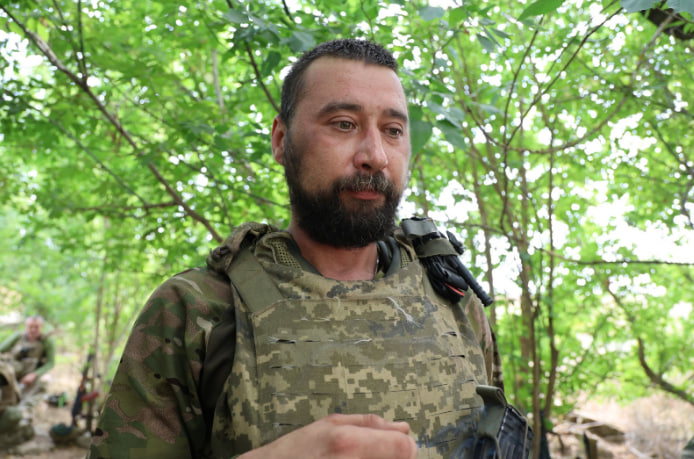
Dima ("Klim"), an infantry soldier from the 98th Separate Territorial Defense Battalion, expressed deep skepticism about Trump’s approach to ending the war, warning that it could come at Ukraine’s expense.
“Trump has taken it upon himself to stop the war without ensuring the means to restore justice. He will likely pressure Zelensky and Putin into signing a peace agreement that leaves part of the country to the enemy.”
Reflecting on past failed agreements with Moscow, he cautioned against trusting Russia’s commitments, fearing that any rushed deal would only strengthen the enemy.
“We have already seen many times what agreements with Russia are worth and how well it abides by them. This would only be a pause for the enemy to regroup.”
"I think Trump is only interested in making money, and our war is hurting that. He wants to end it not because he is a good person, but because it harms business—and also to show the world how tough he is. I believe there will be a pause and some kind of truce, but only for 2-3 years, and then it will start again. That’s why we need to prepare for the second round, even if a peace deal is signed."
Ihor, known by his callsign “Rogue” from the drone unit Yasni Ochi of the 23rd Mechanized Brigade, shared his skepticism about Trump’s motivations for ending the war.

“I think Trump is only interested in making money, and our war is hurting that. He wants to end it not because he is a good person, but because it harms business—and also to show the world how tough he is.”
Ihor warned that any truce would likely be temporary, emphasizing the need for long-term preparation.
“I believe there will be a pause and some kind of truce, but only for 2-3 years, and then it will start again. That’s why we need to prepare for the second round, even if a peace deal is signed.”
Oleksandr, who goes by the callsign “Pharmacist” due to his pre-war occupation, criticized Trump’s stance on Russia, arguing that Western leaders are failing to grasp the true stakes of the war.
“In my opinion, his approach to Russia is far too soft. The Russian army is wiping out our homes and killing innocent Ukrainians, while America and Europe play games with our lives.”
“Trump might only freeze this war, but it will come at a great cost to us. Ukrainian soldiers believe only in themselves,” said Oleksandr.
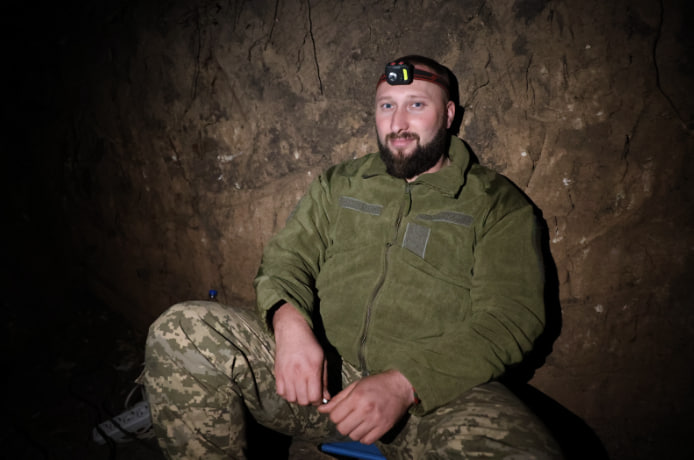
The common theme shared among Ukrainian soldiers is that Trump and the West are not serious about truly ending the war for good or securing a lasting settlement. While a ceasefire may be achieved, Ukraine must prepare for another war, as Russia will use the pause to regroup and strike again.
Furthermore, soldiers don’t believe Ukraine will receive a "just peace" after losing so many of its best people in the war. Yet, despite Western support, they remain determined to keep fighting for their land and preserving their freedom.
Author: David Kirichenko