


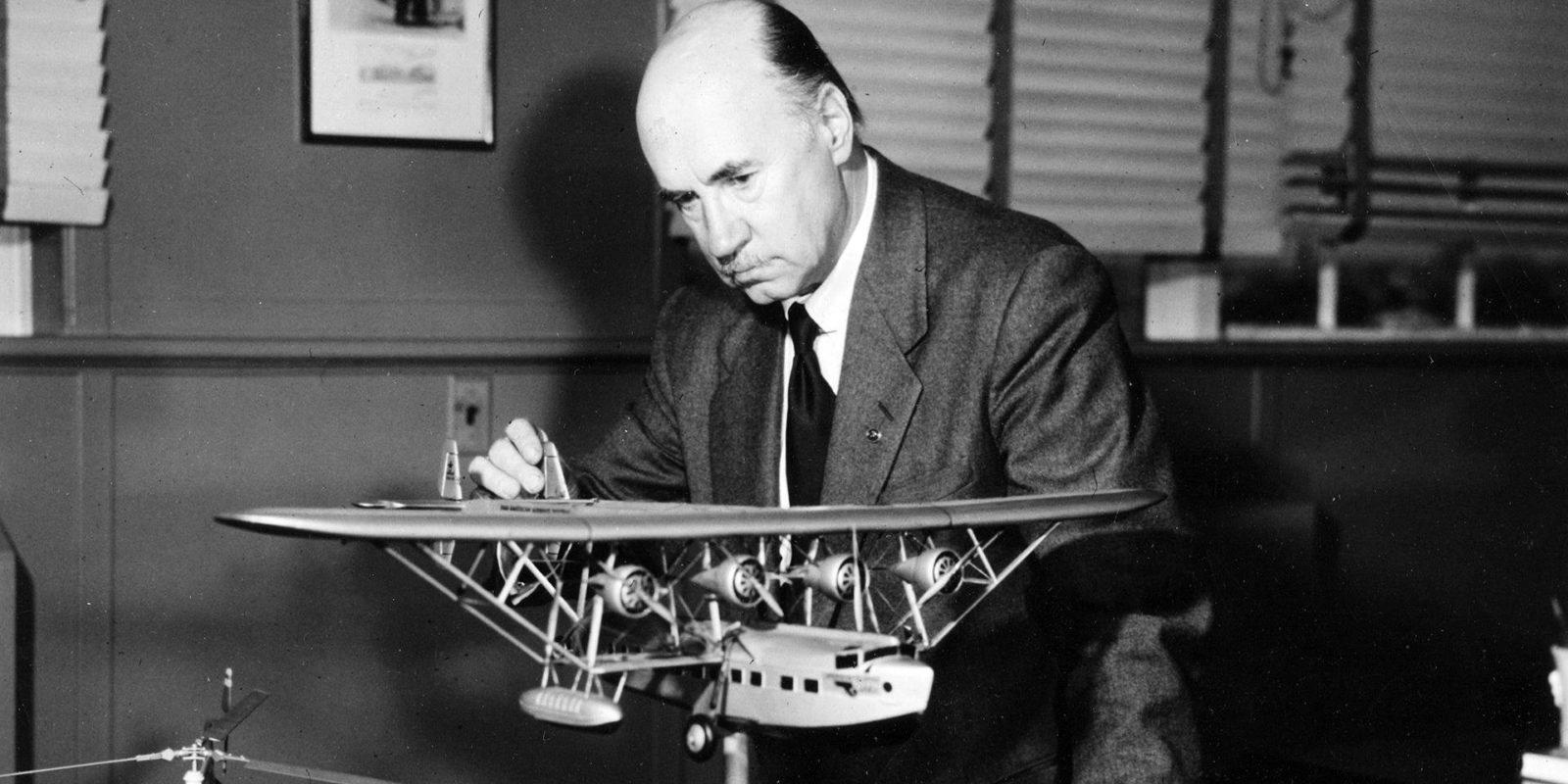
Igor Sikorsky is a world-famous aircraft designer of Ukrainian origin, the creator of the world's first heavy multi-engine aircraft and one of the pioneers of world aviation.
This was reported by Ukrainian Interest..
The future engineer was born into the family of a professor at the Kiev University of St. Volodymyr Ivan Sikorsky on June 6, 1889. He received his education at the Naval Cadet Corps in St. Petersburg, and later studied at the Kiev Polytechnic Institute. He was one of the organizers of the Aeronautical Club of KPI and a member of the Kiev Aeronautical Society.
In 1909, Sikorsky built two helicopters, but due to insufficient engine power, they could not take off with a pilot. After that, he focused on creating airplanes. Already in June 1910, he made his first flight on an airplane of his own design, and in 1911, on a biplane S-5, he set records for the Russian Empire in terms of altitude, range, duration and speed of flight.

Igor Sikorsky (right) with his brother Sergei and sisters Olga, Lydia and Elena (1906)
In 1912, Sikorsky moved to St. Petersburg, where he became the chief designer of the aviation department of the Russian-Baltic Carriage Plant. He was convinced that the future of aviation lay in large multi-engine airplanes with comfortable cabins.
In August 1912, he began work on the world's first multi-engine airplane "Grand". The aircraft had four engines, weighed about 4 tons and could reach speeds of up to 90 km/h. The airplane became the prototype of future passenger, transport and military vehicles. It had a closed cockpit, a passenger cabin with furniture, a toilet and a washbasin - solutions that had no analogues at that time.

The first tests of the "Grand" took place in the spring of 1913, and a full-fledged flight was made on May 10. Later, the design was improved by installing four engines in a row. In July 1913, the aircraft took to the air in a new configuration and was renamed the "Russian Knight". Sikorsky personally participated in the tests.
The "career" of the aircraft ended on September 24, 1913, when during a competition for military airplanes, an engine from another aircraft fell on it. Sikorsky decided not to restore the aircraft, as he was already working on a new project.
The next development was the "Ilya Muromets" - an even larger four-engine aircraft with a wingspan of up to 32 meters and a take-off weight of over 5 tons. It had electric lighting, heating, and the ability to service the engines during the flight. The first flight took place on December 23, 1913.
"Ilya Muromets" became a serial aircraft - about 85 machines were built. In 1914, the world's first combat unit of heavy multi-engine aircraft was created on their basis - the Airship Squadron. During the First World War, these aircraft were used as bombers and scouts, flying hundreds of combat missions and dropping tens of tons of bombs.
In 1915, Sikorsky created the S-16 fighter to accompany "Ilya Muromets". In total, before the revolution, he developed about 25 aircraft models, two helicopters, three air sleds, and one aircraft engine.
After the events of 1917, aircraft production was stopped. In 1918, Sikorsky emigrated – first to Great Britain, then to France, and later to the USA.
In the United States, he first worked as a mathematics teacher, and on March 5, 1923, he founded his own company, “Sikorsky Aero Engineering Corporation”. In the USA, he created 17 types of airplanes and 18 types of helicopters, most of which were mass-produced.
After World War II, Sikorsky’s company became one of the leaders in world aircraft construction. One of the greatest achievements was the S-55 helicopter, which in 1952 made the world’s first transatlantic flight. The last helicopter developed with Sikorsky’s participation was the S-58 (1954-1955), which was operated in almost 50 countries around the world.
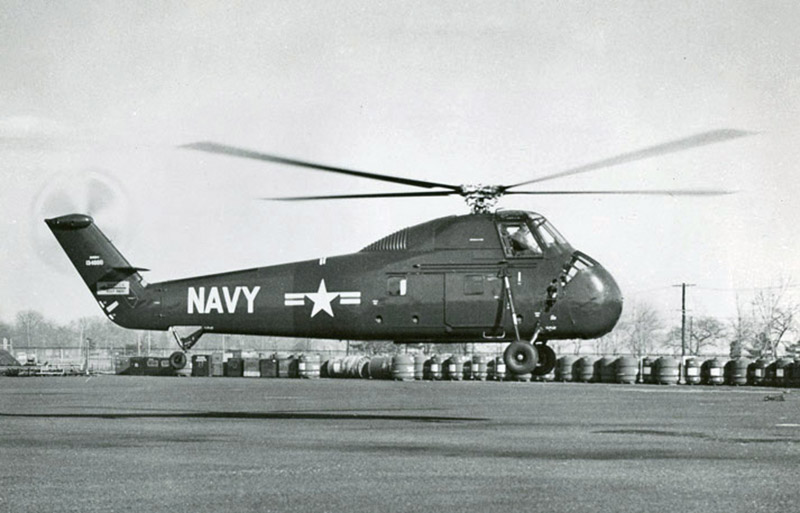
The Sikorsky Aircraft company continues to operate today, as part of the Lockheed Martin corporation.
Igor Sikorsky died on October 26, 1972 in Easton, Connecticut, and is buried in Stratford. In Ukraine, a street, the Kyiv International Airport (Zhulyany), and the National Technical University of Ukraine "Kyiv Polytechnic Institute" are named after him.
Photo: theukrainians.org, uain.press, sikorskyarchives.com
Author: Danylo Pievchev