


Russia’s ongoing invasion of Ukraine didn’t just inspire ordinary Ukrainians to rise up and resist — it also galvanized Ukrainians across the world to take action. The Ukrainian Diaspora stepped up to support Ukraine in any way they could. For those with specialized skills, this meant leveraging their expertise—developing innovations to aid Ukraine’s defense while also raising awareness about the war.
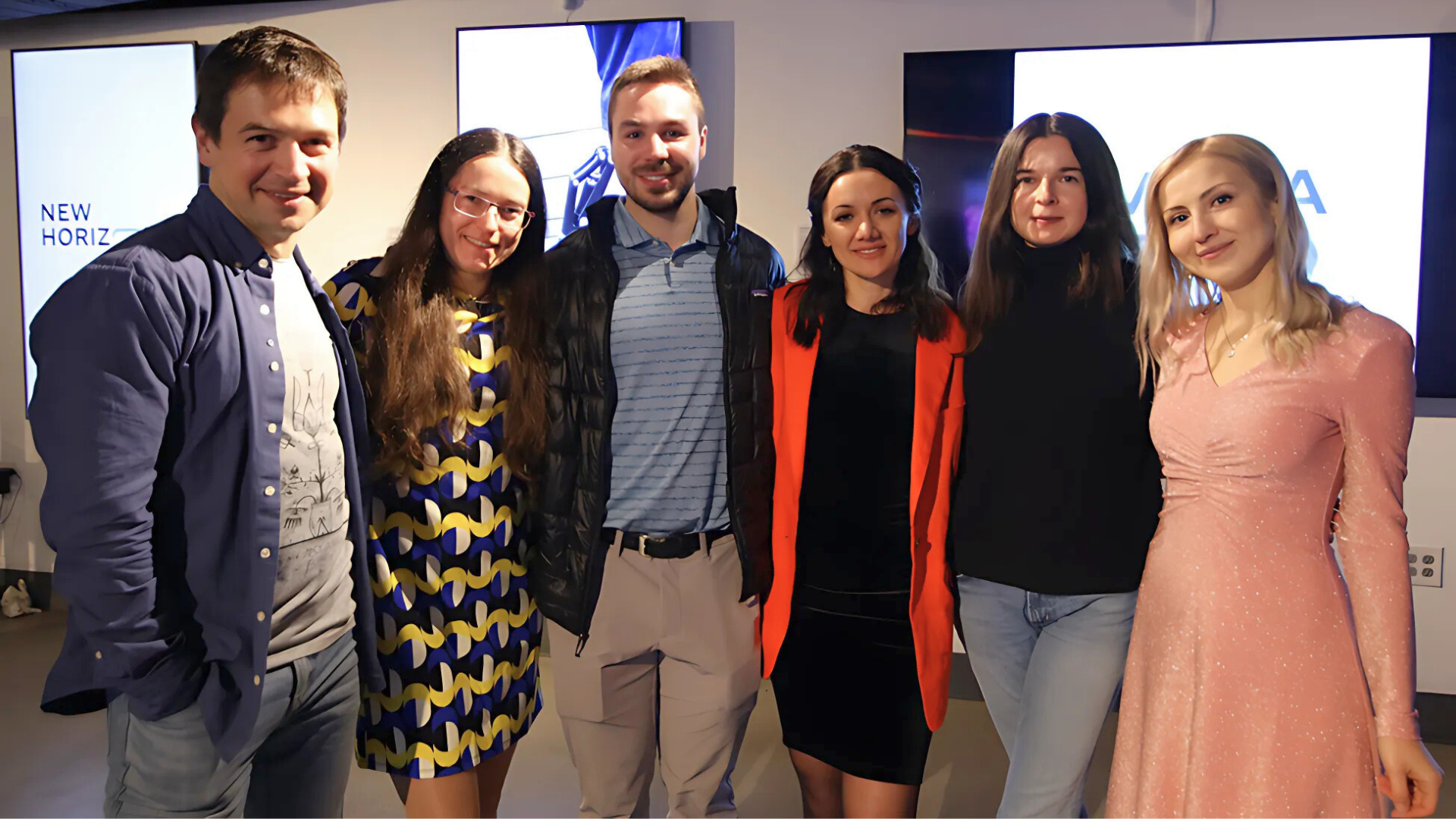
In the United States, the Volia Fund was founded in August 2022 after four Ukrainian Americans — Arsen Kostenko, Tetiana Novokhatska, Aly Owens, and Anastasia Stepanova — came together from the tech sector in May 2022 to brainstorm how to create an organization that would focus on helping Ukraine. Their vision was to build something different from all other existing nonprofits at the time.
“We wanted to create a platform for partnership — open for collaboration with other organizations and open to volunteers from all backgrounds, not demanding exclusivity. One of the key elements was that we wanted to fund projects that would use technology in the most efficient way to save lives and help Ukraine be more self-resilient in its fight for freedom,” said Tetiana Novokhatska in an interview.
“In addition to the initial four founders, we were joined by CFO Alex Balkan and VP of Medical and Veteran Affairs Yuliia Matvievieva,” noted Novokhatska. “Currently, two board members have stepped away from active roles, leaving four on the board and key executive positions, supported by around ten active volunteers.”
"We see ourselves as a platform, fostering open communication, collaboration, and support — always with the goal of saving lives and improving well-being in Ukraine. Every effort we make is driven by this mission," said Novokhatska.
Volia Fund’s Impact
Volia Fund co-founder Tetiana Novokhatska highlighted the fund’s direct impact on helping Ukraine.
"From every $1 donated, 97 cents go directly to material aid, with only 3% covering operational overhead. We are committed to ensuring the highest return on investment for our efforts and funds, making sure Ukraine can defend itself today and prosper in the future."
She also shared the organization’s fundraising achievements, noting their ability to scale operations while maintaining a lean, volunteer-driven team. "Since our inception, we’ve raised $1,712,559 and completed 378 projects. In 2024 alone, we scaled up, raising $1.25 million — despite keeping our team lean and operating without paid staff."

"So far, we have supplied over 3,500 components for research and development, 115 drones, 187 anti-drone systems and detectors, 41 evacuation vehicles, and 640 tourniquets. Every piece of equipment provided is another step toward Ukraine’s resilience," she added.
"The main vision hasn’t changed, but reality has course-corrected how we distribute funds across different types of projects," noted Novokhatska.
"Initially, we thought a significant portion of our funds would go toward R&D — helping people in Ukraine develop life-saving inventions. However, the constant flow of requests from our defenders and the urgent need for essentials like vehicles, drones, and anti-drone systems for safe evacuations have taken priority. At the same time, we remain committed to R&D, with a dedicated board member, Anastasia Stepanova, serving as our Chief Development Officer."
She added, "The rehabilitation needs of Ukrainians wounded in the war—both civilians and veterans — along with the manufacturing of demining equipment, have also become pressing concerns. We do our best to balance these priorities while still supporting innovation."
Reflecting on the challenges, Novokhatska pointed out that, "As time goes on, the basic needs of Ukrainians only continue to grow. Unfortunately, fundraising is becoming harder and harder."
Novokhatska highlighted the unique efficiency of technological innovation in supporting Ukraine’s war efforts. “It’s a combination of smart use of technology, like 3D printing, and achieving an incredibly high return on investment,” she said.
Dmytro ("Pysok"), a serviceman in the 241st Territorial Defense Brigade credited the Volia Fund for supplying vital equipment over the past few years. Through the Fund, his unit received an ATV, a car, night vision equipment, and other crucial resources.
Applying Technical Expertise
Anastasia Stepanova another co-founder of Volia Fund, emphasizes the importance of applying technical expertise to ensure the group is delivering maximum impact from their work.
"At Volia Fund, I’ve been donating technical expertise for sourcing projects, conducting thorough due diligence, and estimating trade-offs between risks and potential impact. My goal is to ensure our project portfolio is well-balanced for both long-term and short-term wins — skills I’ve honed through my experience in angel investing and technical leadership."
Stepanova stressed the importance of embracing wise calculated risks, particularly when it comes to emerging technologies that could accelerate Ukraine’s capabilities. "I strongly believe the biggest mistake is to avoid risk altogether. That’s why I’m constantly exploring how we can accelerate emerging technology at Volia Fund — whether through research and development grants, active advisory roles, or by connecting engineering talent with relevant investors."
Despite the challenges of funding R&D projects, she highlighted the long-term benefits and secondary effects that come from investing in innovation. "Even though the R&D projects we fund sometimes face delays, the overall upside — and the unintended impact that emerges from research and development — drastically outweighs any setbacks."
Demining Support
Ukraine has tragically become the most heavily mined country in the world: with an estimated 30% of its territory contaminated by landmines. “Russia left approximately two million landmines in the field,” she added. “Many of these are specifically designed to harm people, including booby traps and a variety of prohibited antipersonnel mines launched from specialized ground systems. These landmines pose an especially grave danger to children.”
To address this crisis, Ukraine trains a few hundred specialists each month in humanitarian demining. However, this effort requires a diverse array of equipment, from dielectric probes to metal hooks used for identifying and disarming landmines. Recognizing the urgent need for cost-effective solutions, the Volia Fund partnered with a Ukrainian nonprofit led by a professional sapper.
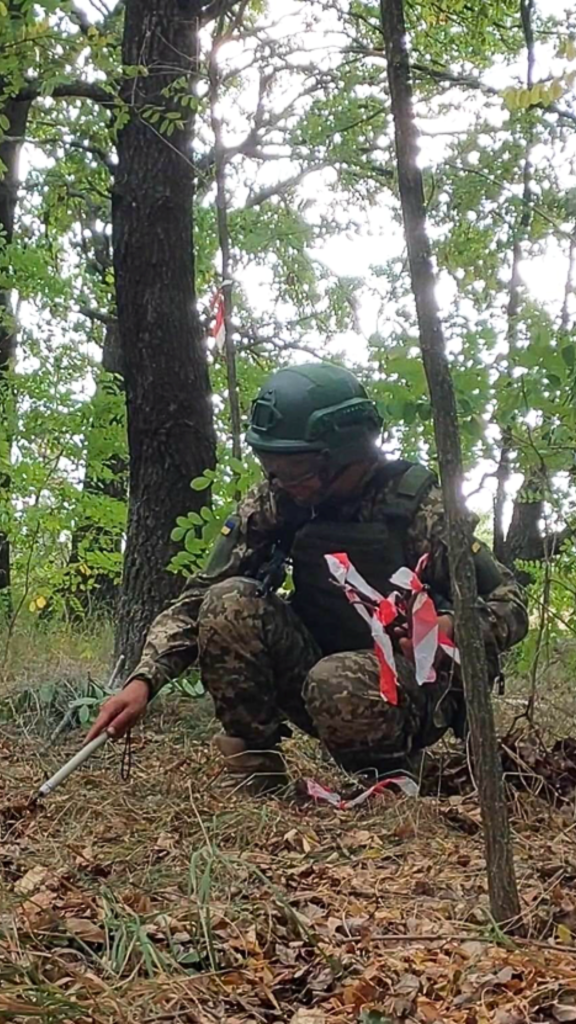
“We worked together to manufacture life-saving demining devices at an incredibly low cost,” said Novokhatska. “This is possible because volunteers contribute their labor for free, and no profit is made on the devices.” As a result, a standard sapper set — including a dielectric probe, 50 meters of paracord, and one or two metal hooks — costs only $8 to $10, a fraction of the retail price.
This partnership extends beyond manufacturing; it fosters an iterative process of improvement. “We receive constant feedback from sappers in the field,” she noted. “This helps us maintain high-quality standards, refine designs, and quickly implement changes when conditions demand them.”
In January 2025 alone, the initiative funded the production of 2,500 sapper sets, which were distributed free of charge to units dedicated to clearing Ukraine of landmines. “These sets are used for both training and humanitarian demining,” she emphasized. “Every tool we provide contributes to making Ukraine safer.”
The Ukraine Abilitation Initiative (UAble)
Yuliia Matvieieva, Vice President of Medical and Veteran Affairs at Volia Fund's Ukraine Abilitation Initiative (UAble), highlighted the program’s impact, stating: "UAble has made significant strides in improving rehabilitation services for Ukrainian veterans and civilians with severe injuries, particularly those who have undergone limb amputations."
According to its website, UAble is a cost-effective humanitarian effort dedicated to supporting over 80,000 Ukrainians who have suffered war-related limb loss. Its mission is to restore independence and facilitate reintegration into society for people who have lost limbs during the conflict.
The group reached a major milestone in March 2024 when UAble partnered with Protez Hub and Enhancing Skills for Life to organize a rehabilitation mission in Ivano-Frankivsk. Protez Hub, a Ukrainian initiative, is dedicated to the sustainable development of the country’s prosthetics and orthotics industry.
"We helped to fit six individuals with bilateral upper limb amputations with prostheses and trained dozens in adaptive equipment use," she explained. Additionally, 20 occupational therapists and five prosthetists underwent advanced training to improve patient support for upper limb loss.

In June 2024, UAble continued its efforts by collaborating with Hanger Clinic Louisiana specialists to provide advanced training for prosthetists at the Unbroken Rehabilitation Center in Lviv.
"Education and skill-building for local specialists are crucial in ensuring long-term rehabilitation success," Matvieieva noted.
In November, UAble launched two major initiatives: workshops focusing on rehabilitating veterans with vision impairments, and a mental health mission featuring experts from Yale and Brown Universities. These specialists trained over 100 Ukrainian psychiatrists and psychologists in trauma-focused care for PTSD.
Matvieieva underscored UAble’s commitment to innovation in rehabilitation, highlighting new efforts to equip recovery centers with adaptive solutions.
"We provided four adaptive kits to help veterans with bilateral upper limb amputations eat independently and sponsored monthly rehabilitation services for more than 20 veterans with limb amputations and spinal injuries," she said.
The organization also delivered a robotic exoskeleton hand rehabilitation device to St. Jude Thaddeus Rehabilitation Center and installed a ceiling lift system to assist patients. To further support technological advancements, UAble contributed $1,000 worth of filament for 3D printing prosthetic components and launched a new initiative to sponsor winter adaptive sports equipment for veterans with limb amputations and spinal traumas.
"It’s truly inspiring to witness the resilience of the people we support. Watching them smile, regain independence, and embrace life with their new identities is the most rewarding part of this work," said Matvieieva.
"While we focus on bringing advanced knowledge, expertise, and rehabilitation equipment to Ukraine, I believe the most valuable thing we bring — both to patients and healthcare providers — is hope. Because there is no future without hope."

Raising Awareness
"Volia Fund actively works within the communities we are part of to spread factual information about the Russia-Ukraine war, the devastation it brings to the Ukrainian people, and the consequences for the democratic world if Ukraine falls," said Novokhatska.
She added, "We partner with other local organizations and non-profits to organize marches and emergency rallies in cities like Seattle and San Francisco, issue press releases, and speak to the press to share our part of the story. The world deserves to know the truth through the lens of people who are closely impacted by this war."
Novokhatska also highlighted Volia Fund’s engagement in political advocacy: "Our board members take part in the Ukraine Action Summit, which happens in Washington, D.C., twice a year. It focuses on advocating with members of Congress on Ukraine-related issues, ensuring that policymakers understand the urgent needs on the ground."
As Ukraine continues to resist Russian aggression, its global network of supporters remains vital — driving technological innovation, providing humanitarian aid, and amplifying advocacy efforts. The Ukrainian American diaspora, through organizations like the Volia Fund, plays a crucial role in funding, innovating, and championing Ukraine’s success.
"The lack of weapons supply and the West’s reluctance to ensure Ukraine's victory in this war is what breaks our hearts. While we cannot directly influence this, we try to make our humble contribution by speaking out — about Ukraine, about this war, and why it is crucial for the entire free world to help Ukraine win," said Novokhatska.
Author: David Kirichenko