


Ukrainian drone warfare has evolved from improvisation to a high volume, precision strike ecosystem that Russia often struggles to match. With some operators flying up to 15 missions a day and factories now producing millions of drones , Ukraine’s domestic drone production has reached an unprecedented scale.
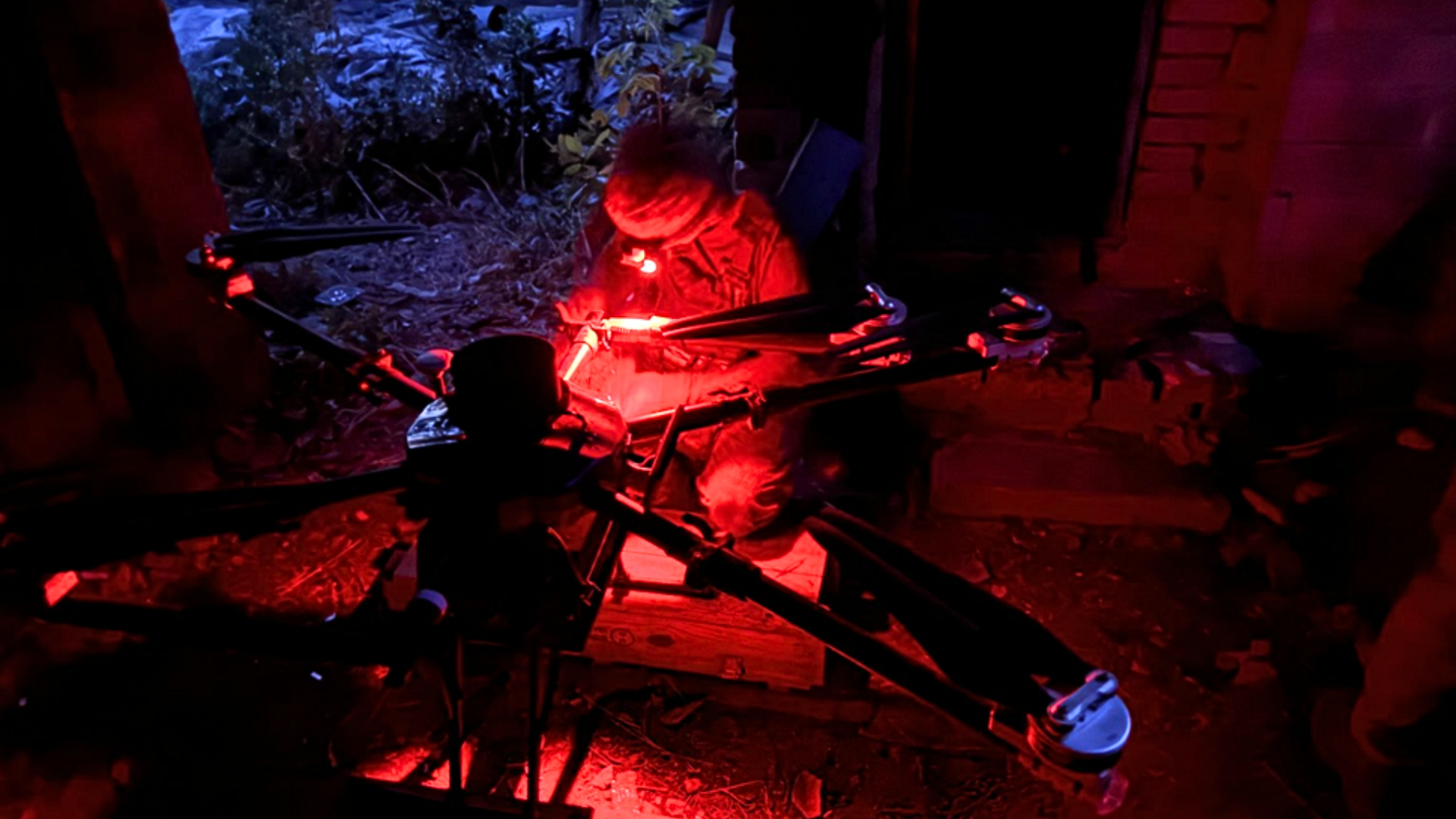
Soldiers from the 23rd Mechanized Brigade are setting up a heavy bomber drone to conduct operations in Chasiv Yar. Photo David Kirichenko
These drones have become central to Ukraine’s battlefield strategy – pinpointing, punishing, and relentlessly pushing back Russian forces. The New York Times wrote on the sentiment on the front, “It feels as if there are a thousand snipers in the sky.” But some question how long Ukraine can hold that technological advantage.
Russian troops, by contrast, are often starved for drones. Some battalions receive just 10 to 15 FPV (First-person view) drones per week. “We know where they are flying from, but there is nothing to kill with,” lamented one Russian operator. A Russian drone developer recently admitted, “Modern combat realities prompt us to modernize and iterate on drones practically every month.”
Regulatory bottlenecks have made matters worse. “Heavy drones now require state approval,” wrote a Russian blogger, noting that units have begun constructing their own drones to fill the vacuum left by the faltering domestic drone industry.
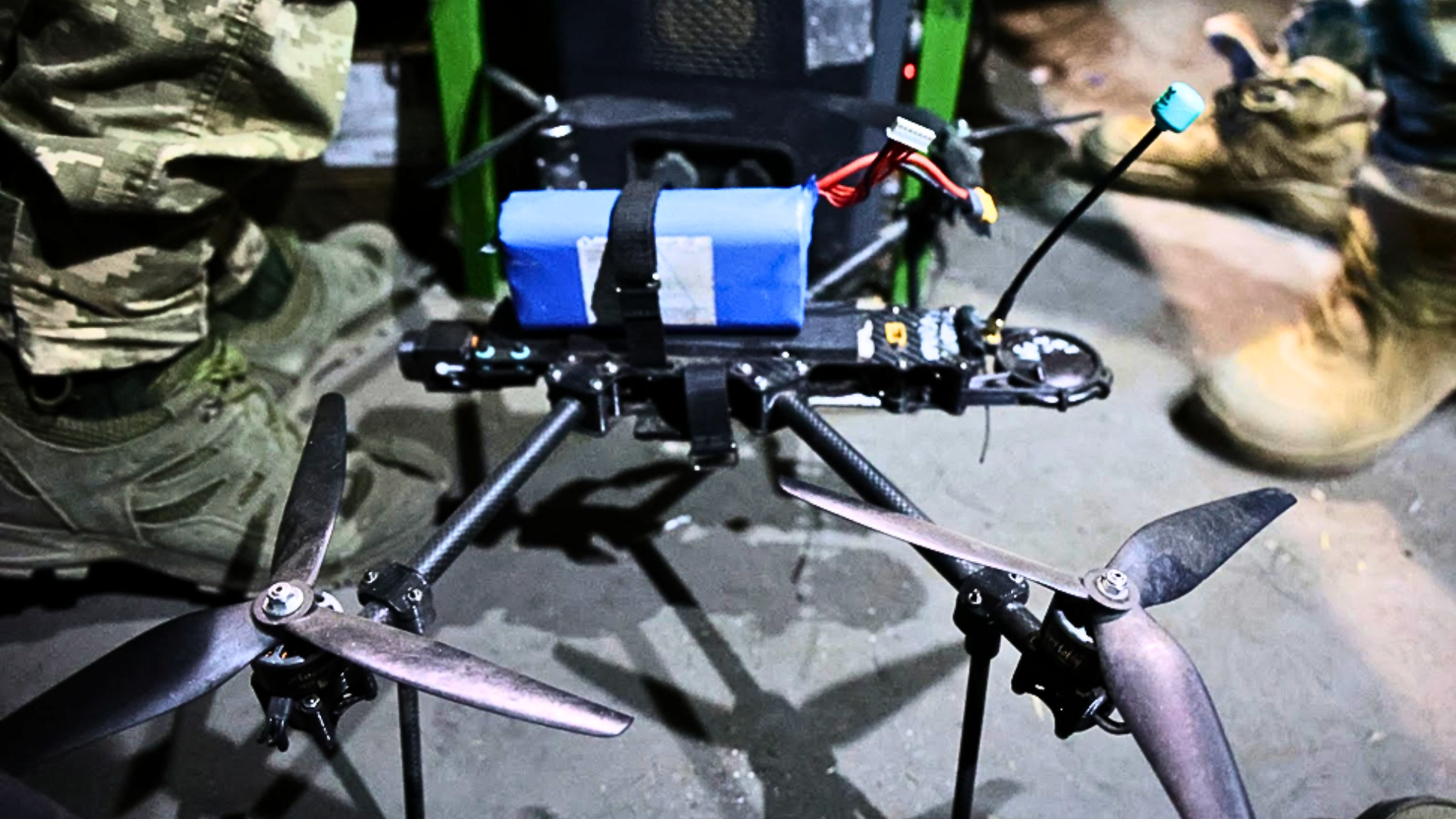
An FPV drone is being prepared for combat operations in Eastern Ukraine. Photo: David Kirichenko
Evolution of Drone Warfare
One of the standout innovations has been Ukraine’s development of the “Баба Яга” – a heavy multirotor drone named after the mythical Slavic witch. Russian forces have attempted crude countermeasures, attaching long sticks to their FPV drones to intercept Ukraine’s bulky bombers. Russian soldiers are deathly terrified of the Baba Yaga drone when it flies overhead and the resulting strike.
While Ukraine continues to develop newer platforms, it has also refined older systems to enhance their impact on the battlefield. Mavic drones pioneered the use of light bombing in Ukraine, serving as lethal anti-personnel systems early in the war.
But FPVs have since taken over the role, offering greater payload capacity and flexibility. Some FPV FPV drones have now carry up to six VOG grenades – compared to the two typically deployed by Mavics – allowing for more impactful strikes with greater reach and frequency.
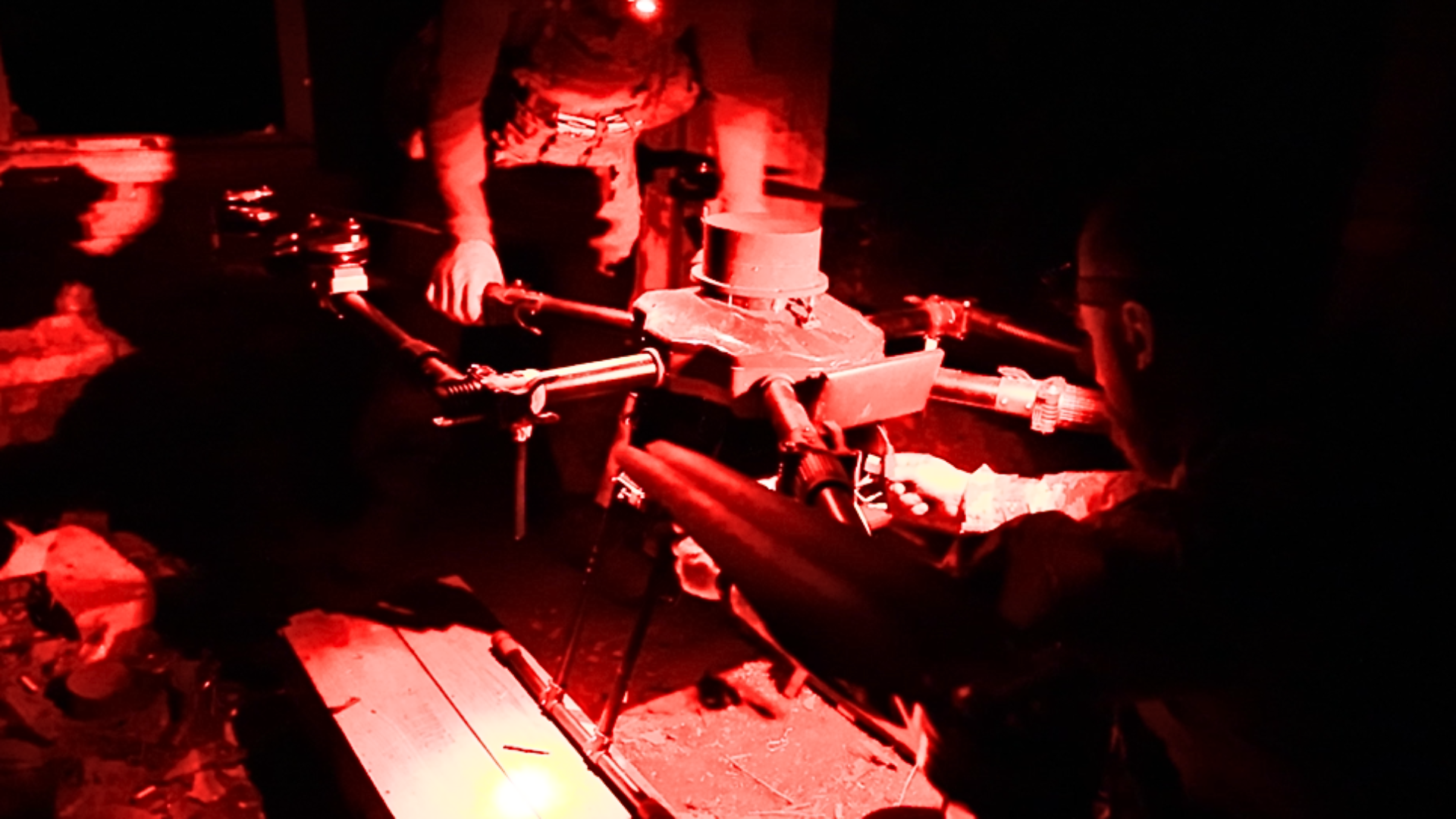
Ukrainian drone operators are loading T-62 anti-tank mines onto a heavy bomber drone. Photo: David Kirichenko
One of the more recent innovations pushing that edge is the emergence of mothership drones. Ukraine is usingmothership drones – large unmanned aerial vehicles (UAV) capable of carrying and launching multiple FPV drones – to conduct long-range strikes behind enemy lines.
One Russian commentator wrote: “FPV drones are about tactical dominance. They bring chaos, fear and uncertainty to close combat. They are not feared, they are hated. They are cheap, massive and deadly effective. And their potential grows with each passing day: AI guidance, automated launches, swarms. These are no longer makeshift weapons, but new close-combat artillery.”
FPV drones have emerged as a key interceptor weapon to target Russian reconnaissance drones for the Ukrainian military. The Russians use the FPV drones to target Ukrainian "Baba Yaga" drones.

Yurii, a drone pilot in the 23rd Mechanized Brigade, has been fighting since 2014 and is regarded as one of the best pilots in the unit. Photo: David Kirichenko
Much of Ukraine’s operational drone success stems from specialized units.Birds of Magyar, one of Ukraine’s most prolific drone units, released some data from its drone operations. In March 2025 alone, the unit executed more than 11,600 sorties, hitting over 5,300 targets. Most of these were achieved with FPV drones (67%) and heavy bombers (31%). While viral FPV strike videos captivate online audiences, the less glamorous “Baba Yaga” night bombers may in fact inflict the bulk of real-world damage.
These UAVs specialize in demolishing infrastructure and personnel shelters, not just enemy armour. The March tally: 1,701 strikes on Russian infantry, resulting in 1,002 confirmed kills, and dozens of bunker-busting missions. Furthermore, in April, Ukrainian drone brigades said striking 83,000 Russian targets – marking a 5 percent increase compared to March.
Dmytro Lysenko, a drone pilot with the 109th Separate Territorial Defense Brigade who was killed in combat in 2024, previously stated: “Even when we drop explosives from drones on Russians, I sometimes shiver and feel discomfort because I remember all those times I was sitting in a trench.” He added, “The Russians would shoot at us with everything possible. But the drone was the scariest. A shell can fly and miss and that’s it. But a drone pilot aims and will be very accurate when they drop an explosive.”
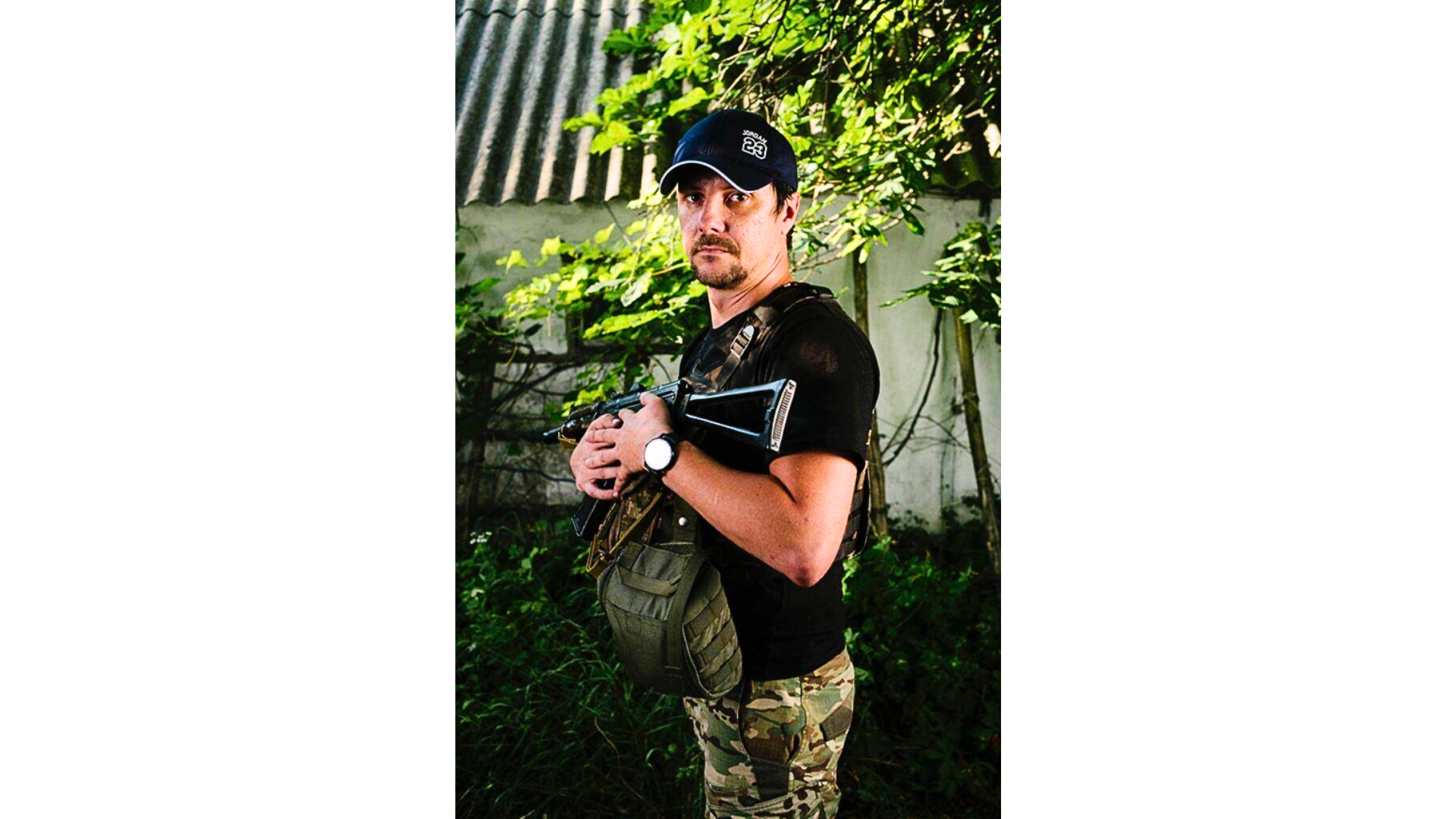
Serhii (callsign: “Muha”) is the leader of a large drone bomber group for the 23rd Separate Mechanized Brigade. Photo: Nicolas Cleuet
Russian milblogger "Vault 8" highlighted how Ukrainian FPV and reconnaissance drones dominate territory up to 25 kilometers behind the front line, making road travel highly dangerous and turning rear areas into what he calls a “highway of death,” where even vehicles far from the front are frequently destroyed. Both sides are having to adapt to this reality.
In 2024, one drone pilot told me that at some point in the near future, heavy armor won’t be able to get within 10km (six miles) of the front and that “Autonomous drones will patrol the skies and will be taking out all the heavy armor.” Now, Ukraine is using these drones to build a "drone wall" along the front line, extending the no-man’s land for dozens of kilometers and deterring Russian advances through constant aerial threat.
Russia, for months, has been using motorcycle, to spearhead their suicidal offensives, mainly due to a shortage of armored vehicles because of Ukrainian drones.
Ukraine’s 425th Skala Assault Regiment recently established its own motorcycle assault company. With FPV drones acting as the new artillery of modern warfare, motorcycles now offer one of the best chances for assault units to quickly break through.
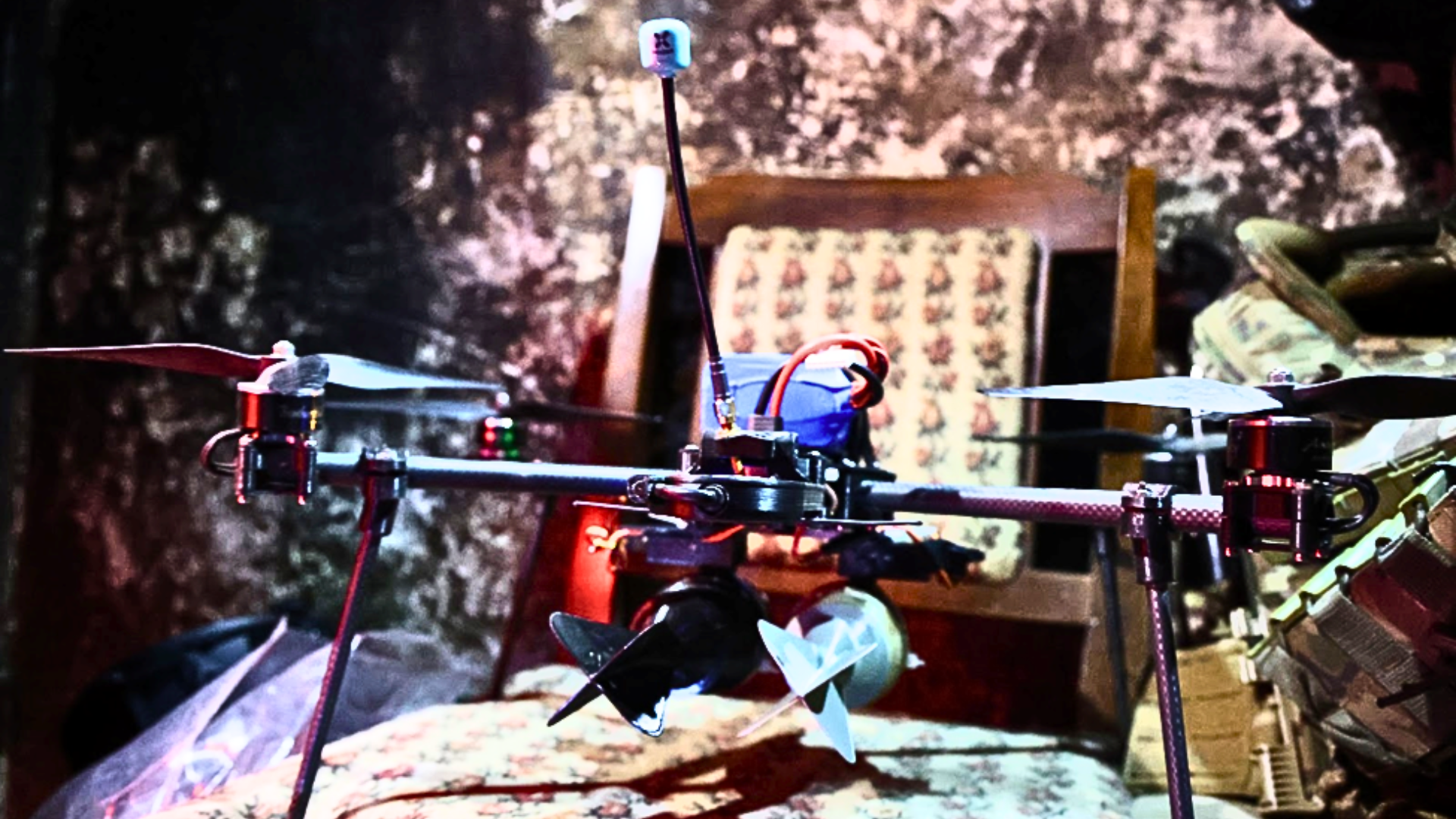
A Ukrainian FPV drone loaded with small explosives in Chasiv Yar. Photo: David Kirichenko
Beyond direct attacks, the unit also lays mines, conducts drone reconnaissance, more than 10,000 missions to date, and is testing jamming-resistant drones. With national production surging to 200,000 drones a month, the kill rate of Birds of Magyar has soared, from under 300 targets a year ago to over 5,000 now. The drone unit is now averaging one Russian killed every 6.5 minutes.
Even Ukraine’s logistics have gone airborne. “Vampire drones have now started to be used as logistics drones in some directions,” said Oleksii. They carry food and ammunition to frontline units, flying at low altitudes to avoid detection. “FPVs ranging from 10 to 15 inches are being used. Unlike the Vampire, the FPV crew is much more mobile.” And while bombers must drop payloads from high altitudes to avoid small arms fire, FPVs can dive directly into a one-meter target.
“They’re both effective, but each has its nuances,” said Danilo, a drone pilot from the 108th Separate Territorial Defense Brigade. “FPVs are more effective against pinpoint targets, where the scale of damage doesn’t matter, but accuracy does.” For hardened positions, Danilo adds, FPVs fall short: “A Vampire drone can drop a couple of TM-62 mines and take care of it. But it’s a big drone, bulky, and requires a crew. It’s harder to work with.”
Oleksii, a drone unit commander from the same brigade in Zaporizhzhia, echoed the challenge: “With a Vampire, you still need to transport it by vehicle. That means you either have to get close to the position or fly it from a long distance. At long range, it’s very visible in thermal cameras and can be intercepted, even shot down by another FPV, before it even crosses the line of contact.”
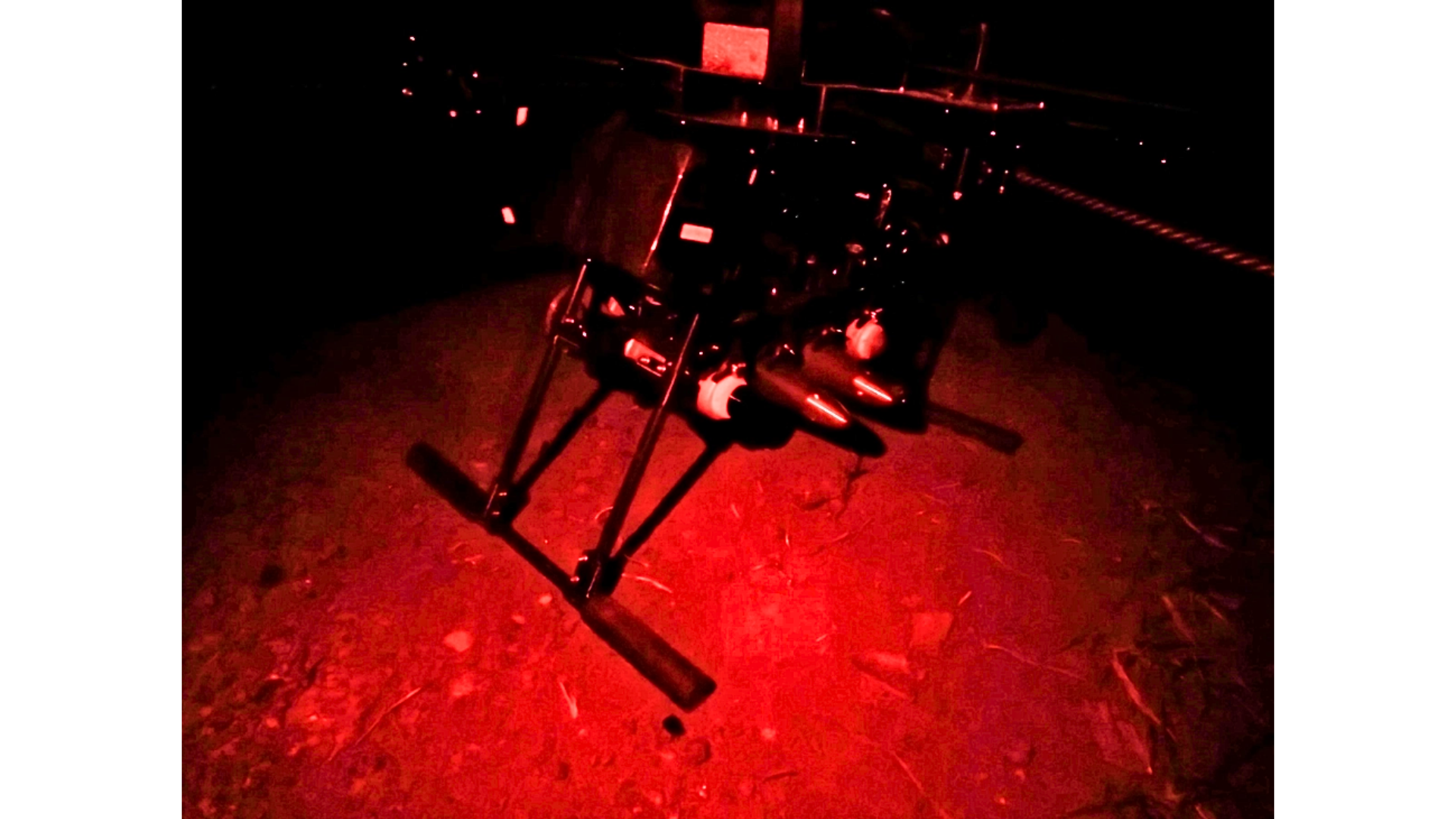
A heavy “Baba Yaga” multirotor drone being used by the 109th Separate Territorial Defense Brigade for night operations. Photo: Dmytro Lysenko
n some cases, however, FPVs outperform the Baba Yaga. “FPVs, even with an effectiveness rate of 30–40%, cause more damage than the Vampire,” said Andrii of the 59th Brigade (Da Vinci Wolves). That’s because Russian vehicles often stay far from the frontline. “Not every Vampire can reach that far, but most FPVs can.” Moreover, FPVs fare better under Russian jamming, as they can switch control frequencies mid-flight, something the Vampire cannot do.
A Russian volunteer also reportedthat Ukraine’s heavy "Vampire" drone bombers – targeting artillery crews, tanks, and command posts – offer a major strategic advantage due to Ukraine’s systematic development and deployment methods. Ukraine also recently recorded its first confirmed kill using a drone-mounted grenade launcher, highlighting how the technological drone race continues to evolve.
Even Ukraine’s logistics have gone airborne. “Vampires have now started to be used as logistics drones in some directions,” said Oleksii. They carry food and ammunition to frontline units, flying at low altitudes to avoid detection. “FPVs ranging from 10 to 15 inches are being used. Unlike the Vampire, the FPV crew is much more mobile.” And while bombers must drop payloads from high altitudes to avoid small arms fire, FPVs can dive directly into a one-meter target.
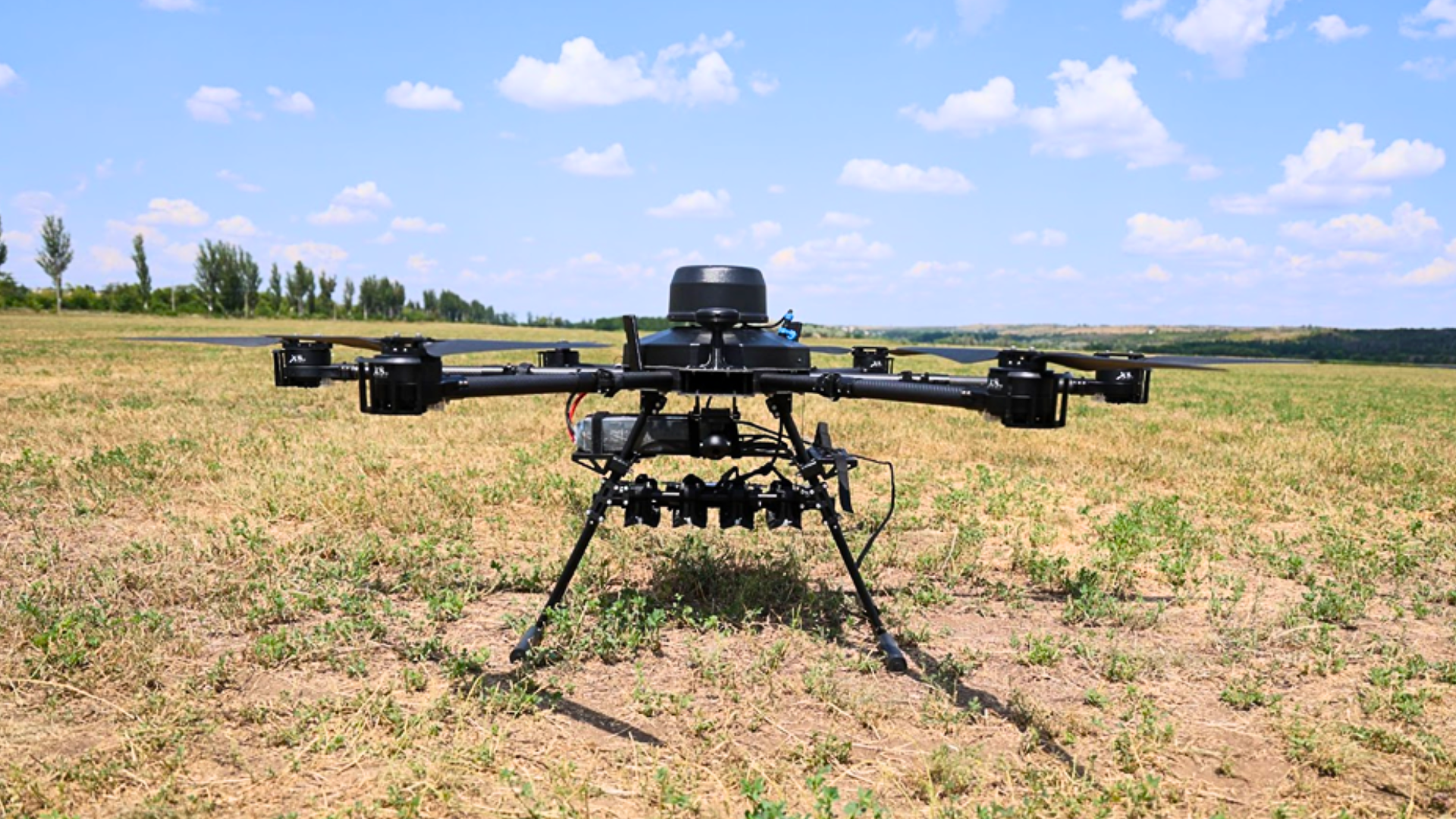
A Ukrainian Vampire drone is being tested in Eastern Ukraine. Photo: David Kirichenko
Russia, meanwhile, is still scrambling to respond. It lacks anything comparable to the Baba Yaga. “Ukraine invested in its fleet of larger, long-range drones as a response to Russia’s investment in Shahed/Geran drones,” observed Samuel Bendett, an adjunct senior fellow at the Center for a New American Security.
“Russia seems to be satisfied with Geran performance to date, has invested heavily in their mass production (many thousands to date) and seems to be content with their relatively low cost,” said Bendett. However, he also noted that “since these drones have different ranges and different missions, they should not be compared to smaller FPVs, which have a different range and different tactical applications.”
“Ukrainian ‘Vampire’ type heavy drones have a complementary role to FPVs,” explained Roy Gardiner, an open source weapons researcher and former Canadian officer. “While FPVs attack Russian logistics vehicles during the day, heavy drones attack the same vehicles at night by precision mining Russian roads. The Russians complain the Ukrainian Baba Yagas have significantly increased in numbers, sometimes attacking several at a time and increasingly during the day.”
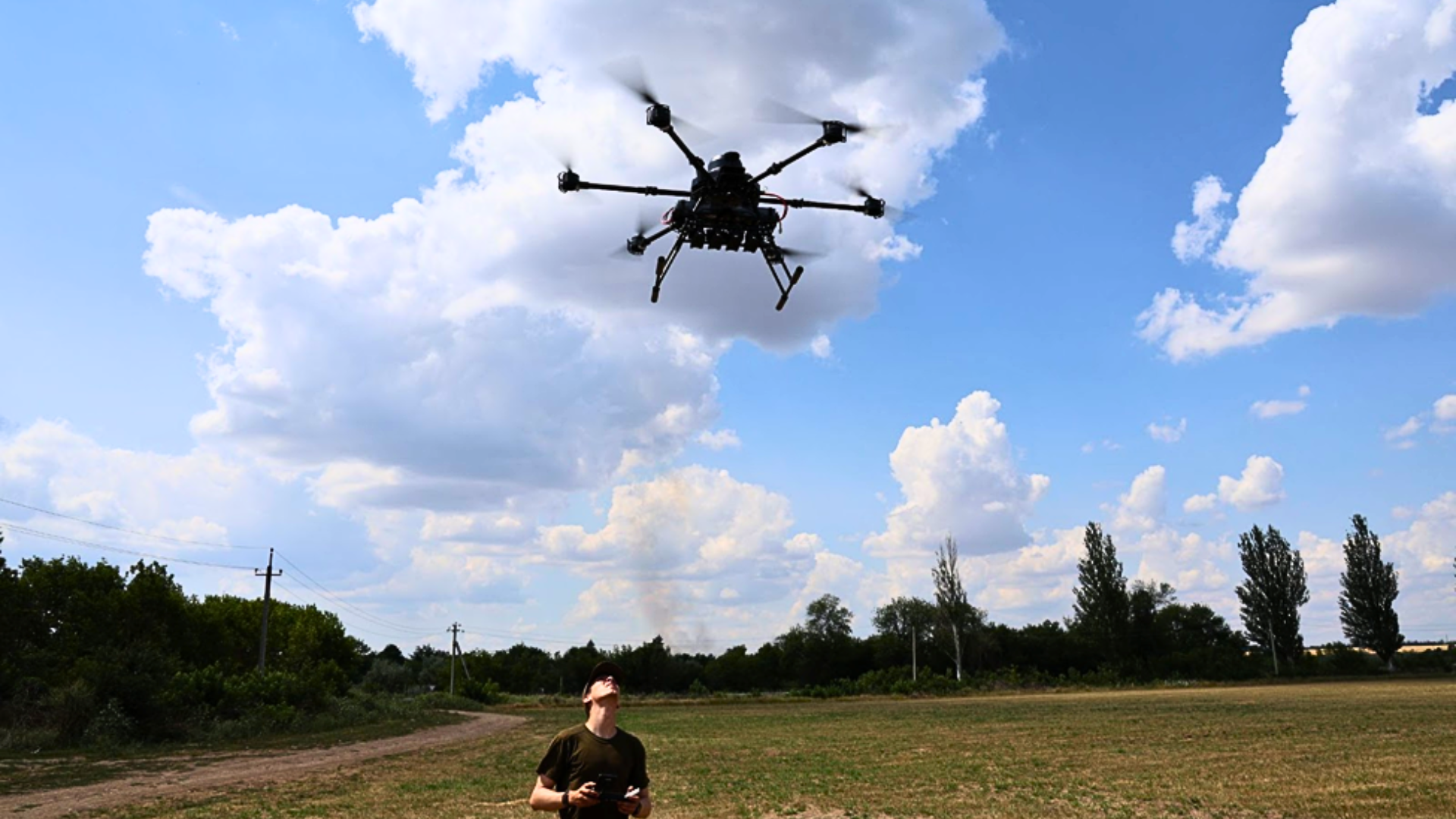
Vitalii, a drone pilot from the 23rd Mechanized Brigade flying a Vampire drone. Photo: David Kirichenko
“There have been indications that Russian drone units have been forbidden to make direct purchases without permission from above,” said Gardiner. In the meantime, Russian units have resorted to bizarre improvisations, including the “Vobla,” a jerry-rigged drone with four quadcopters connected to a single flight controller.
“Russia has made a lot of noise about developing a domestic drone industry, which of course has failed to deliver,” wrote Gardiner.
Ukraine’s drone innovation is also catching international attention. By contrast, Ukraine is positioning itself as a future defense hub for Europe. “Ukrainians are training NATO in Poland and the UK, and have consulted with the Pentagon about their innovative use of US equipment,” said Branislav Slantchev, a political science professor at UC San Diego. “Ukraine's defense industry will be massive as well. It was a critical hub in Soviet production and will now be part of Europe's.”
Valerii Zaluzhnyi, Ukraine’s former commander-in-chief said, “Europe needs Ukraine as a shield. We have the biggest army on the continent. We are the only one with an army that knows how to contain Russia.” Zaluzhnyi added, “The only one with an army that knows how to wage modern, high-tech warfare.”
The Race for Tech Supremacy
Yet Ukraine’s technological edge won’t always hold. Russia is catching up in key areas or even surpassing Ukraine, such as with fiber optic drones. Russian strike drones are now reaching the Kramatorsk–Dobropillia highway, over 30 km from the front, using fixed-wing “Molniya” UAVs or the smaller “Tyuvik” version of the Shahed. A Russian kamikaze drone was also reportedly using AI and machine learning to enhance targeting, scanning highways for military vehicles and recently adapting to evade interceptor drones.
Amid these developments, some Ukrainian experts express growing concern. Maria Berlinska, head of the Air Intelligence Support Center warned, “We are gradually reaching the point where the Russians will be able to launch 1,000+ Shahed strike UAVs per day.” Berlinska added, “Overall, by the end of May 2025, we are starting to fall further and further behind in the technological race. In a number of areas, parity still exists, but in general, the Russians are increasingly ahead.”
“We lasted for more than three years. But these solutions are increasingly being surpassed by systemic, monumental scientific projects of joint Russian-Iranian-Chinese engineering teams,” wrote Berlinska. Oleksandr Yakovenko, who leads one of Ukraine’s leading drone companies, warned that while Ukraine previously was two steps ahead of the Russians, now they’re only “one step ahead of them.”
That long-term threat is echoed by others. Tatarigami, A former Ukrainian officer and OSINT analyst wrote, “Barring severe economic collapse or major defeat, if Russia spends several years building and stockpiling equipment while leveraging Chinese industry and Western parts, its future military will be more modern and technologically advanced than during the 2022 invasion.”
About Author:
