


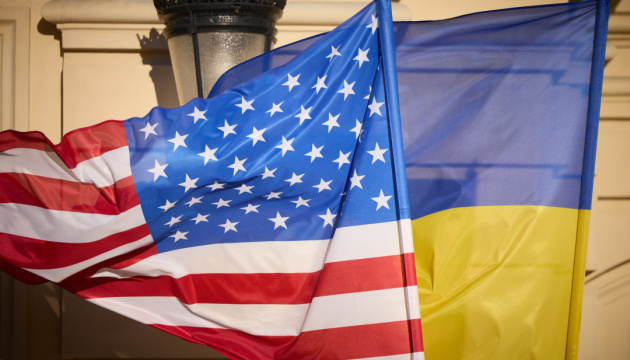
Negotiations between Trump and Putin to end the war in Ukraine, support for peacekeeping missions by the international community and the resumption of US military assistance to Kyiv have become key events in recent days. Despite efforts to resolve the conflict, Ukraine refuses to make territorial concessions, and the issue of sanctions against Russia remains on the agenda of the G7 summit. At the same time, the reduction of American funding has had a negative impact on humanitarian projects in Ukraine, which is particularly noticeable in the frontline regions.
Trump and Putin discuss conditions for ending the war
US President Donald Trump has announced a phone call with Russian President Vladimir Putin scheduled for Tuesday. The purpose of this conversation is to discuss the conditions for ending the war in Ukraine and the possible division of assets. Trump has expressed hope that a peace agreement can be reached, although Kyiv insists it will not officially cede territory to Russia.
International community ready for peacekeeping mission in Ukraine
More than 30 countries, including Britain and France, have agreed to provide peacekeepers to maintain stability in Ukraine. Canadian Prime Minister Justin Trudeau invited Ukrainian President Volodymyr Zelenskyy to the G7 summit, underscoring international support for Ukraine. The coalition, which includes Britain, France, Turkey, Canada, and Australia, is prepared to send up to 30,000 troops for peacekeeping.
Resumption of US military aid to Ukraine
After reaching an agreement on a 30-day ceasefire, the United States has resumed military aid and intelligence sharing with Kyiv. The move is aimed at supporting Ukraine under the temporary ceasefire and creating conditions for further negotiations.
G7 Foreign Ministers Summit in Canada: Support for Ukraine, Maritime Security, and an Unfriendly USA
During the G7 Foreign Ministers' Summit in Canada, the main topic was support for Ukraine. Ministers reaffirmed their commitment to Ukraine's sovereignty, discussed sanctions against Russia, and condemned military support for the aggressor from North Korea, Iran, and China. Much attention was also paid to global challenges, from the situation in the Middle East to the security of sea lanes. The main intrigue, however, was the controversy with the United States, particularly over statements by American officials about the possible annexation of Canada. These comments caused outrage among the G7 allies and deepened the rift between the United States and other countries.
UN Mission Explains How Reduced US Support Has Affected Projects in Ukraine
The United Nations Humanitarian Mission in Ukraine (UNMIK) has taking place a reduction in US financial support that is already having a negative impact on humanitarian projects in Ukraine. According to the UN mission, the US funding freeze has disrupted shelter repairs, reduced access to clean water and medical care, and left hundreds of thousands of Ukrainians without social and financial support. The frontline regions are particularly affected, where the lack of aid can be catastrophic.
The United States is withdrawing from the International Center for the Investigation of Russian Crimes against Ukraine.
Donald Trump’s administration has decided to withdraw the United States from the International Center for the Investigation of Russian Crimes against Ukraine, indicating that Washington is abandoning its efforts to bring Putin to justice. The U.S. Department of Justice has already informally notified its European partners of its withdrawal from this multinational group, and an official announcement is expected in the near future.
The center, created with the support of Eurojust, was designed to investigate crimes of aggression committed by Russia and its allies, Belarus, North Korea and Iran. The U.S. withdrawal from this initiative could weaken international efforts to prosecute the Kremlin leadership and undermine justice mechanisms aimed at punishing war crimes.
Author: Danylo Pievchev