


Europe’s diplomatic headaches are mounting by the day. Relations between the continent and the Trump administration increasingly resemble the chaos of a Facebook comment thread – chaotic, combative, and often devoid of decorum.
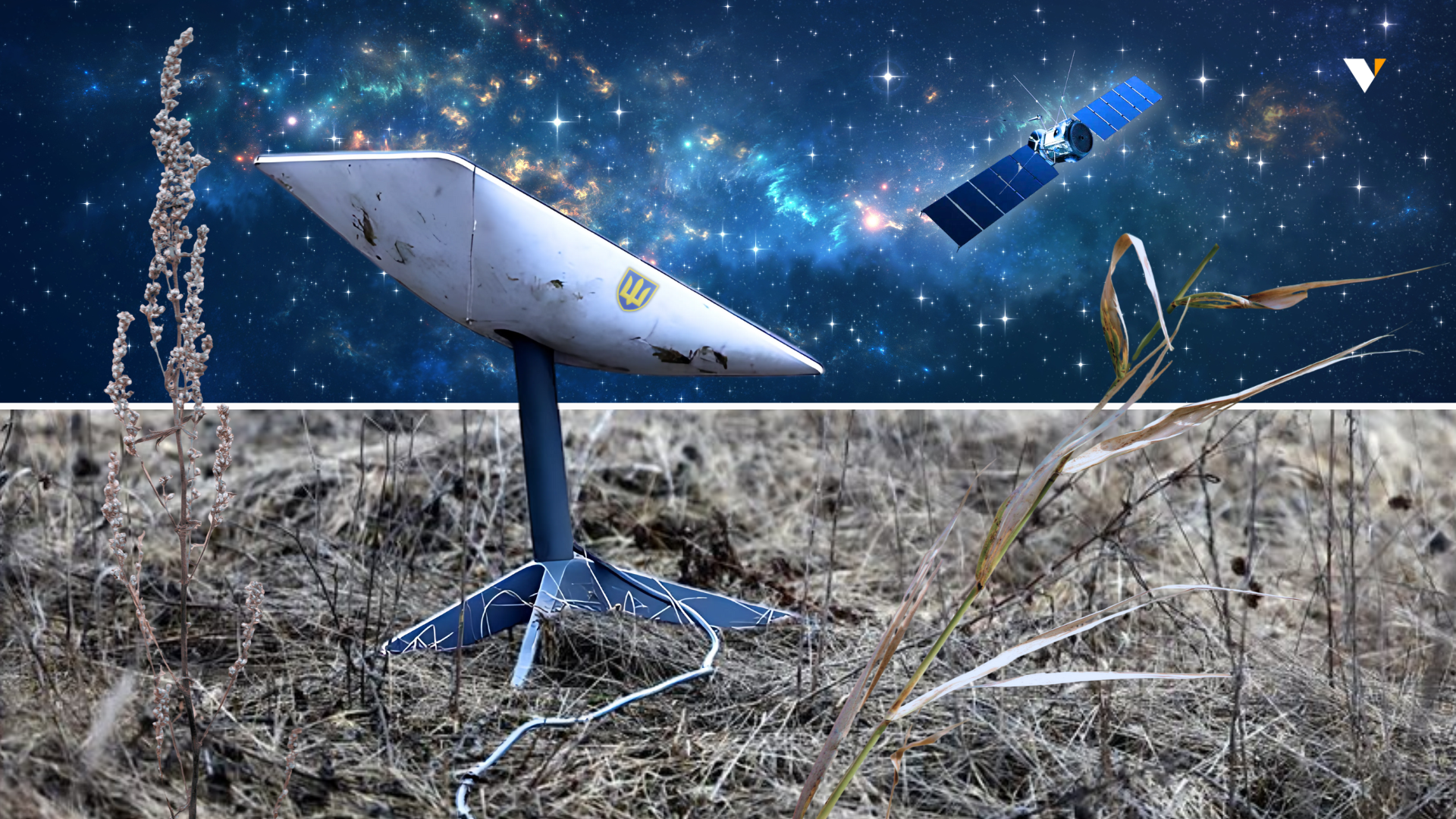
For weeks, speculation swirled that the Trump administration was considering using Starlink as a bargaining chip to pressure Kyiv. Elon Musk dismissed the claims, but the rumors refused to die, eventually drawing in Polish officials and escalating into a public spat.
The controversy erupted into a heated exchange on social media over the past weeks between Polish Foreign Minister Radosław Sikorski, U.S. Secretary of State Marco Rubio, and Musk himself. Sikorski warned that Poland would seek alternative providers if SpaceX proved unreliable, prompting a dismissive response from Rubio, who demanded that he "say thank you" for Starlink. Musk escalated the confrontation, mocking Sikorski as a “small man” and insisting there was no substitute for his satellite network.
This isn’t the first time Musk’s control over Starlink has raised alarms. He previously admitted to refusing to activate Starlink over occupied-Crimea to block a Ukrainian drone strike on Russia’s Black Sea fleet, claiming he wanted to avoid complicity in what he called a “major act of war.”
Concerns over Musk’s erratic influence have led Ukraine to seek backup options. Defense Minister Rustem Umerov confirmed that Kyiv is already sees backup satellite communication systems, though details remain undisclosed.
Meanwhile, Italy is already reconsidering a €1.5 billion deal with Elon Musk’s Starlink for military and government use, citing shifting U.S. commitments to European security, including Ukraine. Now, the Franco-British satellite operator Eutelsat may be a potential alternative to Starlink for Europe and Ukraine.
But replacing Starlink poses significant logistical and hurdles. OneWeb, which merged with Eutelsat in 2022, charges around $10,000 per terminal – far costlier than Starlink’s $600 per unit – making large-scale adoption prohibitively expensive.
Ukraine currently relies on roughly 40,000 Starlink terminals, while Eutelsat has only a few thousand in stock and would need to scale production rapidly to meet demand.
To understand the potential impact of losing Starlink, we turned to Ukrainian soldiers who rely on Starlink daily for their perspective.
Illia from the 13th National Guard Brigade (Khartiia) emphasized how important Starlink is to Ukrainian soldiers, stating that without internet access at frontline positions, operations would revert to early 2022 conditions, relying on radio communication for targeting, which would significantly slow down response times.
“There are so-called Wi-Fi guns that allow for maintaining a connection, but their speed is insufficient for live transmissions,” said Illia.
Illia also pointed out that the loss of Starlink would be disastrous if it happened unexpectedly, though he believes Ukraine’s leadership is preparing for such a scenario. He referenced reports that France is developing an alternative system and planning to provide 10,000 terminals to Ukraine.
"Starlink terminals and radios are what we rely on," said Mario from the 23rd Mechanized Brigade. "We use LTE connectivity as well, but only where cell towers exist, we even fly drones over LTE sometimes. Starlink is absolutely critical, and replacing it quickly would be impossible. All live drone video feeds depend on it."
"There are other communication options, like military-grade LTE (4G) networks, satellite terminals from other manufacturers, Two way satellite communication, and state-encrypted systems," said Yuriy. "But they’re not as widely available."
"If we lost Starlink, transitioning to alternatives would take weeks," said Yuriy. "That delay would seriously impact combat effectiveness."
"All alternatives to Starlink are far less common and significantly more expensive," said Mario. "That’s why they are rarely used."
Without Starlink, Ukrainian forces would be forced to rely on radios and retransmitters, a significant downgrade, says Dmytro, from the 413th Separate Battalion of Unmanned Systems. “With standard radio signals (like Motorola devices), we can’t stream 4K video like we do with Starlink.” He explained that while radio communications remain a backup plan, they are far less effective in modern warfare.
“There are radio systems like Silvus that provide a stable video signal for high-quality drone streaming, but Starlink is the backbone. We don’t go on missions without it. A drone flight without live-streaming to command posts and allied units is useless,” he emphasized.
Some Ukrainian units have turned to other options where Starlink is unavailable. “Datagroup provides an alternative, and most units in the Kursk region use it since Starlink doesn’t work there. However, speeds are much lower, and scaling this solution across all defense forces is impossible due to production limits,” he said.
Another option is two-way antennas, but they require extensive setup and are vulnerable to Russian attacks. “You run fiber-optic cable to a village 30 km from the front, mount an antenna on a tower, and set up a receiver 5 km from the frontline to pull internet. It works, but installation is a hassle, and Russians often destroy antennas. Plus, the terrain must allow for a clear radio horizon,” Dmytro noted. “We’ve been using these setups for a while, and any communications specialist here knows they’re a necessary part of the job. But they are much harder to deploy under fire.”
If Starlink were suddenly shut down, the consequences would be serious. “There’d be months of disorganization as units transition to backup channels and reestablish coordination. How bad it gets depends on how proactive each unit’s communications officer is. Front-line breaches are possible, but it wouldn’t be an immediate disaster,” he said.
Another key challenge is whether alternative providers can handle the scale of Ukraine’s demand. “Starlink has an overwhelming number of satellites at very low altitudes, which means they frequently lose and replace them. Their customer base in Ukraine is much larger than anywhere else. We push hundreds of terabytes through a single Starlink terminal every month. In 2022, speeds were 150 Mbps—now we’re lucky to get 30 Mbps,” Dmytro explained.
But there’s another issue: cost. “Right now, soldiers pay for Starlink themselves. I haven’t seen a single unit where the government covers it. We pool money from our crew and pay $100 per month for the service. Starlink was provided to us by volunteers,” he said. “If Eutelsat is going to replace Starlink, what will the pricing be? Will NGOs be able to buy it for us? Will pricing change depending on how much bandwidth we use? These are all unanswered questions.”
While the ideal solution would be a European alternative free from U.S. political influence, Dmytro sees no reason to abandon Starlink if it continues to work. “If it ain’t broke, don’t fix it,” he concluded.
Author: David Kirichenko