


Children continue to be caught in the middle of Russia's war of aggression against the Ukrainian people. "It is wrong and dangerous to keep silent about the fact that it is Russia that is killing children with ballistic missiles," announced Ukrainian President Volodymyr Zelensky. This grim reality is tragically illustrated by recent attacks against Ukrainian civilians and children.
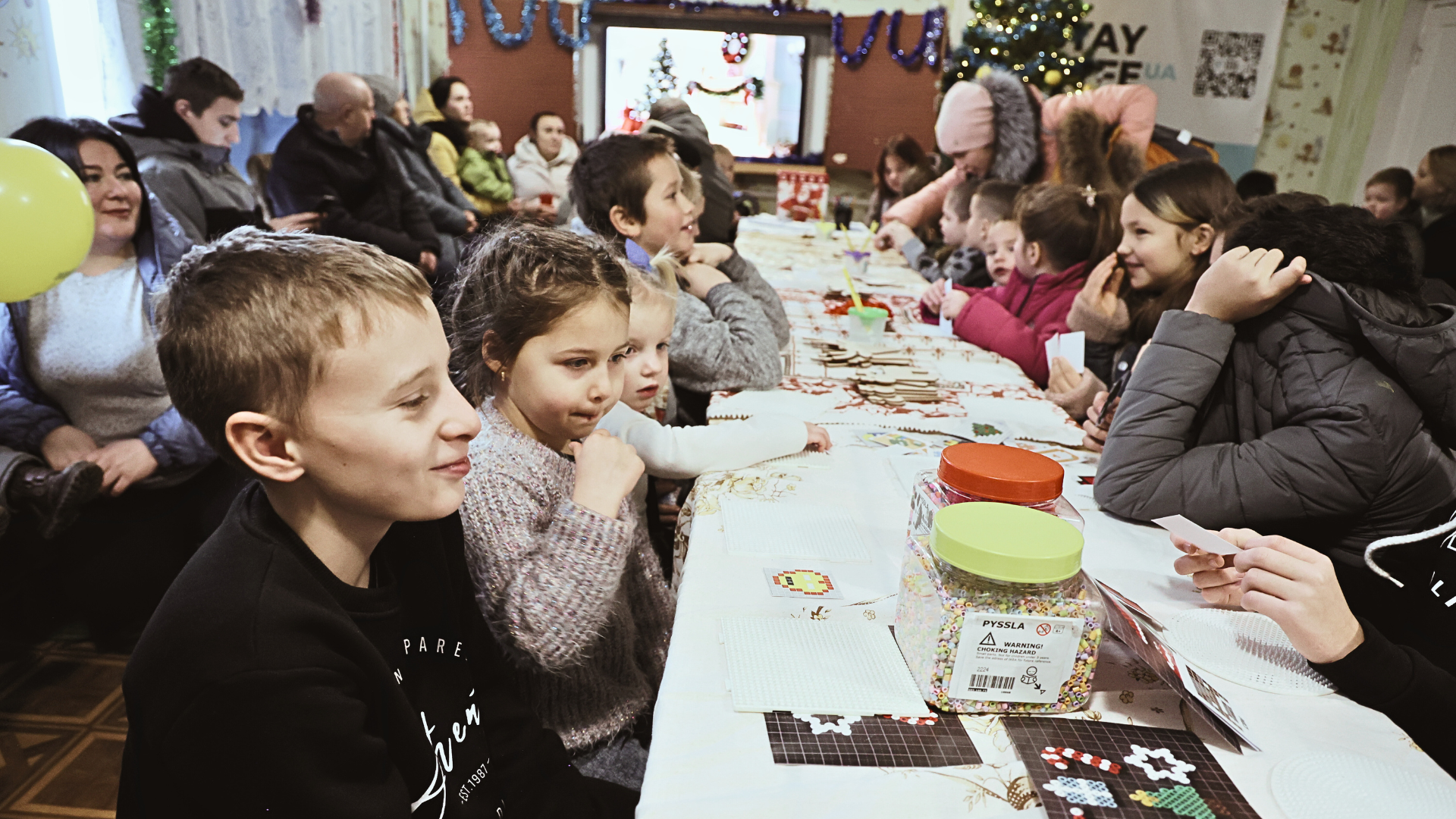
Families attend an event hosted by humanitarian aid organizations Dobra Spava and Love UA at a former community center in the city of Druzhkivka, Donetsk Oblast. Photo: David Kirichenko
Twelve people were killed and 90 civilians – including six children – were injured in a large-scale Russian missile and drone strike on Kyiv on April 24. The attack came just weeks after a devastating April 4 strike on the city of Kryvyi Rih where a Russian cluster-armed Iskander-M ballistic missile hit the city of Kryvyi Rih killing 18 people, including nine children, and wounded over 40 others. One of the youngest victims was just three months old.
The strike echoed the July 2024 attack on Kyiv’s Okhmatdyt children’s hospital, which was packed with young cancer patients and is known as a lifeline for some of the sickest children in Ukraine.
Ihor, known by his callsign “Rogue,” a drone pilot from the 23rd Mechanized Brigade, believes Russia is deliberately targeting children and families with missile strikes. “They are engaging in plain terrorism,” he said. “Since they were forbidden from striking energy infrastructure, they’re targeting civilians and children instead to create internal pressure on the president.”
“When the conditions for peace become unacceptable,” Ihor added, “mothers and civilians will begin, out of fear, to pressure the president to agree, even to those terms.”
Peter Gelpi, an American volunteer who has supported humanitarian operations in Ukraine since 2022, said he has been deliberately targeted by Russian forces multiple times. “I have been targeted at least three times by the Russians: direct small arms fire, shelling and a drone,” he said. “Each time I was driving a vehicle that was plainly marked as ‘humanitarian,’ ‘evacuation,’ and ‘volunteer.’”
He added: “I have also seen hundreds of civilian homes, churches, schools, community centers and medical facilities hit by ordinance where no soldiers or military presence was anywhere near. These can’t possibly be mistakes.”
“As every one has been an extremely accurate strike without any evidence of multiple strikes and bracketing characteristic of poor fire control or observation, weapons handling or weapon accuracy. These strikes were clearly deliberate,” said Gelpi. According to the United Nations, Russian strikes killed 151 people and injured 697 others in Ukraine between April 1 and April 24. This is a 46% increase in civilian casualties compared to the same period in 2024.
Ruslan, callsign “Mj.Pain,” a platoon commander in the unmanned systems battalion of the 23rd Separate Mechanized Brigade, said that from the outset of the war, “Russia has systematically targeted civilians. Hospitals, residential buildings, and shopping centers are struck, yet Russian media claims they’re hitting military facilities.” He added, “What can I say? It's a failed state devoid of any moral values.”
Historical Parallels
Russia doesn’t just target children with missile strikes. But they are also actively kidnapping children. Russia has taken more than 19,000 children from Ukraine, deporting them to Russia. Some have even described Russia’s actions of kidnapping Ukrainian children as genocide. The Trump administration also recently suspended funding for Yale University's project documenting Russia's abduction of Ukrainian children.
According to the Children of War website, 744,000 children have been deported based on open source data released by the Russian Federation (likely including those taken since 2014).
This pattern of targeting the youngest and most vulnerable echoes a darker chapter of Ukrainian history. Kristina Hook, an Assistant Professor at Kennesaw State University, pointed out that since beginning her research in 2015, Ukrainian leaders have warned her of parallels between Stalin’s famine and Putin’s violent campaign to crush Ukraine’s autonomy.
Despite the Soviet collapse, modern Russian leaders have continued to deny the Holodomor’s intent and Ukrainian-specific targeting. Hook contends that this historical denial has now evolved into a broader attempt to erase Ukrainian identity through war.
During the 1932–1933 Holodomor (death by hunger), children were among the most vulnerable and targeted victims of the Soviet-engineered famine in Ukraine. The Soviet government starved millions of Ukrainians to death. Despite their parents’ desperate efforts to protect them, millions of children starved, with historians estimating between 1.5 to 4 million child deaths.

Taken in Kharkiv in 1933, this photograph is from the Innitzer Collection. It shows a female child who died of hunger lying on the steps of a street in Kharkiv. Photo: Музей Голодомору
Those who survived often grew up in orphanages that functioned as death camps, and many remain unrecognized as official victims. “The Holodomor has played a pivotal historical role in Russia's ongoing war against Ukraine. Beyond the battlefield, this war has been, in many ways, about the fight for historical narratives,” said John Vsetecka, Assistant Professor of History at Nova Southeastern University.
Natalia Kuzovova, Head of the Department of History, Archeology and Teaching Methods at Kherson State University, reflected on the generational efforts of Russia to kill Ukrainians stating, “We talk about children who will grow up. Yet hundreds of Ukrainian children will never reach adulthood because they were killed by Russia.”
She drew parallels with the Holodomor, when the status of children in society differed significantly from today. At that time, the family structure was patriarchal, survival hinged on a man’s physical labor, and society was not child-centered. Family relations extended beyond the modern concept of a nuclear family, and during dekulakization and the Holodomor, entire "households" were subjected to repression.
“Even very young children were labeled enemies of the Soviet state and deported with their families, many dying en route or becoming orphans,” said Kuzovova. Teenagers were arrested for failing to meet grain quotas and starved to death in prisons and penal colonies. Children whose parents had been arrested were often left on the streets without care, and those placed in shelters perished due to a lack of food. “It is believed,” Kuzovova noted, “that the most numerous victims of the Holodomor were children under the age of four, due to their mothers’ loss of lactation and the absence of age-appropriate food.”
War’s Psychological Toll on Children
Today, the psychological toll on Ukraine’s children remains immense. Yuliia Matvievieva, VP of Medical and Veteran Affairs at Volia Fund, recently returned from conducting medical work in Ukraine and highlighted the growing psychological toll the war is taking on the country’s youth. “There are multiple reports published that highlight the increase in anxiety, sleep disorders, depression, and PTSD symptoms among Ukrainian children since the beginning of the full-scale invasion,” she said.
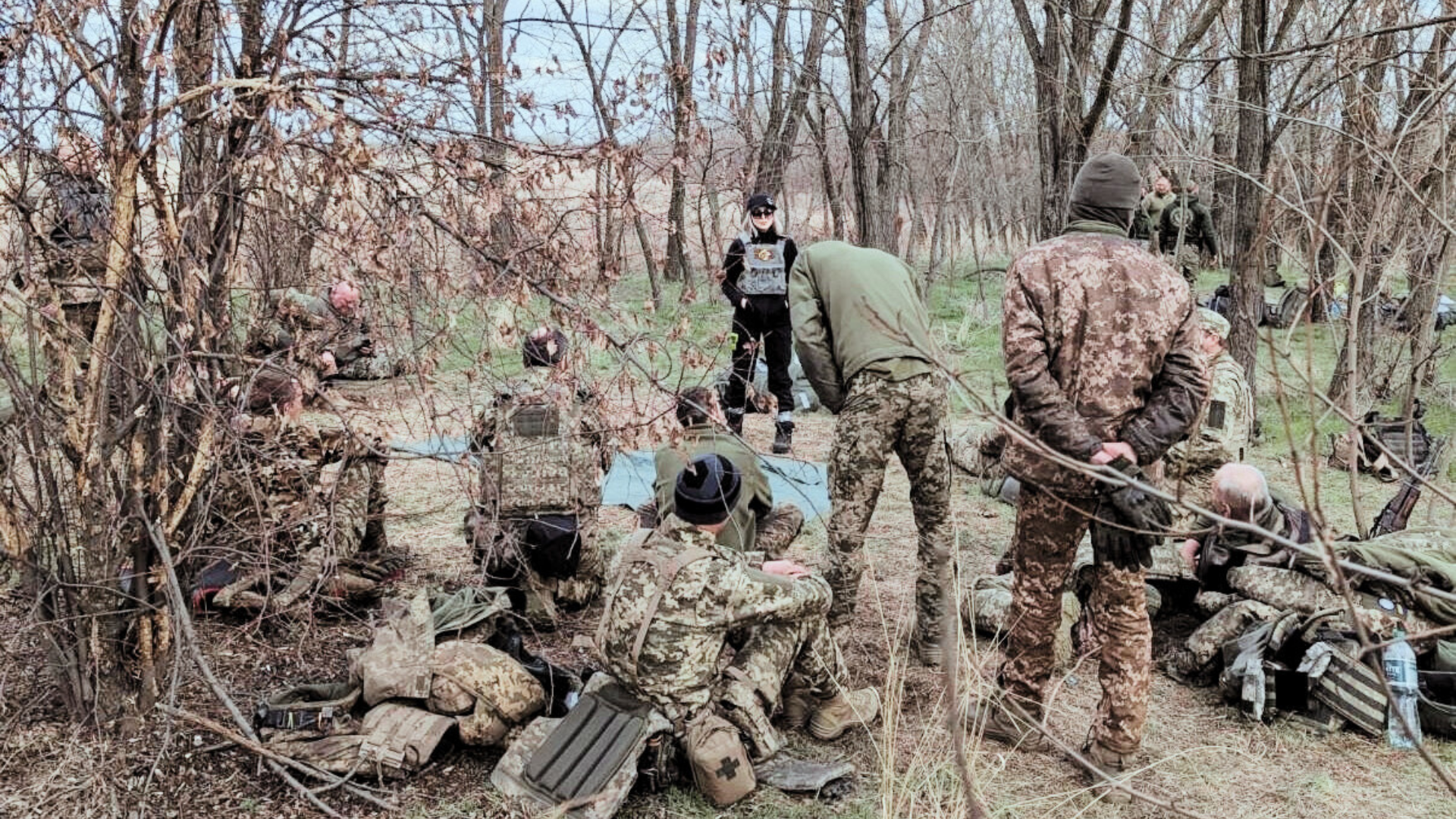
Yuliia facilitating a training on psychological first aid for Ukrainian defenders in the Donetsk region. Photo: Yuliia Matvievieva.
“Some factors that contribute to the worsening of children’s mental health include displacement, losing contact with their friends and families, exposure to violence, constant life threats, and ongoing stress experienced by caregivers,” said Matvievieva. “When parents or caregivers are constantly overwhelmed and emotionally unavailable, it takes a toll on a child’s mental health.”
The challenges of displacement have compounded these hardships. Lina Ngo, a Ukrainian refugee of Vietnamese descent and Secretary to the Board of Ukraine Defense Support said, “Every Ukrainian has a story to tell from the past three years, almost every Ukrainian knew someone who died in this war.”
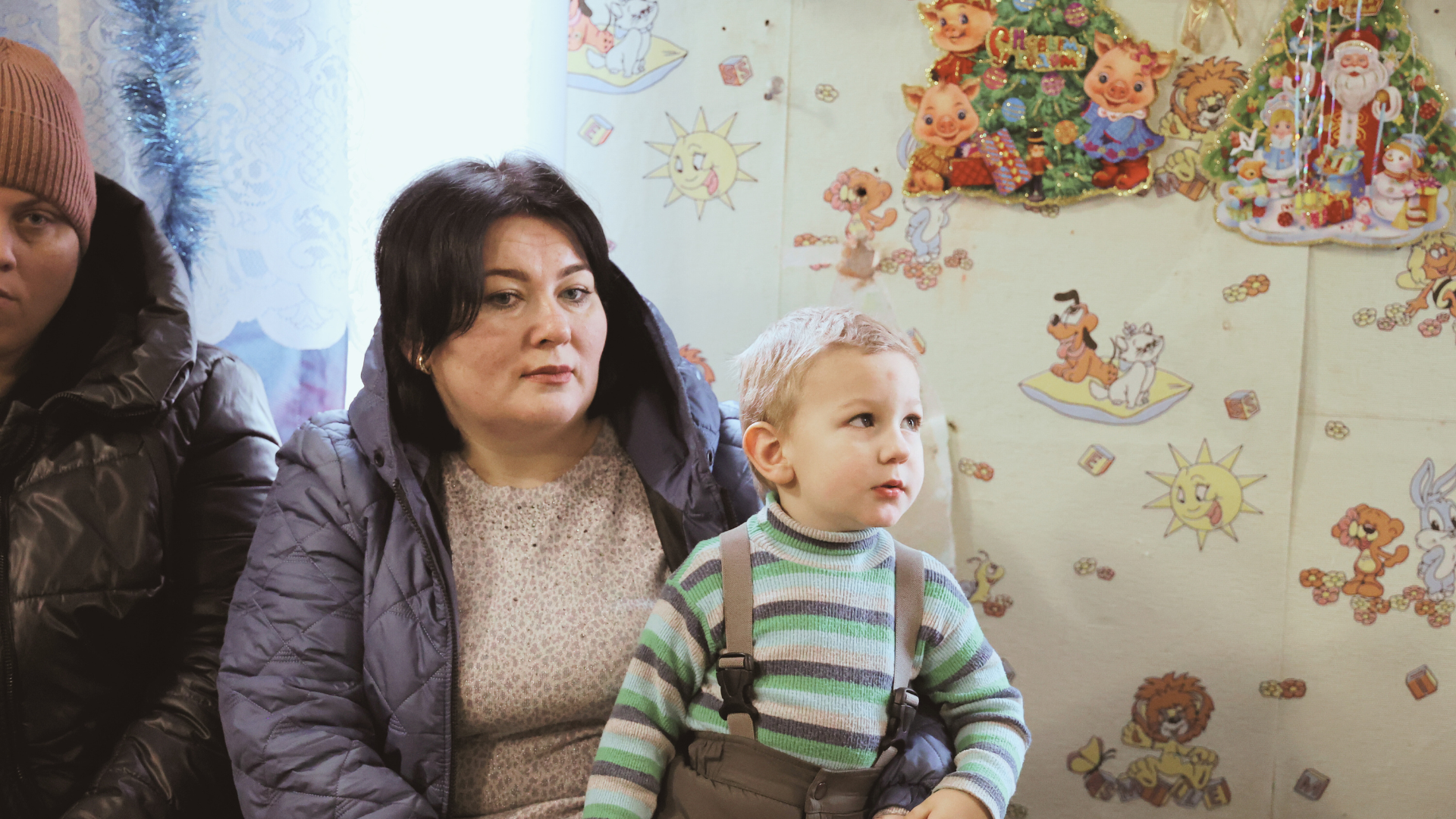
A mother holding her son at a shelter in the Donetsk region of Ukraine. Photo: David Kirichenko
She continued, “The Ukrainian government supports internally displaced people (IDP), financial support, and housing. But resources are limited and financial assistance doesn't guarantee full assimilation, many return back to occupied territories because they can't adapt to the new life. They can't find new jobs, find their community, they face prejudice.”
Ngo added, “The Ukrainian government is not fully at fault here, it's just human nature. Change is hard, not everyone can adjust to forced displacement, whether it's in Ukraine or abroad. I know many refugees, including my family members, who came back to Ukraine after fleeing the country, despite the danger. They told me they feel safer at their real home.”
Alina Holovko, from Dnipro, Ukraine, is the lead coordinator of Dobra Sprava, an organization that brings aid to civilians on the frontline and evacuates refugees. “The war has turned every child’s life upside down,” she said. “They’re forced to socialize in new circumstances, adapt to remote learning, and face constant changes in their circle of communication.”

Alina in Donetsk Oblast assisting with the delivery of humanitarian supplies. Photo: David Kirichenko
“The information space is filled with videos of people killed and injured by Russian attacks. Children are often the ones who die during these attacks.”
According to Holovko, the psychological toll on Ukraine’s youngest citizens is severe. “All of this has an extremely negative impact on children’s mental health – chronic stress, fear of death, emotional and psychological overload.”
“Several times a day, and several times at night, because of air raid alerts, families with children are forced to hide in shelters: basements, bomb shelters, parking garages.”

Alina Holovko (left) at the entrance sign of Donetsk Oblast. Photo: David Kirichenko
“In response to the explosions and constant tension, children retreat into the virtual world of the internet,” she said.
Holovko also emphasized the need for structural solutions to support children’s well-being and education. “Because of the war, educational institutions must be equipped with underground bomb shelters. Ukrainian children need a safe space to socialize and learn such as doing group activities and development programs,” she said. “In-person schooling would solve many psychological issues.”
Sophia Yushchenko, a Master’s student at Stanford University and co-founder of Code for Ukraine said, “Children will bear life-long consequences due to Russia's invasion. First, we have the children who are in free or liberated territories. Beyond the direct killing or injury of at least 2,520 (this number is from a few months ago, not sure if there is more recent data) children in Ukraine, the war has disrupted their education, shattered their sense of security and safety, and altered family dynamics, as many have lost family members or have parents fighting on the front lines.”
“Second,” Yushchenko continued, “there are millions of Ukrainian children living abroad who have to study online, and with each passing day are less likely to return. Third, we have the children in occupied territories and those who have been taken through reeducation camps and illegally adopted by Russians. While the UN is hesitant to recognize these actions as genocide, the Genocide Convention clearly states that ‘Forcibly transferring children of the group to another group’ is defined as an act of genocide.”
She added that the targeting of children and families appears to be a deliberate strategy by Russia to terrorize the population and undermine Ukraine's future by traumatizing its youngest generation. “When the Russians invade a city, along with soldiers and tanks they bring truckloads of textbooks for schools and libraries, and burn all history, literature and other books that write of Ukraine as a separate nation. They rob and destroy museums and eliminate Ukrainian churches these children attended.”
“They replace this with a militaristic ideology,” Yushchenko said, “hoping to raise a generation of pro-Russia, anti-Ukrainian and anti-Western warriors.” Since 2014, Russia has run a systematic campaign of “patriotic education” in occupied parts of Ukraine, using schools, camps, and youth organizations to instill militaristic ideology in children. Following the full-scale invasion, Russia has accelerated its efforts to indoctrinate children in occupied parts of Ukraine, promoting loyalty to Moscow and the militarization of the children through groups such as the youth organization Yunarmia.
How Americans Are Helping Ukrainian Youth
In response to these deep traumas, some Americans have stepped up to support Ukrainian children across the Atlantic.
KidsKonnectUkraine is a nonprofit initiative that builds digital bridges between Ukrainian and American youth through storytelling, cultural exchange, and student-led media projects. It was launched in late 2022 “as an attempt to help Ukrainian teens and tweens just get their heads out of war and simply be kids,” said Kathleen Hessert, Founder and Director of KidsKonnectUkraine.
“We identify schools and clubs in various U.S. communities that may or may not have a previous connection with Ukraine and/or are dedicated to learning about other people and nations around the world,” Hessert explained. “They have included global studies classes, conferences, Journalism programs, Model UN clubs, and schools affiliated with local World Affairs Councils.”
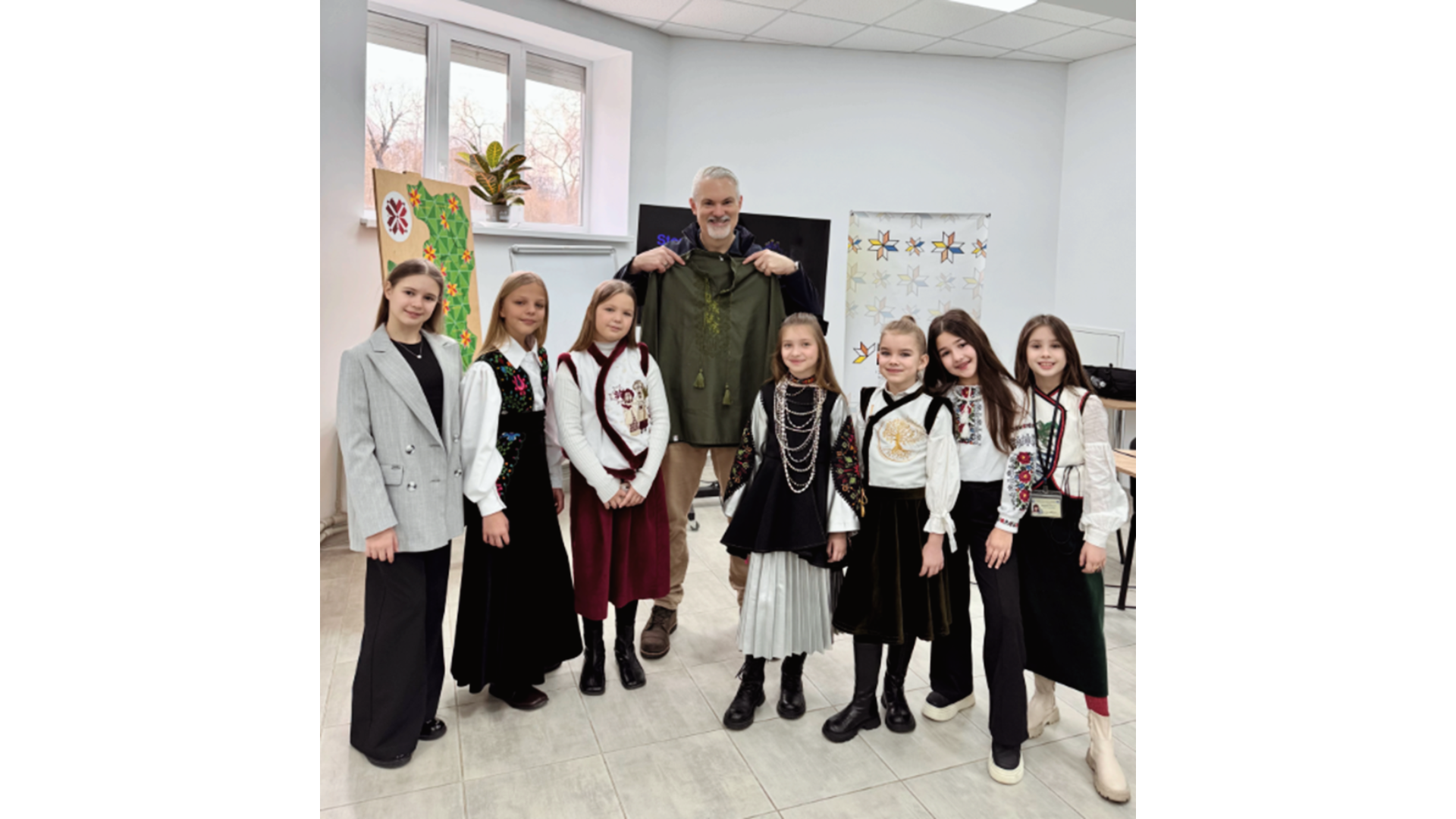
Mick Reed, Executive Producer of KKU after leading a mobile journalism workshop in the heart of Ukraine. Photo: Taylor Thigpen
In Ukraine, KidsKonnectUkraine launched as the youth affiliate of the NGO MoveUkraine.org, which builds housing for internally displaced persons, rehabilitation facilities, and community centers. “The founders work with local governments that request youth programming for their communities,” she said.
“We also have formal arrangements with Ukrainian Catholic University’s Journalism and Communication Department and with multiple departments within the University of Notre Dame, including the Nanovic Institute,” Hessert added.
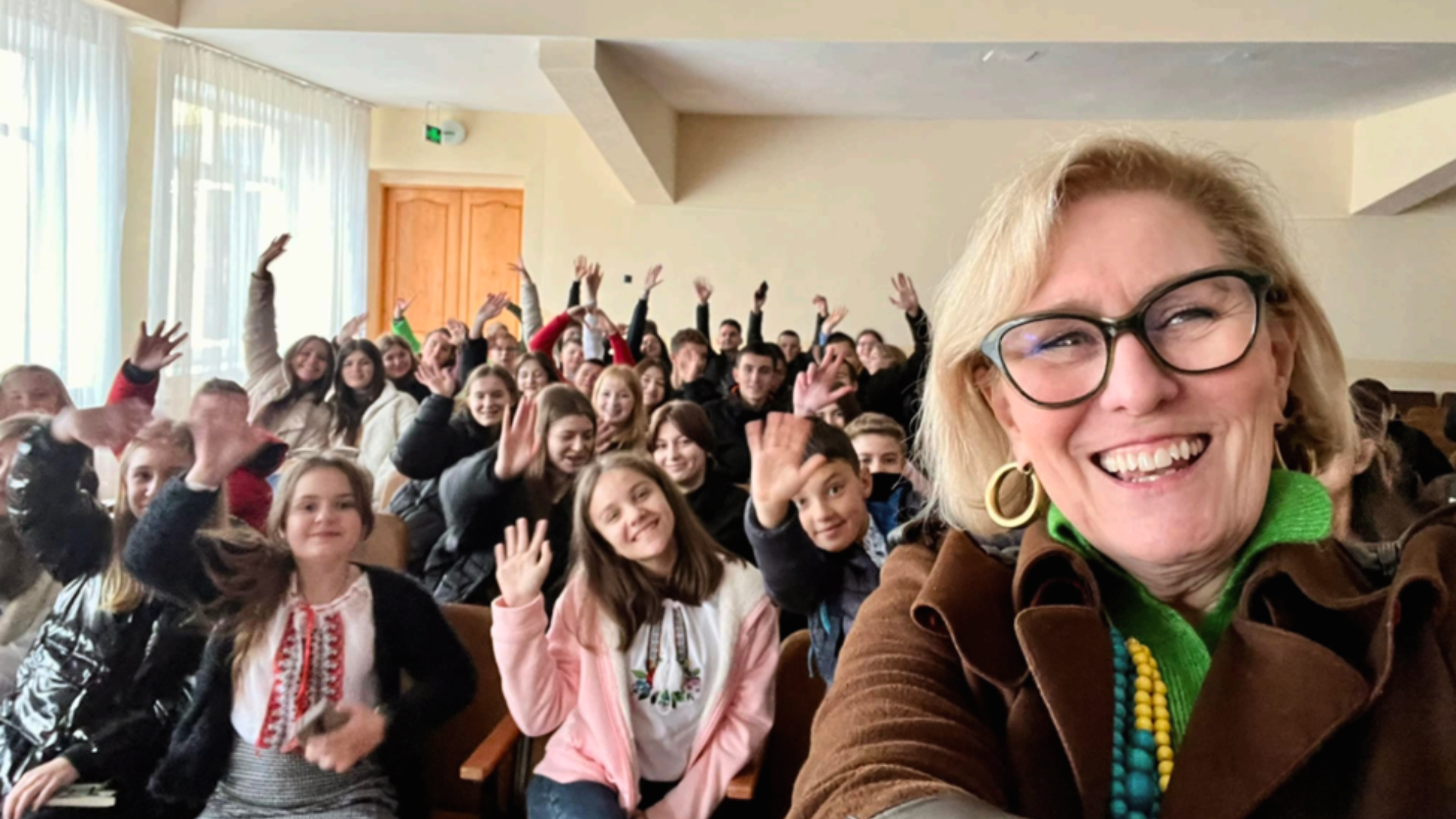
KidsKonnectUkraine President Kathleen Hessert takes a selfie with Ukrainian youth in the program. Photo: Taylor Thigpen
“The youth of Ukraine are incredibly proud to be Ukrainian, are traumatized in more ways than imagined, live in and out of bomb shelters, are afraid that their disrupted education has been jeopardized by the war and may force them to leave their country if they're to have a future,” she said.
She also noted the challenges of displacement: “It's as difficult to incorporate IDPs into a community as it is for IDPs to be incorporated. All kids either have family members or people they know and love who have or are fighting, or have been killed or injured. Many are IDPs themselves, and those who aren't have had to learn to accept them in their communities and schools, friend groups, which can be difficult in itself.”
“Many of the IDPs are culturally different and even speak different languages, have moved multiple times and even lost everything,” Hessert added. “Some of our students have become refugees and returned to Ukraine. Others have been forced to leave with their families to live in foreign countries where they know no one, don't speak the language, know the culture or eat the local food. Some have no homes and continue to live in shelters or social housing.”
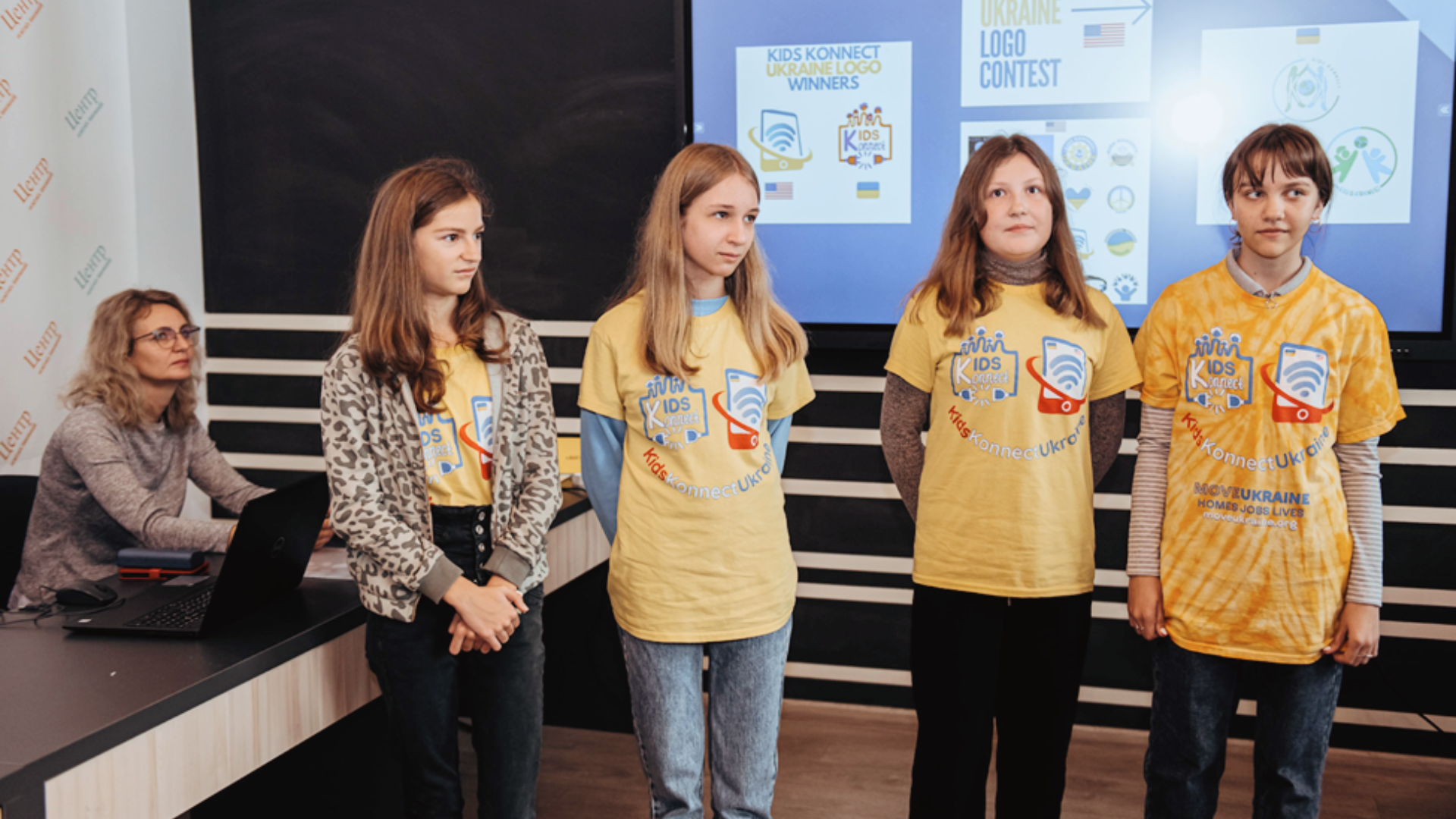
Students from the KidsKonnectUkraine Program. Photo: Taylor Thigpen
She shared an early moment that captured the essence of cross-cultural connection. “At the very first Zoom meet-up to launch a graphic design contest for the official KKU logo, high school students from Charlotte, NC knew nothing substantial about Ukraine and asked the first question of the Ukrainian teens on the Zoom: ‘Do you have fast food in Ukraine?’ The kids in Ukraine laughed and said, ‘We're not a developing nation.’”
“But by the end of the candid and widespread conversation,” Hessert said, “the Americans said, ‘They’re more like us than we imagined. We couldn’t even pick them off the street.’ The Ukrainians were thrilled that they could have detailed conversations with native English speakers and everyone understood each other.”
Taylor Thigpen, Project Director at KidsKonnectUkraine, described how the program offers a sense of connection, healing, and discovery. “Through KidsKonnectUkraine, American and Ukrainian youth have engaged in meaningful cross-cultural exchanges that foster empathy, resilience, and global awareness,” he said.
American students, he noted, have gained powerful insights from their Ukrainian peers, learning about resilience in the face of crisis, the realities of war, and the importance of global solidarity. “These interactions have broadened their perspectives, instilled a greater sense of gratitude for peace and stability, and introduced them to the rich cultural heritage of Ukraine.”
For Ukrainian youth, the program offers both hope and healing. “They’ve felt supported and seen, using creative outlets like storytelling, art, and podcasting to express their experiences and emotions,” Thigpen said.
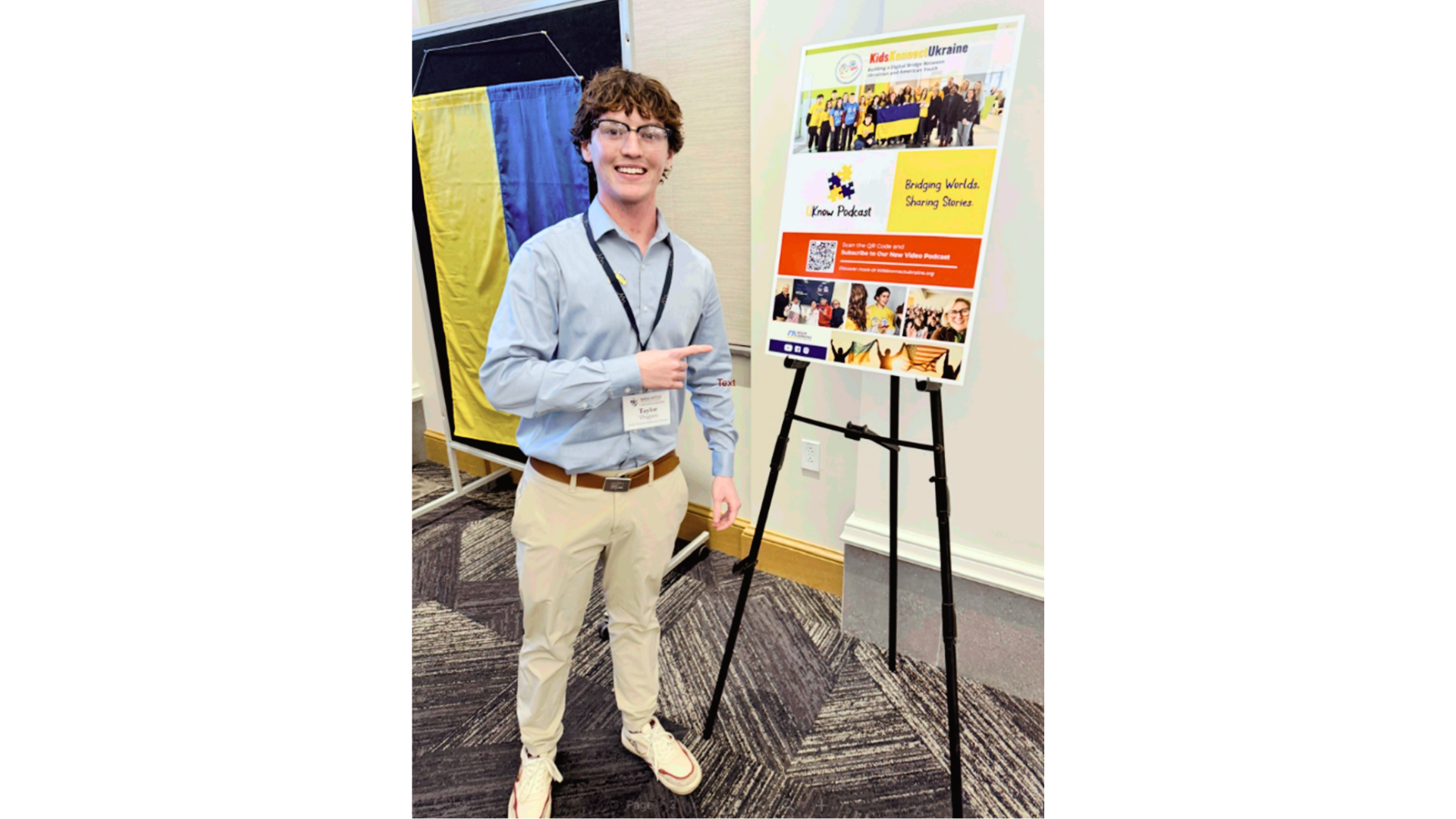
Taylor Thigpen presenting at Notre Dame, Indiana Ukrainian conference. Photo: Taylor Thigpen
These exchanges have helped them process trauma while encouraging future-minded thinking and the ability to envision life beyond conflict. He emphasized that the program goes beyond war stories: students bond over music, slang, food, and TikTok challenges, sharing laughter and everyday life. “It is not just about war,” Thigpen added. “Students love discussing their families and what they do for fun.”
For many participants, these connections leave a lasting mark. “It’s a life-changing experience for them,” said Tetiana Duplei, a Ukrainian teacher from Kalush.
If you would like to get involved with KidsKonnectUkraine, please visit their website for more information.
About Author:
