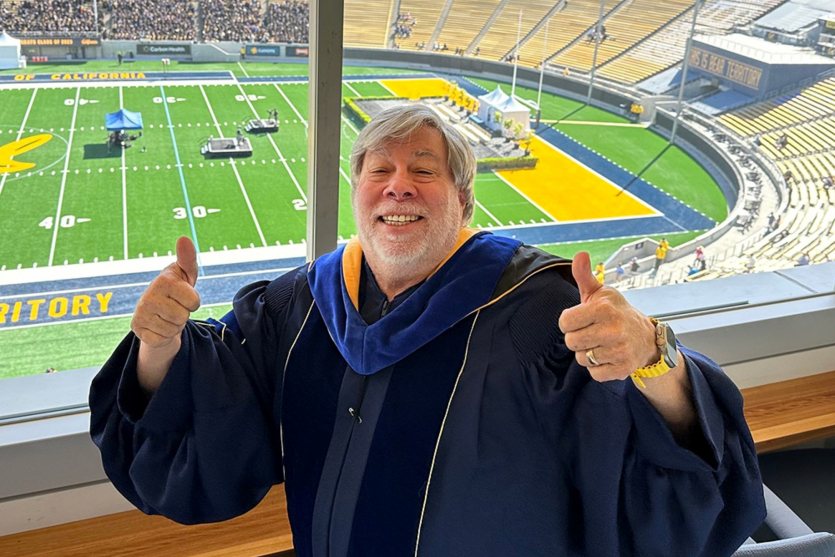
I am confident that most people on planet Earth have a clear idea of who Steve Jobs is — and there is a natural, technological explanation for that. At the same time, many people in different countries know Steve Wozniak, have heard about him, read about him, watched or listened to his speeches as a speaker and mentor. After all, he is the co-creator of Apple Inc., one of the most famous American technology companies of our time. Surprisingly, their professional story is very similar to that of Pierre de Coubertin — the educator, humanist, and sports enthusiast — and his associates in reviving the modern Olympic movement. Millions around the world know Coubertin, but sadly, only a few know his friends and partners.
Our story is not about Steve Jobs or Pierre de Coubertin, but about Steve Jobs’ partner and friend — Steve Wozniak. That will be one story. The second story will also be about Steve Wozniak, but not as the co-founder of Apple Inc. What connects them are three interesting elements: first, the same name and surname; second, sports; and third, Ukrainian roots.

Steve Wozniak — Co-founder of Apple Inc.
Steven Gary Wozniak was born on August 11, 1950, in San Jose, USA. Speaking about his Ukrainian roots, he once said: “Many people ask me: ‘Steve, are you Polish?’ Because my last name is Wozniak. I answer: ‘No, I am Ukrainian.’ All my life I wanted to visit Ukraine, and now my dream has come true.” He said this in 2017 when he visited Ukraine and participated in the Olerom Forum One business forum. Believe it or not, this forum took place at the Palace of Sports in Kyiv. Symbolic, isn’t it? A small detail, but quite notable when speaking about Steve Wozniak and sports.
Although Steve was not particularly passionate about sports — in other words, he was not a big fan — physical activity still played an important role in his life. It is known that during his school years, he was involved in running and baseball. This is not surprising, as these sports are very popular in the United States. There is a particular feature in American society: even if you do not become a professional athlete, your life will inevitably be connected to sports — at school, college, or university. The expectation of being well-rounded is a defining and widely embraced value. So, even if Steve did not see himself pursuing sports professionally, maintaining health, status, and physical fitness was always important.
In fact, this life philosophy likely led to his passion for Segway polo starting in the mid-2000s. What began as curiosity turned into enthusiasm, and eventually he became one of the most dedicated supporters of this new sport. Here is how Steve creatively described his passion for Segways: “I take it almost everywhere I travel. Although I don’t often take it on airplanes. Sometimes I ship it by mail. Once I shipped it from California to San Antonio for just $25. I rented one in Prague. But now, whenever I travel, I drive if it’s less than 12 hours. I go, and then I have my Segways with me.”
This means that already in his mature years, his main sporting activity became the promotion of Segway polo. And here, as we can see, Steve’s technological talent truly revealed itself. Somehow, he managed to combine cutting-edge technology with sport. This is genuinely unique — to find a connection between sport and a two-wheeled electric vehicle that also resembles equestrian polo is remarkable.
The modern world is marked by many fascinating phenomena. Modern sport is also highly dynamic and constantly evolving. Against this background, new sports naturally emerge. One such example is Segway polo, which Steve Wozniak came to greatly enjoy. Readers will likely be interested in learning more about this relatively new and increasingly popular sport — I certainly am. According to media reports, Segway polo originated in the early 2000s. In particular, some of the earliest matches were played in 2003 and 2004. This is worth verifying, as something similar may have existed earlier. However, these years coincide with the period when Steve became interested in the sport. According to the International Segway Polo Association: “Segway polo is a relatively new and exciting team sport that originated in the United States in 2003, when a version of the modern game was first played during halftime at a Minnesota Vikings show, supported by Mobile Entertainment. However, the sport gained greater popularity starting in 2004, when members of the Bay Area Segway Enthusiasts Group began playing it more regularly and further developed it by attracting teams.”
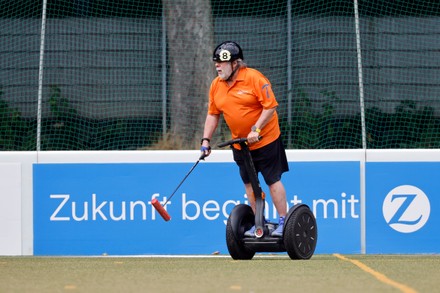
A few words should also be said about the rules of the game, as without them it is difficult to understand the essence of the sport. Segway polo is very similar to equestrian polo and bicycle polo, from which its rules were adapted. The basic rules are as follows: two teams of five players each hit a ball with mallets, trying to score into the opposing team’s goal. The standard field size is 200 by 128 feet (61 by 39 meters), and the goal measures 8 feet (2.4 meters) wide and 5 feet (1.5 meters) high. A standard match consists of four 8-minute quarters, known in polo as “chukkers.” The ball may be struck with a mallet or with any part of the player’s body or the Segway, but only the mallet may direct the shot toward the goal. A goal cannot be intentionally scored with the body or Segway. Steve himself described the process of developing the rules as follows: “We started by trying to mimic the rules of horse polo and bicycle polo. Gradually, we discovered what worked and what didn’t — and what could be exploited by unscrupulous players like me. For example, we had to determine the appropriate goal size. We set height limits, like in soccer… We don’t look as professional as soccer, but soccer has been around for a long time.”
At first glance, everything seems both simple and complex — which is natural for any innovation in society. I assume something similar happened with Apple Inc. in its early days. Today, Segway polo is gaining popularity in countries such as the United States, Germany, Sweden, Austria, Barbados, Lebanon, the United Kingdom, the Netherlands, and Spain. Moreover, there is now an International Segway Polo Association.
Steve’s active involvement in the sport led to the creation of the Woz Cup in his honor — an annual tournament similar to a world championship. Although there were years when the competition did not take place, it remains an inspiring initiative.

To understand the scale of the spread of Segway polo, it is worth noting the geography of the Woz Cup tournaments. Thus, the first tournament took place in 2006 in Auckland, New Zealand; in 2007 — in California, USA; in 2008 — in Indianapolis, USA; in 2009 — in Cologne, Germany; in 2010 — in Bridgetown, Barbados; in 2011 — in Folsom, California, USA; in 2012 — in Stockholm, Sweden; in 2013 — in Washington, USA; in 2014 — it was not held; in 2015 — in Cologne, Germany; in 2016 — it was not held; in 2017 — in Gemer, Germany; in 2018 — it was not held; and in 2019 — in Stockholm, Sweden. Thus, we can see that for a long time the Woz Cup was held regularly and was largely mobile in nature, meaning that annual competitions were organized in different countries. However, there were exceptions, with certain years when the tournament did not take place. Unfortunately, the reasons for this are unknown.
Steve’s recollections of certain tournaments are also quite interesting. For example, speaking about 2009, he said: “We thought Barbados would be something like the Jamaican bobsled team. We had great respect for the German team; we heard the Austrians were also very good. We went there thinking we had a chance to win. And in fact, we were lucky. We lost one match to Austria. We made it to the final, and Barbados… well, when we first watched them, we realized they were very good. They could hit the ball well and quickly, with a motion similar to a soccer throw.”
Reflecting on his own success in Segway polo, Steve recalled: “Once I scored five backward shots without even looking at the goal. It’s strange, because I find it difficult to score when I’m facing it.”
Steve also shared thoughts on the future development of this remarkable sport: “I don’t know if this is something that could ever be played at the Olympics. But anyone who has a signed Segway polo poster will have a real collector’s item.” I would add that the development of the Olympic Games and the inclusion of new, progressive, youth-oriented, and technological sports could eventually lead to Segway polo becoming part of the Olympic family, perhaps even in the near future.
Steve Wozniak’s connection to the Olympic movement is also noteworthy. For example, in 1984 he donated $100,000 to the Organizing Committee of the Olympic Games in Los Angeles — truly a commendable act, especially considering that the Games were held in the United States.
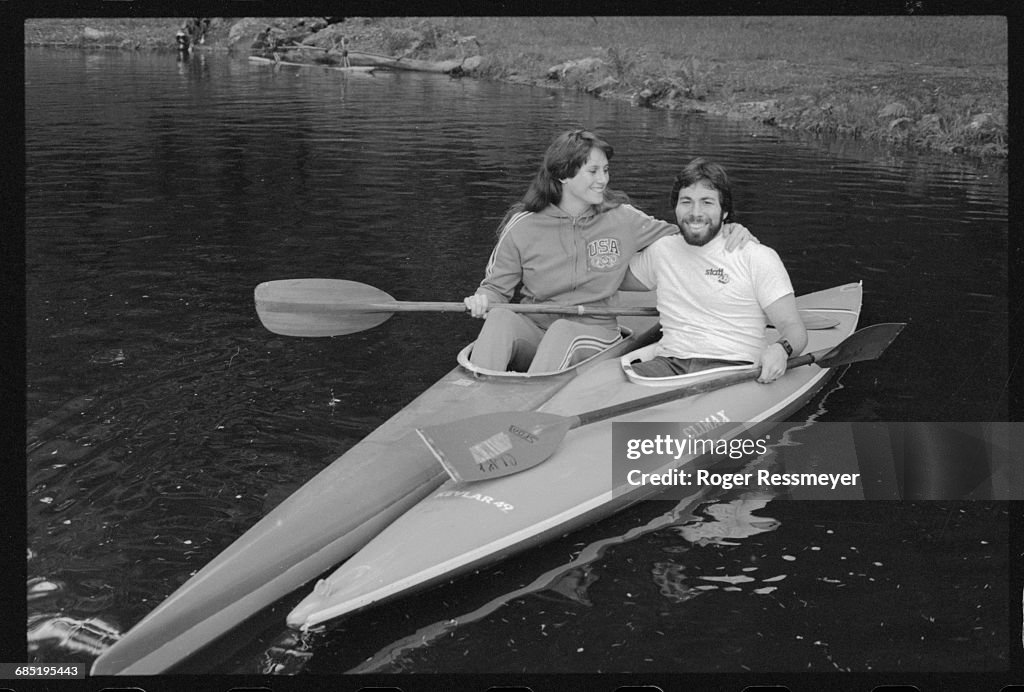
Another interesting connection to Olympic traditions and philosophy is his wife, Candice Clark, who competed in the 1976 Olympic Games as part of the U.S. canoe and kayak team. She also participated in national championships and world championships. Continuing the Olympic theme in Wozniak’s life, it is worth mentioning that his daughter Sarah worked as a lawyer for the U.S. Olympic Committee.
Another sport that Steve enjoys is hockey. According to media reports, he is a fan of the San Jose Sharks hockey club.
Steve Wozniak – Cement Truck Driver
I found not much information about Steve Wozniak. There is especially little information concerning his personal biography. At the same time, there are quite a number of materials about Steve’s sporting achievements. Here is a short list of Steve Wozniak’s sporting successes: in 1937 he won the U.S. National Five-Mile Swimming Championship; on July 26, 1954 he finished third in a 41.8 km swim in Atlantic City; in 1956 he won a 54 km (32-mile) swim on the Nile River; in 1957 he won five- and ten-mile competitions at the Canadian National Exhibition; he took part in an 88 km (55-mile) swim on the Paraná River in Argentina in 1961; he finished third in several 36-kilometer (22.5-mile) marathon swims around an island in Atlantic City, USA; he swam 9 miles around Buffalo Harbor with his legs tied when he was 71 years old; he participated in the Traversée internationale du lac St-Jean, organized by Gilles Potvin; in 1979 he received the title of Honor Swimmer in the International Marathon Swimming Hall of Fame. Such results truly deserve attention and recognition.
The Ukrainian press in the United States wrote quite actively about Steve’s performances. For example, in 1948 it was mentioned: “Steve Wozniak of Buffalo, New York, recently won the world 10-mile swimming championship at the Canadian National Exhibition in Toronto. Steve, who last year received $1,000 for third place, received $5,000 for winning the marathon this year. Then, five days later, Steve covered a 12-mile distance in 5 hours 18 minutes and took second place in a race at Lake George, New York. Steve received $1,000 for this result.”
There is also interesting and unique information that in 1948 Steve Wozniak could have been a participant in the Olympic Games in London (United Kingdom). It was written as follows: “Steve Wozniak of Buffalo, an ace swimmer, was included in the U.S. national long-distance swimming team and will likely represent the United States at the 1948 Olympic Games.” It would have been very good if Steve had taken part in the Olympic competitions.

In 1956, the newspaper Svoboda informed readers about Steve’s success: “By the way, speaking about swimming and Buffalo, New York…, 40-year-old Steve Wozniak of Buffalo, one of the outstanding stars of long-distance swimming, was entered to participate in the World Long-Distance Swimming Championship in Atlantic City, New Jersey, which took place on Wednesday, July 18. Since this column was written last Monday, we do not know the results at the time of writing. Wozniak took third place in the history of these competitions.”
In his remarkable sporting career, Steve planned to swim the English Channel for the second time, but his health stood in the way. He died in 1987 at the age of 71. For Steve Wozniak, long-distance swimming was a favorite hobby. His career lasted more than 50 years.
Thus, two Steve Wozniaks, two life stories, two paths of sporting success and Olympic traditions — both have Ukrainian roots. We have much to be proud of!
Author: Oleksii Lyakh-Porodko