


Russia’s ongoing invasion of Ukraine is a war of imperial conquest, an attempt by the Kremlin to drag Europe back into the past in a bid to restore old Russian imperial glory. Since there is little hope for the future for Russians, the Kremlin must look to the past for inspiration. For Vladimir Putin, Ukraine is not merely a neighboring state but a missing piece of a grand historical puzzle, the central piece to rebuilding the Russian empire.
U.S. Special Envoy Steve Witkoff has drawn criticized for parroting Kremlin narratives during media appearances and diplomatic visits to Moscow. In an interview with Tucker Carlson, he praised Putin as “gracious” and “smart,” mischaracterized Ukraine’s territorial sovereignty, and even bungled basic facts, such as confusing Crimea’s 2014 annexation with newer occupied regions. His proposals, including territorial concessions in exchange for vague peace promises, signal a troubling naivety that reflects the danger of Trump's pivot toward Russia.
U.S. Special Envoy Steve Witkoff went again to Mosocw and following his five-hour meeting with Putin, he continued to suggest that Ukraine give away more territory to Russia to move towards a “permanent peace.” He also suggested the deal could open the door to renewed U.S.-Russia relations through commercial incentives, framing it as a broader effort to stabilize the region. Witkoff once again demonstrated that a real estate developer has no place in high-stakes geopolitics – he’s clearly out of his depth.
When Russia rolled its tanks across Ukraine’s borders in 2022, the message to all former Soviet republics was unmistakable: Vladimir Putin intended to rebuild the Russian Empire and drag the world back decades to do it. Just months later, Putin openly compared himself to Peter the Great, praising the tsar’s conquests and suggesting that, like his predecessor, he too was reclaiming what was “rightfully” Russia’s.
This imperial vision has long roots. In 2005, President Vladimir Putin described the breakup of the Soviet Union as the greatest geopolitical catastrophe of the twentieth century. At 72, he is running out of time to realize his vision.
Russia’s ambition to dominate Ukraine predates Vladimir Putin and won’t end with him, unless Russia is defeated on the battlefield. The idea that Ukraine belongs within Moscow’s sphere of influence has been a persistent feature of Russian political thinking, even under supposedly democratic leadership in the 1990s.
These anxieties were not limited to the post-invasion period. When Ukraine gained independence from the Soviet Union in 1991, Russia’s first elected president, Boris Yeltsin, reportedly contemplated a nuclear strike to prevent Kyiv from breaking away permanently. Though the threat was never carried out, it revealed how deeply rooted the Kremlin’s anxiety over Ukrainian sovereignty truly was. As the Soviet Union was collapsing, Boris Yeltsin, then President of the Russian Federative Republic, said that Russia reserved the right to review its borders with any neighboring republic that chose to leave the union, with reference to areas of Kazakhstan and Ukraine.
By 1994, Russia had already begun attempts to reassert control over Crimea, encouraging separatist sentiment and political unrest. The tension never fully dissipated. Then, tensions flared again in 2003 during the Tuzla Island crisis, when Russia began building a dam toward a Ukrainian island in the Kerch Strait, raising alarms in Kyiv about an attempted land grab. It was a clear attempt to challenge Ukrainian sovereignty. Though the crisis was eventually defused, it foreshadowed the future Russian aggression in Crimea.
In 2013, when Ukrainians took to the streets in the Euromaidan protests to demand closer ties with the European Union, Russia’s approach shifted from economic pressure to outright aggression. The annexation of Crimea in 2014 and the formenting war in eastern Ukraine marked the acceleration of Russia’s attempt to destroy the international system and the post-Cold War order itself.
If Putin succeeds, Russia would not just grow in size but gain immense strategic depth and economic leverage. If Russia succeeds in absorbing Ukraine, it would gain more than territory. Moscow would inherit much of Ukraine’s military, industrial base, and strategic infrastructure, boosting its power and reach. A victorious Russia would emerge stronger, more aggressive, and far harder to contain.
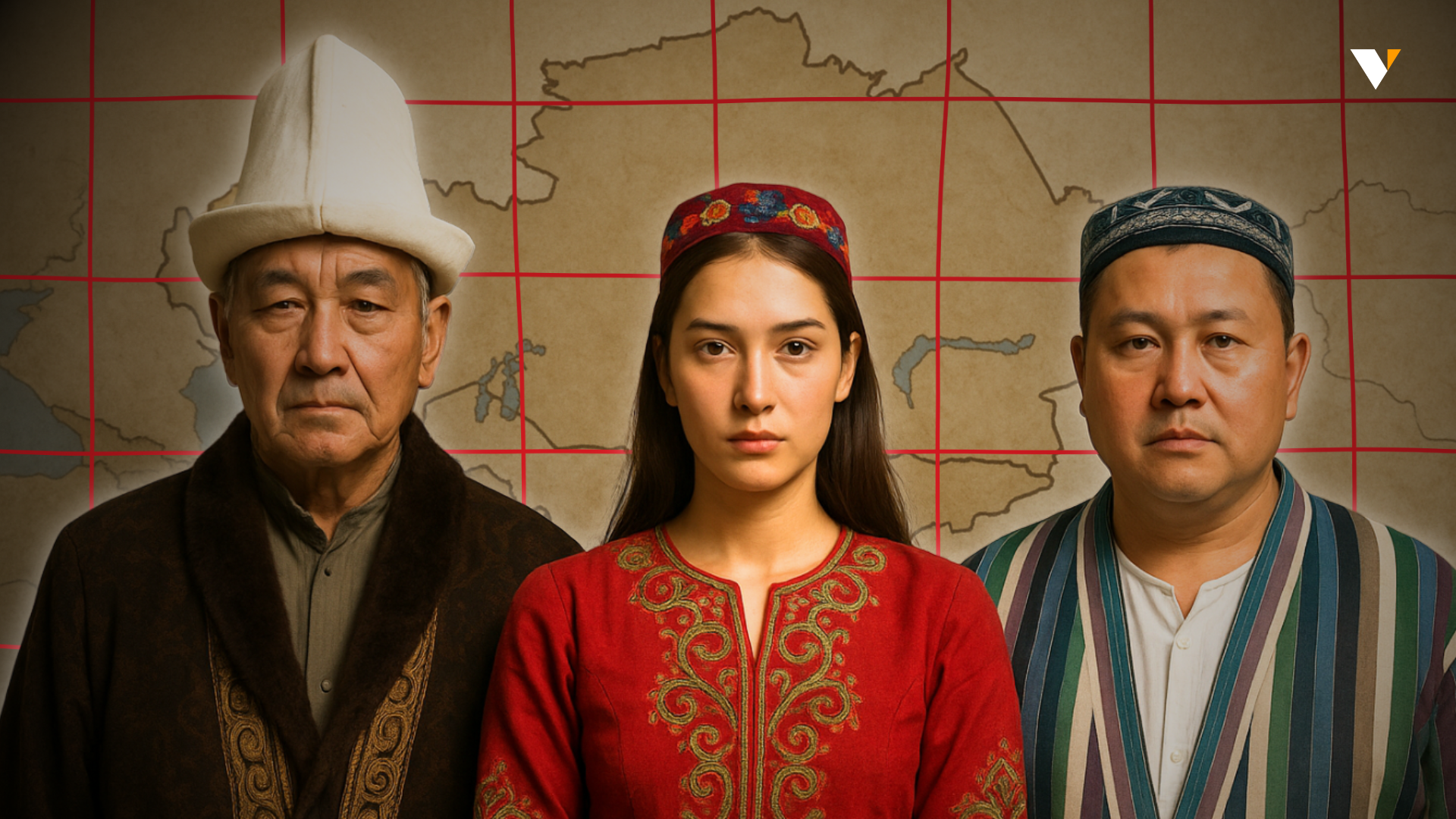
The implications of a Russian victory would extend far beyond Ukraine. Central Asian states like Kazakhstan and Kyrgyzstan have accelerated efforts to distance themselves from Russia – not just politically, but linguistically as well. While Kyrgyzstan initially welcomed an influx of Russian migrants fleeing conscription, the surge reignited fears of renewed Russian imperial influence. In response, many young Kyrgyz are embracing their native language as an act of resistance and identity reclamation. New policies now require Kyrgyz to be used in government, and grassroots efforts to promote the language are gaining momentum, especially among urban youth.
Much the same is happening in Kazakhstan, where efforts to revive the Kazakh language have accelerated, including a shift away from the Cyrillic script. Uzbekistan completed its own transition to the Latin alphabet in 2021, marking a clear move to shed remnants of Russian cultural influence.
If Putin justified the invasion of Ukraine by claiming to protect Russian speakers in the Donbas, what’s to stop him from making a similar claim in Central Asia? Could he one day argue that Russian speakers in Kazakhstan or Kyrgyzstan also need “protection” and send in tanks under that pretext? After all, how many believed Russia would annex Crimea in 2014, or launch a full-scale invasion of Ukraine in 2022? Russia’s former president Dmitry Medvedev has echoed similar imperial rhetoric, not just against Ukraine but also against Kazakhstan, which he called an “artificial state” in 2022.
Despite initial hopes that Russia’s invasion of Ukraine would push Kazakhstan to pivot toward the West, Moscow’s influence in the country has actually deepened. While Kazakh President Kassym-Zhomart Tokayev has made symbolic gestures to assert independence, such as speaking in Kazakh during official visits, his reliance on Russia remains substantial. Russia helped Tokayev stay in power during the 2022 unrest, and since then, economic ties have strengthened, with record levels of bilateral trade, joint energy projects, and Russian stakes in strategic resources like uranium.
As Kate Mallinson, Associate Fellow in the Russia and Eurasia Programme, pointed out, the promised reforms toward a more democratic “New Kazakhstan” have largely stalled, giving way to growing authoritarianism. With Western influence waning and China’s presence expanding, Russia remains firmly positioned as an influential force in Kazakhstan’s future.
But the Central Asian nations have attempted to distance themselves from Moscow politically, refusing to back its invasion of Ukraine or recognize Russian-claimed territories. As a result, Russia has pivoted to soft power tools like humanitarian aid, cultural diplomacy, educational exchanges, and major development funding. With over 350,000 Russian “compatriots” in Kyrgyzstan and deep institutional ties through the CSTO and Eurasian Economic Union, Russia is investing heavily in maintaining its foothold. But that calculus could shift quickly if Russia secures its desired outcome in Ukraine, freeing up resources for other fronts.
Meanwhile, Putin continues to stall any real ceasefire deal in Ukraine. He toys with Trump, who shows little interest in seriously addressing the war. Putin racks up diplomatic wins without making concessions – even getting some U.S. officials to echo Kremlin talking points. For now, Trump continues to state he is “pissed off” and “not happy,” but there are still no concrete actions against the Kremlin to force them to the table for an immediate ceasefire. John Herbst, a former U.S. ambassador to Ukraine, said, "While Putin has clearly stalled Trump's efforts to achieve a ceasefire of any kind, he has not been punished for that in any serious way.”
Putin is likely to go to great lengths to manipulate a future Trump administration, particularly one operating under the illusion that it can engineer a reverse Kissinger with China. Such strategic naivety risks handing Moscow exactly what it wants: division among the West, giving Russia more free reign in its empire rebuilding projects.
If Vladimir Putin is permitted to claim victory in Ukraine or strike a peace deal that effectively reduces it to a vassal state, he is unlikely to stop there. Now in his seventies, with his imperial ambitions slipping out of reach, Putin may grow more reckless in pursuit of legacy. The Kremlin elite may believe that, once Ukraine is under its control, they will have an opportunity to turn their attention to Central Asia and revive Russia’s imperial project in the region. Moscow remains intent on dragging the world back into the 19th century – regardless of the cost.
About Author:
