


When Russian tanks rolled into Ukraine in February 2022, most Western leaders and intelligence agencies expected Kyiv to collapse within days. Four years later, Ukrainian operatives are waging war across all of Russia in Kyiv's own special military operation.
Now, much of the world now recognizes Ukraine’s military as one of the most battle-hardened and innovative forces of the 21st century. Former U.S. Secretary of State Anthony Blinken quipped in 2023 that Russia possessed “the second-strongest army in Ukraine” – a nod to how Ukraine's defenders have repeatedly outmaneuvered what was once thought to be a top-tier military power. Yet while Ukraine’s conventional forces have earned headlines, it is the country’s intelligence services – particularly the Main Directorate of Intelligence or HUR – that are quietly waging a war in the shadows against Russia around the world.
Among Ukraine’s most daring missions around the world, many bear the fingerprints of HUR. From assassinations deep inside Russia to sabotage campaigns across Africa and Syria, Ukraine’s military intelligence agency has emerged as one of the world’s most active and feared covert services.
But now, Ukraine’s domestic security service (SBU) has made it clear that every military war planner will be studying their tactics as well. On June 1st, Ukraine’s SBU, after 18 months of planning, neutralized 34% of Russia’s nuclear-capable long-range bombers. Quoting US officials and military analysts, the New York Times wrote, “Ukraine is continuing to change the way wars will be conducted in the 21st century.”
Kyiv carried out a complex 18-month operation dubbed "Spider Web," using 117 smuggled drones hidden in lorries to target five Russian air bases, reaching as far as 4000 km from Ukraine. The Governor of Russia's Irkutsk Oblast Igor Kobzev pondered giving an award to Russian civilians who attempted to throw stones to stop the drones.
The drone damaged or destroyed at least 13 long-range strategic bombers, with Ukraine estimating the operation inflicted $7 billion in losses on Russia. In fact, Ukraine did America a favor by striking Russia’s Tu-95 bombers which have been threatening America for decades, especially in places such as Alaska.
President of Ukraine Volodymyr Zelensky said, “Of course, not everything can be revealed at this moment, but these are Ukrainian actions that will undoubtedly be in history books.” The next day, the SBU bombed the Kerch bridge in occupied-Crimea for a third time since 2022.
The competition for the most daring operations between HUR and the SBU is only likely to intensify. Moscow has great reason to be worried for what’s coming next.
HUR’s reach extends far beyond Ukraine’s borders, reflecting a strategic doctrine shaped by years of war with Russia and foreign partnerships such as with the CIA and MI6. HUR’s chief, General Kyrylo Budanov, implied Ukraine already operates with Mossad-like capabilities, stating, "If you're asking about Mossad as being famous (for) ... eliminating enemies of their state, then we were doing it and we will be doing it. We don't need to create anything because it already exists."
Intelligence agencies like Israel’s Mossad have long been seen as the gold standard in espionage and sabotage. That reputation faltered following its failure to prevent the October 7, 2023 Hamas attack. However, Israel quickly reasserted its operational prowess with a headline-grabbing retaliation known as the "pager attack," carried out in September 2024. Explosives hidden in pagers and walkie-talkies, covertly distributed to Hezbollah fighters, were remotely detonated, killing dozens and injuring thousands.
Ukraine, it seems, was watching. In February 2025, Ukrainian intelligence reportedly carried out a similar operation, purchasing a batch of First-Person View (FPV) drone goggles, rigging them with explosives, and funneling them – via fake donors posing as Russian volunteers – to enemy units. The devices exploded in the hands of Russian drone operators. “Over time, there will be more,” said one Ukrainian intelligence official. Meanwhile, Russian intelligence was suspected of orchestrating a parcel bomb plot across Europe in July 2024, using disguised incendiary devices hidden inside packages containing, according to a Reuters investigation published in April 2025, sex toys and fake cosmetics.
“Ukraine’s ability to conduct a similar operation – akin to the famed pager attack in Lebanon – hinges on a robust and expanding intelligence service capable of extensive covert operations,” said Treston Wheat, chief geopolitical officer at the consultancy Insight Forward and an adjunct professor at Georgetown University. “By further developing covert capabilities, Ukraine could deploy operatives to exploit vulnerabilities in an adversary’s infrastructure, thereby striking critical targets with precision.”
Wheat added that such attacks are likely to become more frequent: “With meticulous planning and a strong intelligence apparatus that can identify weaknesses in supply chains for technology production, these operations – while complex and resource-intensive – can be successfully executed, demonstrating the quintessential importance of covert tactics in modern warfare.”
Ukraine remains secretive about its role in targeted assassinations, but the growing precision and success of these operations likely reflects the increasing capability of its intelligence services. Mark Galeotti, a leading Russia analyst, noted that the Kremlin is “well aware of HUR's capabilities,” adding that Russian security agencies “treat it with considerable professional respect, even if equal dislike.”
Andriy Cherniak of Ukraine’s military intelligence previously warned that anyone attacking Ukraine “is being watched.” Together with the SBU, Ukraine has targeted Russian war criminals and those who have betrayed the country. In recent months, Ukraine eliminated several Russian generals in Moscow, with the Russian intelligence services helpless prevent stopping Kyiv’s growing reach.
“They’ve been effective in terms of tactical outcomes, many of the missions have succeeded, including high-profile assassinations beyond Ukraine's borders,” said Oleksandra Ustinova, a Ukrainian member of parliament from the Holos party. She noted that assassinations of alleged Russian war criminals have provided an important psychological boost for many Ukrainians.
“They’ve also shown the West that Ukraine’s capabilities go far beyond what we’ve traditionally been credited with,” said Ustinova. “Even if they deliver smaller-scale successes, they still play a vital role in the broader campaign.”
According to Ustinova, the goal is to expose cracks and vulnerabilities within Russia’s security and political structures, including both its military apparatus and its leadership. “Ultimately, all wars end with political decisions,” she said. “Military success shapes the political landscape, making it increasingly untenable for the aggressor to continue its campaign. That’s the broader strategic objective behind these operations.”
Kyiv believes that despite the West’s cautious approach, the idea that Russia will automatically escalate if Ukraine strikes inside Russian territory or even hits Moscow has been repeatedly disproved. “These assassinations help demonstrate that.” The West seems to deeply fear what Kyiv could do or attempt if it was let loose with no restrictions against the Russians.
The Evolution of Ukrainian Intelligence
Ukraine’s evolution in intelligence work did not happen overnight. Both the SBU and HUR required support in this rebuilding effort. HUR was mainly focused on intelligence efforts abroad. However, the CIA remained cautious about working closely with the SBU, largely due to its Soviet legacy, history of corruption, and entanglement in overseeing economic crimes. While the CIA did invest into the SBU, building a new spy division called the Fifth Directorate, HUR was the big beneficiary of Western intelligence support.
One of the Fifth Directorate’s earliest lethal operations came in December 2015, when it orchestrated the assassination of Pavel Dremov, a Cossack battalion commander in Russian-occupied eastern Ukraine. Acting on a tip about Dremov’s interest in Range Rovers, SBU operatives smuggled a vehicle into Russian-held territory and rigged it with explosives. A local informant handed Dremov the keys, and the next day, the SBU remotely detonated the bomb, killing him instantly.
In 2015–2016, under then-HUR chief Valeriy Kondratyuk, Kyiv began quietly preparing for covert combat, anticipating future Russian aggression. The CIA eventually directed millions of dollars in funding to help train and equip Ukrainian intelligence officers. This partnered was part of a broader effort to transform Ukraine’s post-Soviet intelligence infrastructure into a modern, proactive force capable of operating deep behind enemy lines.
Kondratyuk took great personal risks to build the relationship, likely disclosing information that he had no approval to disclose. As a result, the Americans began to receive intelligence that they hadn’t seen in decades. It also unleashed a force the Americans could no longer control, one that would increasingly test the imaginary red lines Moscow had drawn for the West in the coming years.
With U.S. assistance, Ukraine constructed around a dozen secret forward-operating bases near the Russian border, designed to support cross-border reconnaissance missions, electronic warfare, and infiltration teams. The reality is that we may never know the full extent of how impactful CIA support truly was. Much of the cooperation remains classified, and many of the most consequential missions likely took place far from the public eye.
However, in August 2016, when Russian helicopters were stationed in occupied-Crimea. Ukrainian special forces from HUR were sent behind enemy lines on a sabotage mission, resulting in a firefight with Russian security services. According to HUR, the Ukrainians assassinated Colonel Roman Kameniev and Sergeant Semen Sychov, and injured several others.
The incident was so sensitive that then-President Petro Poroshenko cut short a foreign trip, and U.S. President Barack Obama weighed canceling Ukraine’s covert operations program. Then- Vice President Joe Biden warned Ukraine’s president that “it cannot come close to happening again.” Putin also threatened, “We obviously will not let such things slide by.”
That same risk-averse mindset was often evident under President Biden, with U.S. officials at times paralyzed by fears of crossing Kremlin “red lines.” In response, Ukraine has taken matters into its own hands – showing that Russia’s so-called red lines can be crossed without triggering the consequences so many in the West still fear.
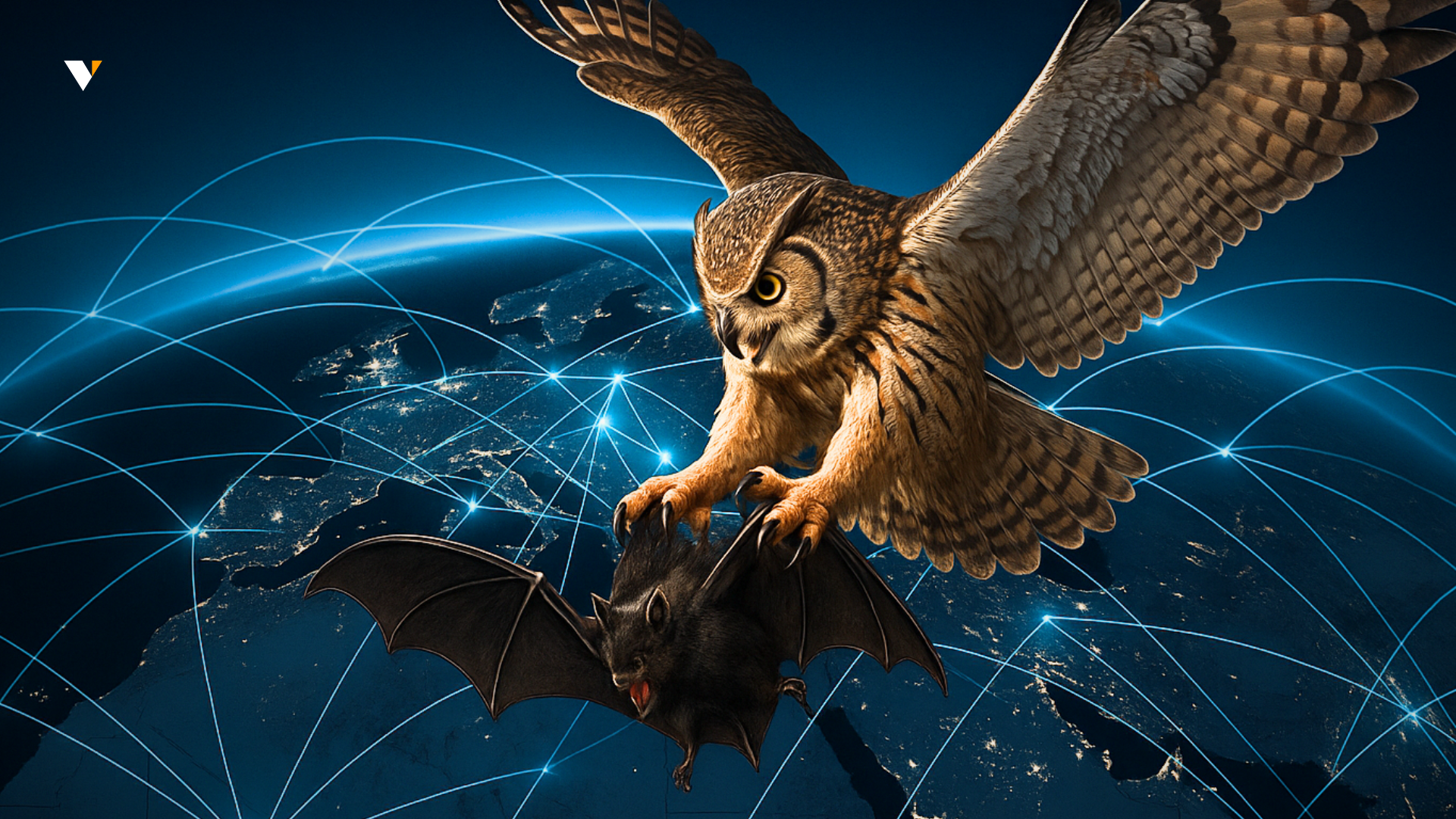
That firefight in Crimea would go on to shape more than just tactics – it forged the identity of Ukraine’s modern intelligence services. The mission, carried out by operatives from Ukraine’s Budanov’s unit, ended with the death of a Russian Spetsnaz commander who was also the son of a general. In the aftermath, the unit, already known for its audacity, adopted a new symbol: an owl with a sword piercing the heart of Russia.
The owl was chosen not only as a symbol of wisdom, but because it is the natural predator of bats – the emblem of Russian Spetsnaz. It was also a deliberate counter to the Spetsnaz motto “Above us only stars.” HUR’s silent reply: Sapiens dominabitur astris – only the wise rule the stars. The Kremlin was livid, attempting to portray the emblem as fascist and extremist, a reflection of just how deeply the symbol struck a nerve.
The emblem was seemingly born from that very raid. Budanov reportedly kept live owls at their base, and the symbol was intended as a message to the Spetsnaz: we see in the dark, and we strike without warning. The image now sits behind Budanov’s desk, an enduring nod to the roots of HUR’s rise and to stick it to the Russians. Budanov has also been the target of 10 Russian assassination attempts.
Russia responded by targeting Ukraine’s operatives. Maksym Shapoval, a key figure in the Crimea raid, was assassinated in 2017. Two years later, a Russian agent attempted to kill Kyrylo Budanov, then a rising officer in HUR, via car bomb – an attempt that failed when the device detonated prematurely.
The Growing Reach of Ukraine’s Intelligence
By 2021, Ukraine’s intelligence operatives were not only trained for war – they were carrying out global missions. During the fall of Kabul, HUR executed a high-risk evacuation operation, rescuing some 700 people over six flights, including Ukrainian nationals and foreign allies. Ukrainian soldiers escorted convoys through Taliban-controlledstreets to the airport, often on foot and under threat in Afghanistan.
When Russia launched its full-scale invasion in February 2022, it was HUR’s elite “Shaman Battalion” that helped prevent the fall of Kyiv. They played a pivotal role in defending Hostomel Airport, a key Russian objective, while other HUR units carried out sabotage missions on Russian convoys and supply lines.
One of their most daring wartime missions came later that year in Mariupol. With the Azovstal steel plant encircled, HUR organized seven helicopter raids deep into Russian-controlled territory to resupply trapped Ukrainian defenders and evacuate the wounded. Piloted by volunteers who knew the risks, the helicopters flew the most daring routes to evade Russian air defenses.
HUR’s global ambitions continued to grow. The Washington Post reported that in late 2024, Ukrainian intelligence sent around 20 experienced drone operators and approximately 150 drones to the rebels to assist in the takedown of the Assad Regime. It was a reflection of Budanov’s pledge in April 2023 that Ukraine would pursue Russians guilty of war crimes “in any part of the world.”
In Africa, HUR has supported efforts to attack Wagner mercenaries in Sudan and Mali, including enabling an ambush in Mali that killed 84 Wagner mercenaries. Serhii Kuzan, chair of the Ukrainian Security and Cooperation Center and former adviser to Ukraine’s Ministry of Defense, also reported that among the Russian mercenaries killed in Mali were numerous criminals who had previously fought in Eastern Ukraine, some dating back as far as 2014. Bah Traoré Legrand, a researcher from Senegal, stated that “Due to the current dynamics of international geopolitics, Mali has become the backdrop for indirect clashes between Russia and Ukraine.”
However, Antonio Giustozzi, Senior Research Fellow at the Royal United Services Institute (RUSI) said, “It is not clear that Ukraine was actually involved in Mali, there is no hard evidence of that.” Giustozzi added, “If there was an involvement, it was likely by providing some funding and perhaps some equipment to rebel groups in Mali.” Kyiv denied that it provided drones to the rebels. Andriy Yusov, a spokesperson for HUR said that the Malian rebels had received the “necessary” information in order to carry out the attack.
These operations have clearly unnerved Moscow. Russian Foreign Ministry spokeswoman Maria Zakharova has accused Ukraine of “opening a second front in Africa,” claiming Kyiv now seeks to destabilize Russia wherever it can.
HUR’s quiet war – from Syria to Sudan to inside Russia itself – demonstrates not only Ukraine’s resilience but its growing mastery of the shadows, which is terrorizing the minds of the Kremlin elite. Irina Filatova, a Russian historian based in South Africa and Professor Emeritus of the University of KwaZulu–Natal, stated, “They (the Ukrainians) have to prove to African countries that the Russians are not all-powerful and can also lose.”
In early April 2025, during a meeting in Moscow, Mali's Foreign Minister Abdoulaye Diop, alongside Russian Foreign Minister Sergey Lavrov, labeled Ukraine a "terrorist state." The Kremlin remains deeply bitter over the attack in Mali – a strike that not only inflicted heavy losses on Wagner-affiliated forces, but also symbolized Ukraine’s growing ability to challenge Russian interests far beyond the battlefield in Europe.
In response, a spokesperson for Ukraine’s Ministry of Foreign Affairs said, “The true threat to African stability and progress is the Russian Wagner mercenaries, who bring nothing but death, destruction, and plunder wherever they go.” Yevhen Dykyi, a former company commander from Ukraine’s Aidar battalion stated that Kyiv has a score to settle in hunting down Wagner mercenaries across Africa.
Kyiv is Writing The Future NATO Textbooks
This likely signals that Ukraine has no intention of halting its operations targeting Russian mercenaries around the world. On the contrary, its campaign appears to be gaining momentum. If the West increased its support for HUR’s global activities – even through modest investments – the returns could be significant.
Such backing could help Ukraine erode Russia’s expanding influence in Africa, disrupt Wagner’s operations, and strengthen local resistance to authoritarian entrenchment. “Russia essentially benefits from its African involvement by gaining votes in the UN assembly and by showing to Western powers that it has the ability to undermine their interests in various parts of the world,” said Giustozzi.
Addressing Ukraine’s expanding global reach in targeting Russia, Mick Ryan, a former major general in the Australian Army, emphasized that Ukrainian intelligence operations in places like Africa and the Middle East send a clear message to the West that they have nothing to fear from Russia. In war-torn Afghanistan, Russia has been increasingly perceived as a dangerous country frequently targeted by drone strikes.
In contrast, the Biden administration in 2022 appeared paralyzed by fear – fear of nuclear escalation and crossing so-called Russian red lines. While Ukrainians were pushing back Russian forces on the battlefield, Washington was handicapped by indecision. Rather than enabling Ukraine to win, the White House chose caution over victory. With indecision, Biden opted not to allow Ukraine to prevail on the battlefield.
History shows that intelligence services willing to take bold action often alter the course of events. Czechoslovak and British operatives successfully assassinated Reinhard Heydrich during World War II. Mossad hunted down and eliminated members of Black September responsible for the Munich Olympics massacre.
When the war eventually ends, Ukraine will have much to teach the world, but much will also not be revealed about the daring spy war being waged behind the scenes.
This is a nation, after all, that the current CIA Director John Ratcliffe recently described as willing to “fight with their bare hands if they have to, if they don't have terms that are acceptable to an enduring peace.”
In the years to come, NATO intelligence services will look to their Ukrainian counterparts not as students, but as peers. Ukraine's intelligence services have already demonstrated how a small, embattled nation can punch far above its weight and now, it stands amongst the very best in the world.
About Author:
