


Russia’s war against Ukraine has changed not only the European security landscape — it has also raised fundamental questions for humanity about values, freedom, and the very nature of the international order. For Ukrainians, this war is not just another armed conflict, but an existential struggle for the right to exist. For the world, it is a test that will determine whether democracies are capable of defending themselves and their allies in the 21st century.
Ukraine has traveled a dramatic path — from naïve faith in “international guarantees” such as the Budapest Memorandum, which was supposed to ensure security after giving up nuclear weapons, to the realization that true security is not granted but earned through struggle. The price of this realization is measured in the lives of thousands of soldiers and civilians, in the cities reduced to ruins, in the pain and anger of millions.
Today, as victory over Russia has become not only a national goal but also a moral duty before the world, a crucial question arises: what should Ukraine’s postwar security system look like? Will guarantees from allies suffice — or must Ukraine build its own defense model, relying on the experience of countries that have lived for decades in hostile environments?
Most often in this discussion, the example of Israel is invoked — a state that, since its founding, has existed under constant threat but has succeeded in building an effective system of national defense that has become part of its identity. Could the Israeli model serve as a guide for Ukraine? Or, conversely, is our context too different to replicate such a model?
This article seeks to answer these questions. We will examine the historical background and the unique features of Israel’s and Ukraine’s security systems, the differences in their geopolitical environments, the role of allies, and the social and cultural factors at play. Most importantly, we will consider how to combine Ukraine’s unique experience with global practices of survival under constant threat.
Ukraine has now reached a point where the issue of defense can no longer be postponed or delegated to partners. We must look not for abstract models, but for real-world scenarios that have proven effective. The example of Israel is one of the most debated and, at the same time, the most compelling. Yet to understand how applicable it is to Ukraine, we must first analyze Israel’s own experience — where it came from, what principles it rests upon, and what lessons it can offer. That is where we begin.
1. Israel’s Experience in Security and Defense: Historical Context and Modern Reality
Israel is one of the few countries in the world where security has become not just a matter of policy but the very foundation of national existence. Since declaring independence in 1948, the country has found itself surrounded by enemies who openly declared their intent to destroy it. Survival in such an environment forced Israel to create a unique defense system where the army, society, and state merged into a single whole.
For Ukraine, this experience is particularly valuable. We, too, face an aggressor state that openly seeks to erase us from the map. Yet our realities differ: our geography, resources, and international circumstances are different. To understand whether Israel’s model can serve as a guide for us, we must carefully trace its genesis — how this model was formed, the principles underlying it, and which of them may be useful for Ukraine.
1.1. Historical Background of the Israeli Defense Model
The origins of Israel’s security system go back to the period before the declaration of independence in 1948. The lands that became Israel were in a state of constant conflict between local Arab communities and Jewish settlements. Colonial rule, mass waves of Jewish immigration from Europe after the Holocaust, and the absence of stable external guarantees compelled the future state to build its own survival structures even before a regular army existed.
A key role was played by the underground organization Haganah, which combined elements of intelligence, guerrilla tactics, and local self-defense. It taught future commanders the principles of flexible mobilization and rapid response to spontaneous threats. At the same time, other armed groups — Irgun and Lehi — emerged, advocating more radical actions against the British administration and Arab attacks. This period established the initial foundation of Israel’s security culture: a blend of civic initiative with centralized command, mobility, and adaptability.
Another crucial factor was the psychology of survival. The collective memory of persecution in Europe, the Holocaust, and years of exile fostered a conviction within society that a state incapable of defending itself is doomed to extinction. This formed the moral backbone of Israel’s future security policy, where compulsory military service, reserve forces, and broad public participation in national defense became the norm.
Thus, the Israeli defense model was born under conditions of perpetual threat and historical trauma. Its core principles — self-defense, mobility, civic participation, and psychological readiness — developed long before the creation of the state, making it both unique and not fully transferable to another context without adaptation.
1.2. The Principle of a Mobilization Army and Mandatory Service
One of the defining features of Israel’s security system is its mobilization army model, which combines a standing professional force with reserve units that can be rapidly deployed in the event of a threat. This system is built on mandatory military service for both men and women — an element that fosters not only military discipline but also a deep sense of civic responsibility.
For most young men and women, the length of service is about two to three years, after which they enter the reserve. Importantly, reserve duty remains active for many years — sometimes for decades — allowing the state to maintain a large defense potential without keeping the entire contingent on full-time professional service. This creates the effect of a “living defense”: nearly every citizen can, within a short period of time, become part of the state’s defensive mechanism.
Another essential aspect is the integration of territorial and mobile defense. Citizens receive training, acquire basic skills in handling weapons and tactical operations, and become familiar with local defense plans for their towns and villages. This enables Israel to respond swiftly to threats of any scale — from terrorist attacks to full-scale invasions.
Equally important is the psychological dimension. Mandatory service shapes the national cultural code in which defending the country is perceived not as a burden, but as an honor and a duty. This fusion of physical preparedness, organizational structure, and moral motivation makes the Israeli army not just an instrument of defense, but an integral part of the state and society.
Overall, Israel’s mobilization model is not merely about numbers or technology — it is a comprehensive concept combining reserves, compulsory service, and cultural motivation. For Ukraine, directly transplanting this system without adaptation would be impossible. However, the underlying principles of mobility, reserve readiness, and societal participation could serve as valuable guidelines for building our own defense model.
1.3. The Military-Industrial Complex and Technological Superiority
One of the key factors behind Israel’s defense capability is the fusion of the military and a high-tech sector. Israel’s military-industrial complex not only equips the country with modern weaponry but also turns innovation into a strategic advantage that compensates for a relatively small population and limited natural resources.
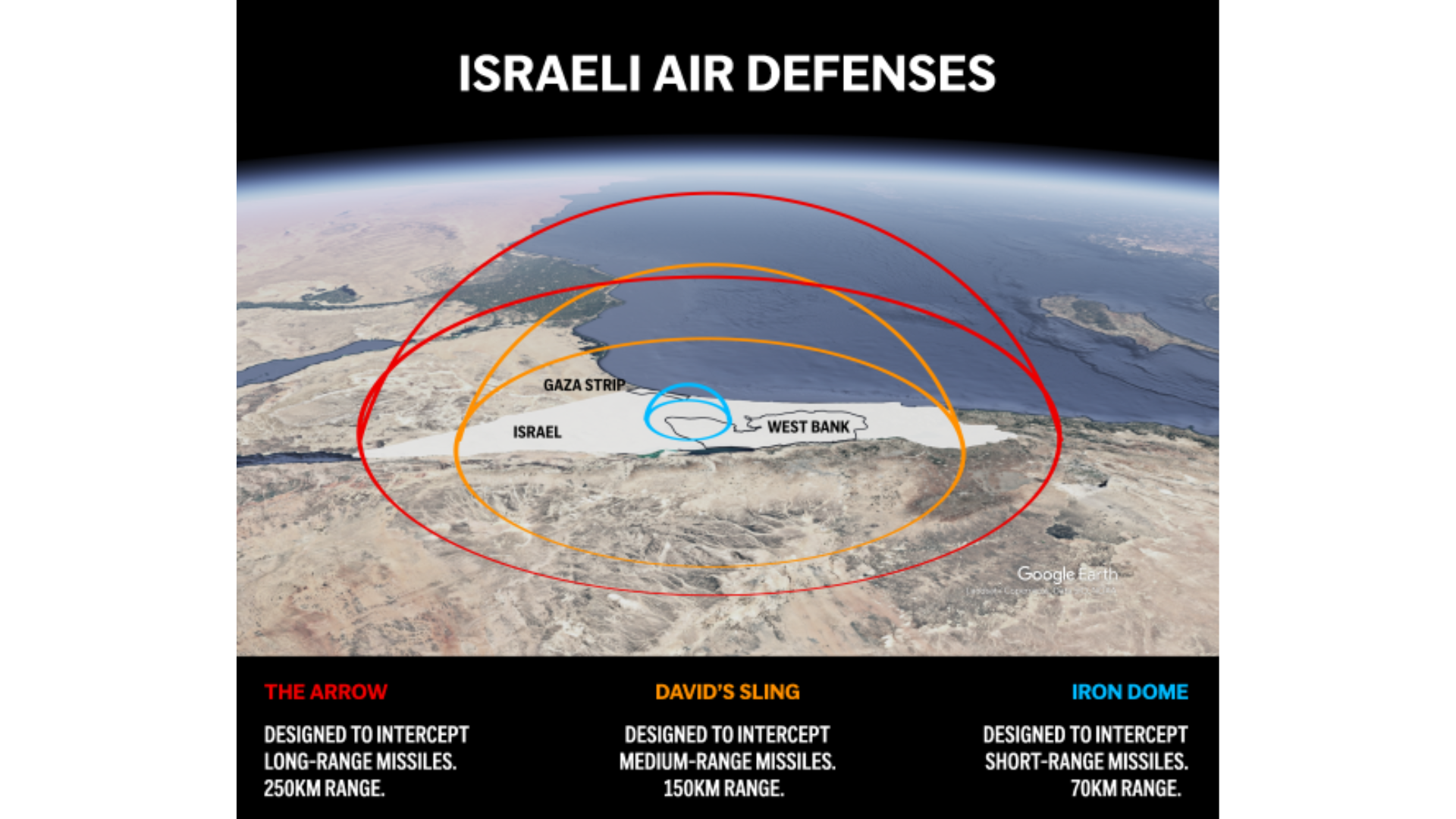
Crucially, technological development is not divorced from the army’s needs; it is shaped by them. Drones, the Iron Dome air and missile defense system, cyber defense, and intelligence platforms are all the result of close cooperation among research institutions, industrial enterprises, and military command. This approach enables rapid and effective implementation of innovations with practical testing under combat conditions.
Another element is export programs. Israeli military products and technologies are in global demand, which provides additional funding and an incentive for continuous improvement. At the same time, this creates strong international integration, where defense innovations become not only national armaments but also an important instrument of foreign policy.
No less important is the internal cultural dimension: technological achievements in the defense sphere become part of national identity, underscoring that the state’s survival depends not only on the size of its army, but also on intellect, ingenuity, and the speed of adaptation.
Israel’s technological edge is the result of systemic integration of science, industry, and the military. For Ukraine, this experience demonstrates that advanced technologies and domestic defense-industrial development can offset numerical and resource constraints, but they require strategic vision and state coordination.
1.4. The Doctrine of Preemptive Strikes and the Security Strategy
Another unique component of Israel’s security system is the doctrine of preemptive strikes. It is based on the premise that it is better to act in advance than to wait for a threat to become critical. For Israel, this means readiness to conduct rapid, precision operations against potential adversaries at the stage when their offensive capabilities are only being formed.
The doctrine is not limited to military actions. It includes intelligence, cyber operations, diplomatic pressure, and economic measures. Information obtained ahead of time allows the army to plan actions that minimize risks to civilians while reducing an adversary’s potential threat.
Historically, the Arab-Israeli wars showed that timely preemptive strikes can not only repel an attack but also create a strategic advantage that endures for years. Treating security as a continuous process of monitoring and adaptation became central to the development of Israel’s army and state institutions.
The doctrine also carries a psychological effect: neighbors and potential adversaries understand that any build-up of threat will be neutralized at an early stage. This creates an additional layer of deterrence that does not require mass mobilization each time.
Thus, Israel’s preemptive strategy shows that effective defense is not only about troops and hardware, but also about a system of early warning, rapid response, and psychological deterrence. For Ukraine, the lesson is clear: without active, strategic risk management and a flexible defense doctrine, even large and well-equipped forces cannot guarantee security.
1.5. The Role of the United States and the Jewish Diaspora in Ensuring Israel’s Security
Israel has never existed in a safe vacuum. From the outset, it received significant support from the global Jewish diaspora and later from the United States. This support manifests itself in three key dimensions: military, financial, and political.
First, the United States provides Israel with modern types of armaments, intelligence technologies, and training for military personnel. As a result, the Israel Defense Forces gain access to advanced air-and-missile defense systems, drones, cyber defense, and other innovative equipment that would be economically and technologically difficult to produce independently.
Second, the diaspora plays a critical role in funding state programs and private defense initiatives. Billions of dollars in investment in defense-technology start-ups and charitable contributions to military structures have enabled Israel to adapt swiftly to new threats and maintain constant readiness.
Third, political support from the West is an important factor in deterrence. Close ties with Washington secure international legitimacy for Israel’s actions and ensure that any aggressive steps by neighbors will be considered at the global level. This external security component creates an additional layer of stability that allows domestic forces to focus on technological development and mobilization.
Equally important is the symbolic effect: support from the diaspora and partners fosters a societal sense that the country is not alone in its struggle, which bolsters moral resilience and collective confidence.
External support from the United States and the diaspora is an integral component of Israel’s security model. It demonstrates that even a high-tech and highly mobilized army cannot exist in isolation. For Ukraine, this is an important lesson: effective defense after victory will require not only internal reforms and technologies but also a strong external backbone.
As preliminary conclusions to this section, we can state that Israel’s security and defense experience demonstrates a unique combination of historically formed mechanisms, a mobilization army, technological superiority, and close integration of external support. Each element—from mandatory service and reserves to a preemptive strategy and the role of the United States and the diaspora—creates a coherent system capable of ensuring the state’s survival in a permanent threat environment.
For Ukraine, this example is valuable not as a direct template, but as a point of reference. It shows that effective defense requires a comprehensive approach: combining internal mobilization, technological development, an active doctrine, and international support. However, our conditions are markedly different: a larger territory, different demographics, a distinct geopolitical position, and societal culture all necessitate the construction of a unique model.
Therefore, before considering how the Israeli scenario might be adapted for Ukraine, it is necessary to analyze in detail the country’s condition after victory and determine which principles can become a true foundation for national security.

2. Ukraine After Victory: Challenges and Preconditions
Victory over Russia—no matter how sweeping—does not automatically translate into security for Ukraine. Israel’s experience shows that a state’s survival depends on a systemic approach to defense, the integration of technologies, mobilization readiness, and external support. For Ukraine, these lessons are useful but must be adapted to our own context.
Our country faces a number of specific challenges: a large territory, a complex demographic structure, diverse political and economic risks, and proximity to an unstable region. Each of these factors determines which security models may be effective and which are unacceptable.
2.1. The State of Ukraine’s Defense Capability After Victory
Victory over Russia will be a historic achievement, but it will not automatically guarantee national security. The state of Ukraine’s defense capability after the war will be determined not only by the number of preserved military units or equipment, but also by the army’s structure, command-and-control systems, logistics, and the ability to mobilize rapidly.
The war revealed Ukraine’s key strengths: high morale among the military and civilians, an ability to adapt to rapidly changing combat conditions, and effective use of international assistance and technologies. At the same time, it exposed weak points: limited resources, dependence on arms supplies from partners, challenges with long-term maintenance and modernization of weaponry, and an insufficiently developed civil-defense system in peacetime.
Particularly important is the issue of modernizing military equipment and technological solutions. Ukraine has received a substantial amount of modern weaponry and reconnaissance systems from allies, yet domestic production remains limited. For sustainable defense after victory, it is essential to build a national defense-industrial complex capable of responding swiftly to threats and reducing dependence on external suppliers.
Another aspect is the mobilization readiness of society. The war showed that Ukrainians are willing to defend the state; however, maintaining this readiness over the long term requires systemic approaches: reserve formations, military training for civilians, development of territorial defense, and integration of society into security planning.
In sum, post-victory Ukraine will possess significant military and moral potential, but it must be structured systematically. The primary challenges are technological autonomy, army modernization, mobilization readiness of society, and development of a national defense-industrial complex. Successful solutions to these tasks will determine not only security, but also the state’s long-term stability.
2.2. Geopolitical Challenges and Threats to Ukraine After the War
Even after victory over Russia, Ukraine will remain in a complex geopolitical environment. Proximity to unstable states, historical border conflicts, and new centers of global influence create a constant risk to national security.
The first challenge is the unpredictability of neighboring states. Although Russia will be weakened, its regional ambitions and the possibility of internal destabilization will not disappear. Other neighbors may exploit Ukraine’s vulnerabilities to advance their strategic interests, particularly in the spheres of economics, energy, and transport routes.
The second key aspect is a new global balance of power. After the war, world politics may shift its priorities: relations among the United States, the EU, China, and regional players will present both opportunities and risks for Ukraine. For example, dependence on supplies of defense equipment and technologies will remain critical, and any change in allies’ strategic priorities could affect the country’s security.
The third challenge lies in internal geopolitical factors. Reconstruction of territories, integration of internally displaced persons, political stability, and economic recovery are integral to long-term security. Without addressing these issues, the state will remain vulnerable to external pressure.
Finally, global threats of a new type—cyberattacks, disinformation, and economic coercion—are becoming part of national security. Victory on the battlefield does not automatically ensure protection from these challenges, making a comprehensive strategic approach a vital necessity.
Post-victory Ukraine will face not only internal tasks of rebuilding, but also a complex map of external risks. The key geopolitical challenges include the unpredictability of neighbors, global shifts in the balance of power, internal stability, and new forms of threats. The success of the security strategy will depend on the ability to integrate these factors into a comprehensive, adaptive defense system.
2.3. Mobilization and Territorial Defense Models for Ukraine
Post-war Ukraine will need a flexible mobilization system capable of swiftly transforming citizens into combat and support units. The experience of Israel and other states shows that the key elements of such a system are mandatory military training, reserve formations, and close integration of society into the defense process.
Territorial defense will play a particularly important role for Ukraine. Given the country’s large area and uneven infrastructure, local units can provide rapid response to threats, support regular forces, and prevent destabilization in frontline and strategically important regions. Establishing a network of territorial-defense zones will allow more efficient use of human resources and increase the state’s resilience to surprise attacks.
Another aspect is the gradual integration of the civilian population. Training programs, preparedness for crisis response, and instruction in logistics and medical aid all build society’s readiness to participate in national defense. Ukraine has the opportunity to create its own unique model in which civilian and military spheres interact within a system of constant defense readiness.
The psychological and cultural factor is equally important. Citizens should view participation in territorial defense not as an obligation solely for the military, but as a civic duty to the state and to the future. This approach strengthens national unity and fosters collective responsibility for security.
Mobilization and territorial-defense models after victory must form a structure that integrates regular forces, reserves, and the civilian population. Ukraine’s context requires a tailor-made approach adapted to territorial, demographic, and cultural features, but the principles of flexibility, readiness, and societal integration can serve as a guide for building an effective defense system.
2.4. Technological Development and Ukraine’s Defense-Industrial Complex
To ensure durable security after victory, Ukraine must build a strong national defense-industrial complex capable of responding swiftly to new threats and reducing dependence on external suppliers. The war has demonstrated that technological superiority can compensate for numerical and resource limitations, and Ukraine should leverage this lesson for long-term planning.
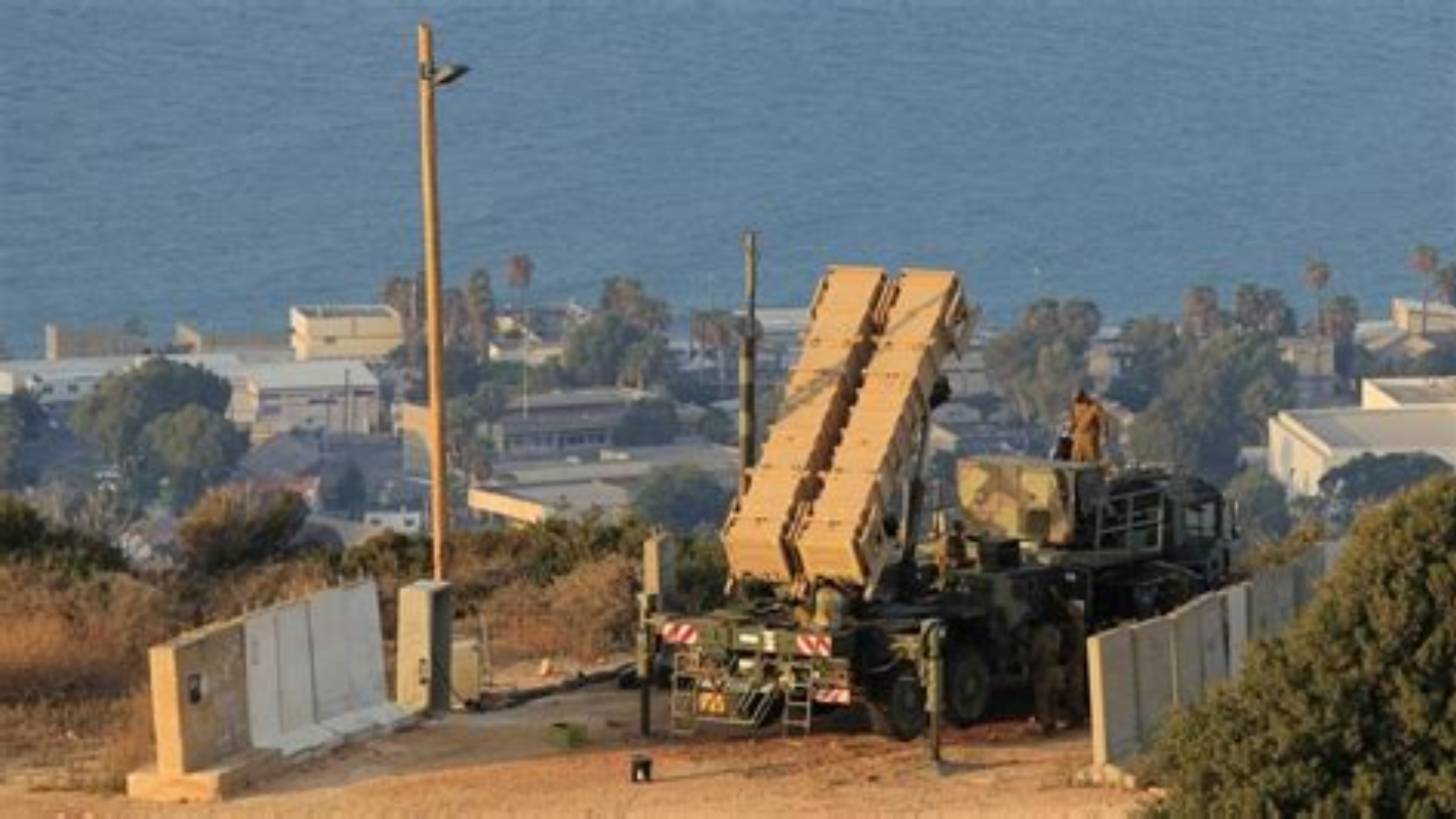
A key element is domestic production of modern weapons systems: drones, air-and-missile defense assets, reconnaissance platforms, and cyber tools. Developing such technologies requires integration of science, industry, and the military—similar to the Israeli model. At the same time, Ukraine must account for the country’s scale and demographic realities: production must be sufficient to supply not only regular units, but also reserves and territorial defense.
Another aspect is integration of international support and technologies. Partnerships with allies in research, modernization, and training will accelerate the restoration and upgrade of defense infrastructure. It is important that these processes do not create long-term dependence but instead stimulate domestic scientific, technical, and manufacturing capacities.
Equally significant is export potential. Developing high-tech defense products can not only strengthen security but also provide a source of economic stability and international influence for Ukraine. This, however, requires strategic planning, state regulation, and clear coordination with the defense and scientific sectors.
Technological development and a national defense-industrial complex are critical for Ukraine’s long-term security. The primary task is to combine domestic production capacity, scientific potential, and international support to create a resilient, flexible, and technologically prepared defense system capable of responding to any threats.
2.5. The Role of International Partners and Alliances in Ukraine’s Long-Term Security
After victory over Russia, Ukraine will not be able to ensure long-term security without a strong external pillar. Israel’s experience shows that partnerships with powerful states and active support from the international community can compensate for limited resources and technological gaps. For Ukraine, the role of allies is no less important than internal mobilization and defense-industrial development.
First, military support and training. Partners can provide access to modern weapons systems, training for commanders and units, and best practices in logistics and cybersecurity. This will allow Ukraine to accelerate the modernization of the army and reserves and integrate new technologies into its own defense system.
Second, political and diplomatic support. Security guarantees, inclusion of Ukraine in international alliances, and allies’ participation in deterring potential aggressors all create an additional layer of stability. Political support at the global level reduces the risk of renewed conflicts and ensures a strategic advantage in negotiations.
Third, economic and technological integration. Cooperation with international partners stimulates the development of the defense-industrial complex, research institutions, and technology start-ups. This not only strengthens security but also enhances economic resilience—a key element of the state’s long-term stability.
No less important is symbolic and psychological support. Close partnerships raise the morale of the population and the military, fostering the sense that the country will not be left alone in the face of new threats.
For post-victory Ukraine, international partners and alliances are not an optional resource but a strategic necessity. Military, political, and economic support can provide critical stability, speed up modernization, and integrate Ukraine into the global security system while reducing risks from potential aggressors.
As we can see, analysis of Ukraine’s situation after victory shows that triumph on the battlefield is only the beginning. Ensuring long-term security requires systematic organization of defense, technological development, mobilization readiness, and societal integration, along with an active role for international partners and alliances.
Geopolitical challenges remain complex: proximity to unstable states, global shifts in the balance of power, internal socio-economic problems, and new types of threats. An effective post-victory security strategy must combine internal resilience with external support, technological autonomy with mobilization capacity, and also cultivate a culture of defense readiness among the population.
Therefore, Ukraine faces the task not merely of rebuilding the army and infrastructure, but of constructing a comprehensive, adaptive security system capable of countering present and future challenges. This conclusion brings us to the key question: is it possible to adapt the Israeli security scenario to Ukrainian realities?
About Author:

One thought on “Ізраїльський досвід і українська безпека. Частина Перша”