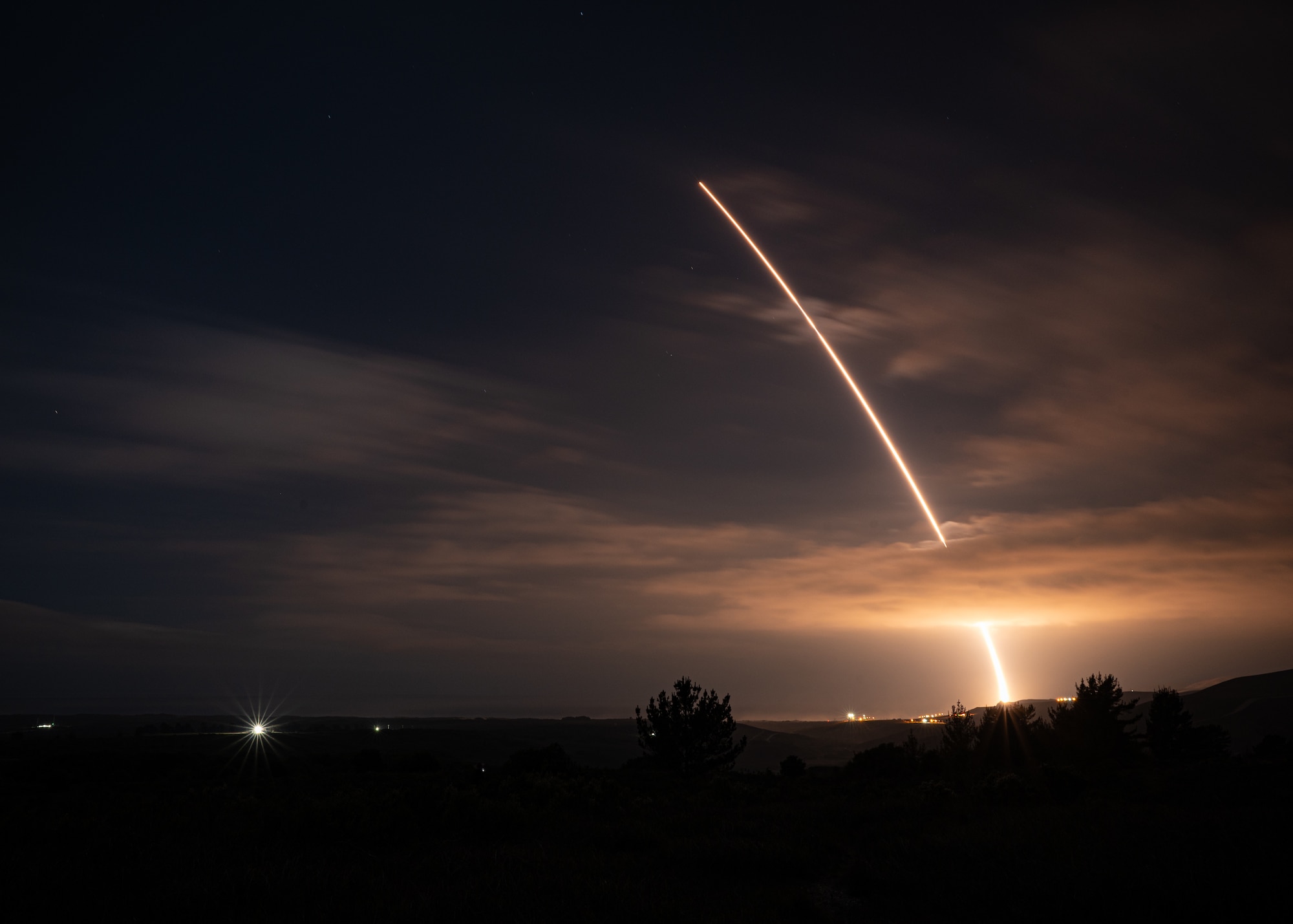
World leaders continue to discuss the possibility of a ceasefire along Ukraine’s current front line and new sanctions targeting russian oil exports. At the same time, Washington is asserting control over global security dynamics — conducting nuclear weapons tests as a message to the kremlin and laying the groundwork for future talks on Ukraine. U.S. representatives to NATO stated that “this senseless war must end,” while European analysts predict a new era of strategic rivalry among the United States, China, and russia.
Ukraine Supports a Ceasefire Along the Current Line of Contact
Ukraine’s Ministry of Foreign Affairs has said that the war should be halted through a ceasefire on the current line of engagement, aligning with U.S. President Donald Trump’s call for both sides to “stop right now on the battlefield” and begin negotiations.
First Deputy Foreign Minister Sergiy Kyslytsya stated that Ukraine has already made many concessions and will not “appease the russian government.” He dismissed rumors of tension during the recent Trump–Zelensky meeting as “overblown,” noting the discussion was “difficult but constructive.” Kyslytsya emphasized that U.S. support remains fundamental to ending the war and stopping the killing of Ukrainians.
According to him, the cancellation of Trump’s meeting with putin shows that Washington is “losing patience” with the kremlin’s manipulation. Kyslytsya described expectations for U.S. deliveries of Tomahawk missiles and Patriot systems as “realistic,” saying negotiations are underway not only with governments but also with weapons manufacturers.
Europe Braces for a New Era of Confrontation
Markus Ewen, an analyst at The Hague Centre for Strategic Studies, told CNN Portugalthat the world is entering a new era of confrontation dominated by the U.S., China, and russia. He called Trump’s revival of nuclear testing a “signal of strength” aimed at bringing russia and China back to arms control talks.
Ewen explained that Washington is practicing “maximalist diplomacy” — creating tension first to secure better negotiating terms. He added that even if no actual tests occur, the declaration itself signals America’s readiness to take a firm stance.
He also predicted that the new global order will no longer be unipolar, as China rises as America’s main competitor and Europe becomes less central to Washington’s priorities. Future U.S. administrations, he warned, are unlikely to refocus on NATO, given the growing strategic emphasis on Asia.
Ewen further noted that the latest U.S. sanctions on Rosneft and Lukoil could be the most effective in years, striking at 40% of russia’s oil revenue.
U.S. Sanctions Slash Russia’s Seaborne Oil Exports
According to Bloombergrussian seaborne oil exports have fallen to their lowest level since early 2024. Average shipments from russian ports dropped to 3.58 million barrels per day, down 190,000 barrels week over week. The decline coincides with new U.S. sanctions banning cooperation with Rosneft and Lukoil.
Moscow’s oil revenues have plunged to about $1.15 billion per week, down 27% from the previous period. Analysts say growing reluctance among refineries to accept russian oil has led to an 8% increase in floating storage — now exceeding 380 million barrels. India, China, and Turkey remain the top buyers, consuming over 95% of russian exports. Despite sanctions, experts predict some volumes may eventually re-enter the market, as russia continues to rely on shadow tanker fleets and complex logistics to evade restrictions.
U.S. Envoy to NATO in Kyiv: “This Senseless War Must End”
U.S. Permanent Representative to NATO Matthew Whitaker visited Kyiv, urging an end to the war. On social media X he wrote that he met with Volodymyr Zelensky and conveyed allied support.
“I expressed the view that this senseless war must end — and that peace, under President Donald Trump’s leadership, is the only viable path forward,” Whitaker stated.
Zelensky also held meetings with NATO representatives from the U.K., Germany, France, Italy, Poland, Canada, and the Netherlands, discussing the frontline situation, sanctions pressure on russia, and future defense assistance. The U.S. Mission to NATO stressed that diplomacy does not mean concessions but should instead reinforce Ukraine’s security and defense capabilities.
U.S. Tests Minuteman III Intercontinental Ballistic Missile
The U.S. Air Force Global Strike Command successfully launched an unarmed Minuteman III ICBM from Vandenberg Space Force Base in California. The GT-254 test aimed to verify the system’s reliability, accuracy, and readiness — key elements of America’s nuclear deterrence posture.
The missile was launched via the Airborne Launch Control System (ALCS) aboard an E-6B Mercury aircraft, simulating command continuity under crisis conditions. Lieutenant Colonel Kerry Ray, commander of the 576th Flight Test Squadron, said: “GT-254 is not just a launch — it’s a comprehensive validation of our system’s ability to fulfill its core mission.”
The unarmed missile flew approximately 4,200 miles to the Ronald Reagan Test Site on the Kwajalein Atoll, where radars and telemetry tracked its trajectory. The test involved personnel from three U.S. missile wings and technical teams from Wyoming and Montana, underscoring America’s commitment to maintaining strategic readiness.
Photo: media.defense.gov
Author: Danylo Pievchev