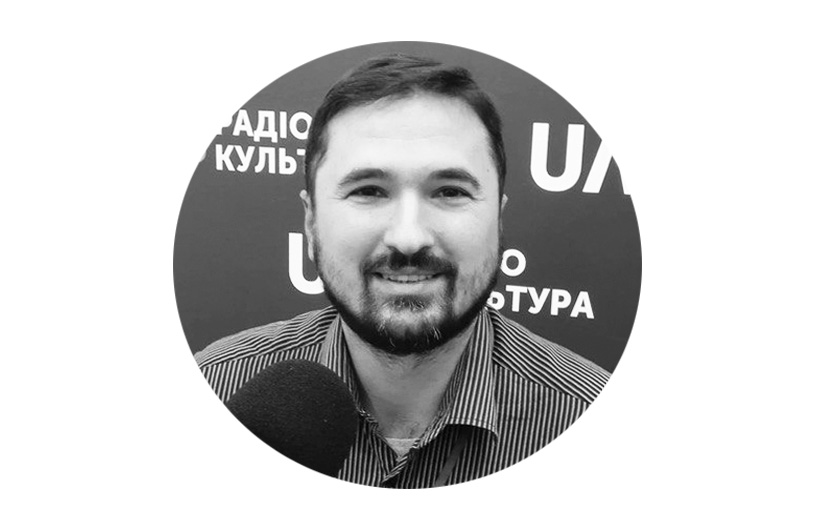
In the history of the Ukrainian community in the United States, there are many distinguished figures who deserve recognition, respect, and remembrance. Ukrainian sports in the U.S. offer numerous examples of success, victory, and resilience. Some have reached the heights of the “Olympus,” building outstanding careers in elite sports. Others have carried their love for sport throughout their lives in an amateur spirit. And there are those who have combined sport, Olympic ideals, and community service. One such remarkable example is Stefaniia Vovchak.
Most Ukrainians in the United States know her for her dedicated work for the community. At the same time, Mrs. Stefaniia has unique sporting stories that date back 90 years. This year marks a symbolic anniversary of her participation and victory at the First Ukrainian-American Olympiad in 1936. But that is not all. The memory of those remarkable events has been carefully preserved. In 1988, during the Ukrainian Olympiad and Youth Rally, she was invited as an honorary guest. The organizing committee of the 2000 Olympiad also remembered her and invited her to the celebrations. Thus, we too cannot overlook such a phenomenal anniversary of this unique Ukrainian athlete.
Before turning to her life and sporting achievements, it is important to clarify a delicate detail—her surname. Various sources spell it differently, and since she competed under her maiden name (as she was not yet married), this may raise questions among readers. As noted above, her surname is Vovchak, which is how it appears in Ukrainian-language publications. Occasionally, it is mistakenly written as Vovchok. In English, her surname appears as Wochok. However, in competitions she participated under the name Demianyk.
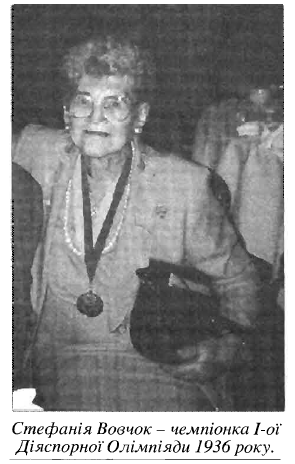
Unfortunately, Ukrainian diaspora publications in the U.S. wrote very little about her sporting career. Information about Stefaniia Vovchak in these sources is scarce. This is something that deserves to be corrected. Moreover, the 90th anniversary of the First Ukrainian-American Olympiad in Philadelphia deserves greater attention and recognition, as it is an important part of our sporting and Olympic history.
For example, in 1958, the magazine Our Life wrote: “We still remember Stefa Demianyk not long ago, when she, along with other young girls, went to school! And now she is not only married and a mother of four, but also a cashier of ‘Providence’!... In school, she did not think about office work. In high school, she took an academic course, dreaming of becoming a teacher, and even began university studies. But times were difficult, and she had to earn a living.” This describes her early years—but contains no mention of her active sporting life, not even a brief reference to her successful performance at the 1936 Olympiad in Philadelphia.
A 1996 publication of Our Life provides more detail, including her youth: “From her teenage years, she centered her life around the Ukrainian church and Ukrainian youth organizations: the League of Ukrainian Catholic Youth, the Ukrainian Cultural Center, which held meetings at the International Institute, and sports. She worked in these organizations as a secretary or treasurer. Later, in the late 1930s, she became active in the Ukrainian National Women’s League of America.” Here, at last, there is mention of sport. Further, the article states: “In October 1937, the 52nd branch was organized, initially known as the ‘Ukrainian Journal.’ She was a founding member and remains a member of this branch.
On May 24, 1940, Stefaniia was a delegate from the 52nd branch at the first congress of the Ukrainian Congress Committee of America. She participated in numerous meetings leading up to the publication of Our Life, which later transitioned into a magazine format.” This is certainly valuable information. Yet it remains puzzling why the year 1936—her most significant and successful year in sports—was overlooked. That year marked her participation in the First Ukrainian-American Olympiad, where she achieved victories. Moreover, considering that in 1935 track and field competitions for Ukrainian youth were held in Philadelphia, it is highly likely that Stefaniia also took part in those events.

The First Ukrainian-American Olympiad in Philadelphia, 1936
To better understand Stefaniia’s sporting legacy, we must take a closer look at her athletic experience—remarkable and truly unique. In September 1936, the First Ukrainian-American Olympiad took place in Philadelphia. The choice of year was not accidental: 1936 was also the year of the XI Olympic Games held in Berlin, Germany. These Games remain a complex chapter in Olympic history, marked by both achievements and significant controversy. In that same year, Ukrainians in the United States decided to organize their own Olympic-style event. The key idea behind it was unity and a shared commitment to the values and philosophy of Olympism. It is worth noting that such symbolic Olympic unity was demonstrated by the Ukrainian diaspora on multiple occasions in later years as well—namely in 1948, 1980, 1984, 1988, 2000, and 2008.
It should also be emphasized that the Ukrainian community in Philadelphia had begun preparations for large-scale sporting events even before 1936. In particular, track and field competitions among Ukrainian youth were held in 1935. It is highly likely that Stefaniia took part in these events. Moreover, given that she was born and lived her entire life in Philadelphia, it is reasonable to assume that she may have also contributed to the organizational process—especially considering her early involvement in community activities. As Volodymyr Halan, head of the United Ukrainian-American Organizations of Philadelphia, wrote about the preparations: “American Ukrainians will experience a new wave in the development of our youth’s organized movement. For now, after the conclusion of the Olympic Games in Berlin, the first Ukrainian-American Olympiad will take place in Philadelphia on September 7, organized by the United Ukrainian-American organizations of the city and the League of Ukrainian Youth of North America… The First Olympiad will conclude the two-day meetings of the Fourth Youth Congress, the Conference of Ukrainian Professionals, and the 11th Convention of the Ukrainian Riflemen’s Association.” These were truly large-scale organizational efforts—a project that engaged the entire Ukrainian community. The sporting competitions became an integral part of broader social, cultural, and even geopolitical activities of the Ukrainian diaspora in the United States.
Halan further noted: “For three years, preparatory work had been carried out among the youth and the wider community of Philadelphia. The first attempt at organizing an Olympiad in 1935 yielded such outstanding results that there was no doubt about the importance of a full-scale Olympiad. Preparations advanced to the point that the First Ukrainian Olympiad would be held at one of the finest athletic venues, with its program under official supervision… Thus, the Olympiad is no longer only a matter for the Philadelphia community—it is a matter for our entire immigration.” Such was the масштаб and significance of the Ukrainian Olympiad. Could Stefaniia have missed it? Certainly not.
Unfortunately, detailed accounts or personal recollections of Stefaniia Vovchak’s performances remain scarce. Only brief mentions and notes have been found. Her own memories of those events would have been invaluable—but, sadly, we can no longer hear them firsthand. Whether such recollections exist in written form remains an open question. Still, there is hope they may yet be discovered. What is known, however, allows us to reconstruct part of her achievement. In 1936, still under her maiden name Demianyk, Stefaniia participated in the First Ukrainian-American Olympiad in Philadelphia. Her results were both notable and impressive: Gold medal in the 400-meter race as part of the Ukrainian Cultural Center team from Philadelphia; Bronze medal in the high jump. In total, Stefaniia Vovchak won two medals—a truly strong performance. The undisputed star of the Olympiad was Anna Lebo, who won several gold medals and whose achievements deserve a separate article. At the same time, Stefaniia’s success confirms her deep passion for sport from a young age. And this was not the last sporting chapter of her life. Olympic values remained with her for many years. Moreover, she became a role model and a guiding light in sport for younger generations.
The Ukrainian Olympiad and Youth Rally in Philadelphia, 1988
As noted earlier, Olympic traditions and values have always held deep significance for Ukrainians. For decades, Ukrainians fought for the right to participate in the Olympic Games under their own flag, representing their country, their anthem, and their identity. However, during the years of occupation, this was impossible. Even when the International Olympic Committee acknowledged Ukraine’s right to stand among equals in the Olympic family, numerous obstacles remained. In Soviet-controlled Ukraine, even the idea of independent participation separate from the USSR was forbidden. As a result, a determined struggle for a free Ukrainian Olympic movement began within the diaspora. One of its manifestations was the organization of Ukrainian Olympiads. In 1988, such competitions returned to Philadelphia. These events coincided with the commemoration of the 1000th anniversary of the Baptism of Ukraine and carried great significance, resonating far beyond the Ukrainian community.
The organizing committee of the Ukrainian Olympiad and Youth Rally, alongside sports competitions, artistic performances, and cultural programming, sought to preserve traditions and honor the legacy of previous Ukrainian Olympic initiatives in the United States. On the eve of the opening, a ceremonial banquet was held, to which Stefaniia Vovchak was invited as an honored guest. Ukrainian press reported: “The benefit banquet of the Olympic Committee was a success. Philadelphia (M. B-y). On Saturday, April 16 of this year, a successful banquet-benefit organized by the Ukrainian Olympic Committee took place at the UOC Center. Two hundred attendees, including distinguished figures from Ukrainian and international sports, spent several pleasant hours in a light atmosphere that lasted nearly until midnight. Dr. Ihor Kunash, the host, opened the event and invited Rev. Mitr. Dr. Ivan Bilanych to lead the prayer. The main report was delivered by engineer Ihor Chyzhovych, head of the Ukrainian Olympic Committee. He informed the audience about the preparations, introduced committee members, representatives of national and local organizations, sports figures, and former athletes of the Ukrainian Sports Organization ‘Tryzub,’ who now hold leading positions in American sports (Dr. Leonid Lutsenko and Yevhen Chyzhovych). He also introduced benefactors Ivan Hyniansky and his wife Diana, who donated $20,000 for the needs of the Olympiad. Engineer Chyzhovych also presented among those present Stefaniia Vovchak, a participant of the 1936 Ukrainian Olympiad in Philadelphia, as well as Anna Yaremko, wife of the late enthusiast of Ukrainian sport Oleksandr Yaremko, and their daughter Daria.”
As we see, Stefaniia Vovchak was invited as an honorary guest to the banquet preceding the official opening of the competitions. It is gratifying that the organizers remembered her and honored her sporting achievements. And this is not the end of the story—it continues as a symbolic connection between Ukrainian traditions and Olympic values.
The Ukrainian Diaspora Olympiad in Philadelphia, 2000
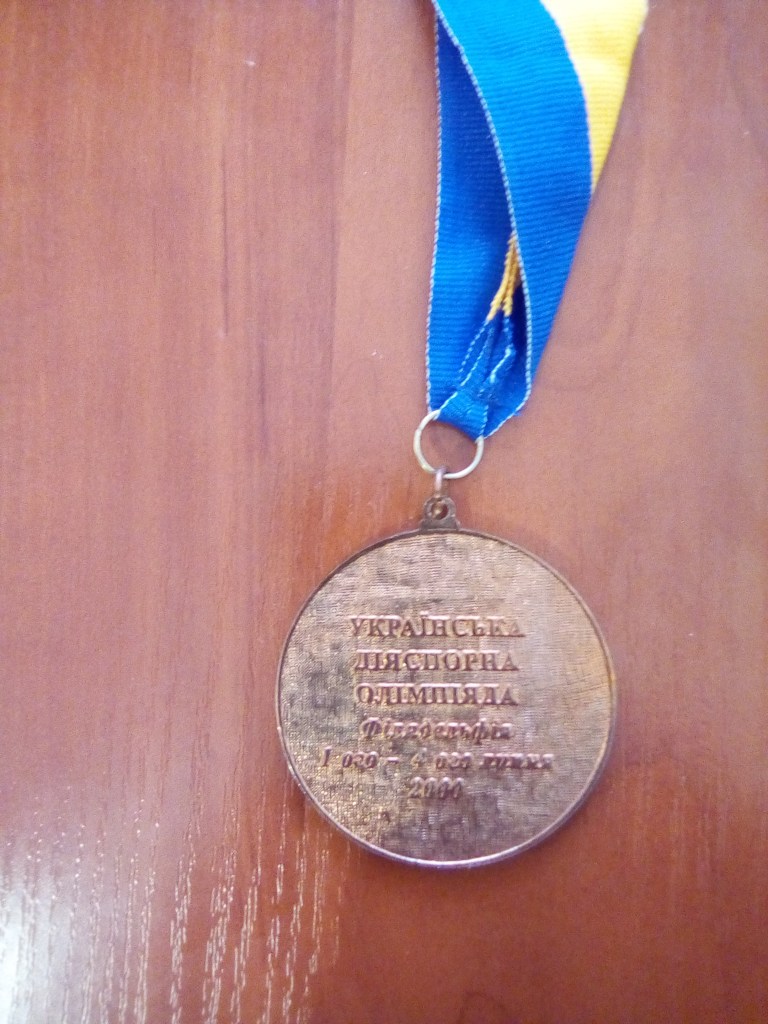
Once again, Ukrainians abroad organized an Olympiad—this time in 2000, the same year as the Olympic Games in Sydney, Australia. This demonstrates that the Ukrainian idea of unity with Olympic traditions remains unwavering. For the third time, Philadelphia became the host city of Ukrainian Olympic competitions, turning this into a meaningful tradition. The organizing committee once again upheld the principle of preserving and honoring the history of the Ukrainian Olympic movement. Notably, Stefaniia Vovchak was again invited as an honorary guest. This is particularly remarkable given her advanced age—she was already 83 years old. Many decades had passed since 1936, yet the “beacon” of Ukrainian sport in the United States continued to shine, inspire, and set an example for younger generations.
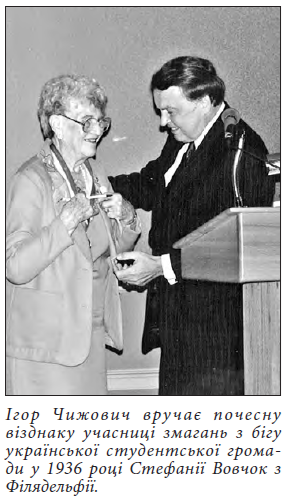
The Ukrainian press in the United States wrote: “A pleasant surprise was the presence in the hall of Stefaniia Vovchok, a participant of the first diaspora Olympiad of 1936. Today she is around 80 years old, yet she recalled the events of those competitions as if they had happened yesterday—how she won a gold medal in the 400-meter race and a silver medal in the high jump.” These were truly unique and touching moments during the 2000 Olympiad. In addition, Ihor Chyzhovych presented Stefaniia with an honorary award.
Indeed, we have much to be proud of—and many remarkable figures to remember.
Author: Oleksiy Lyakh-Porodko