


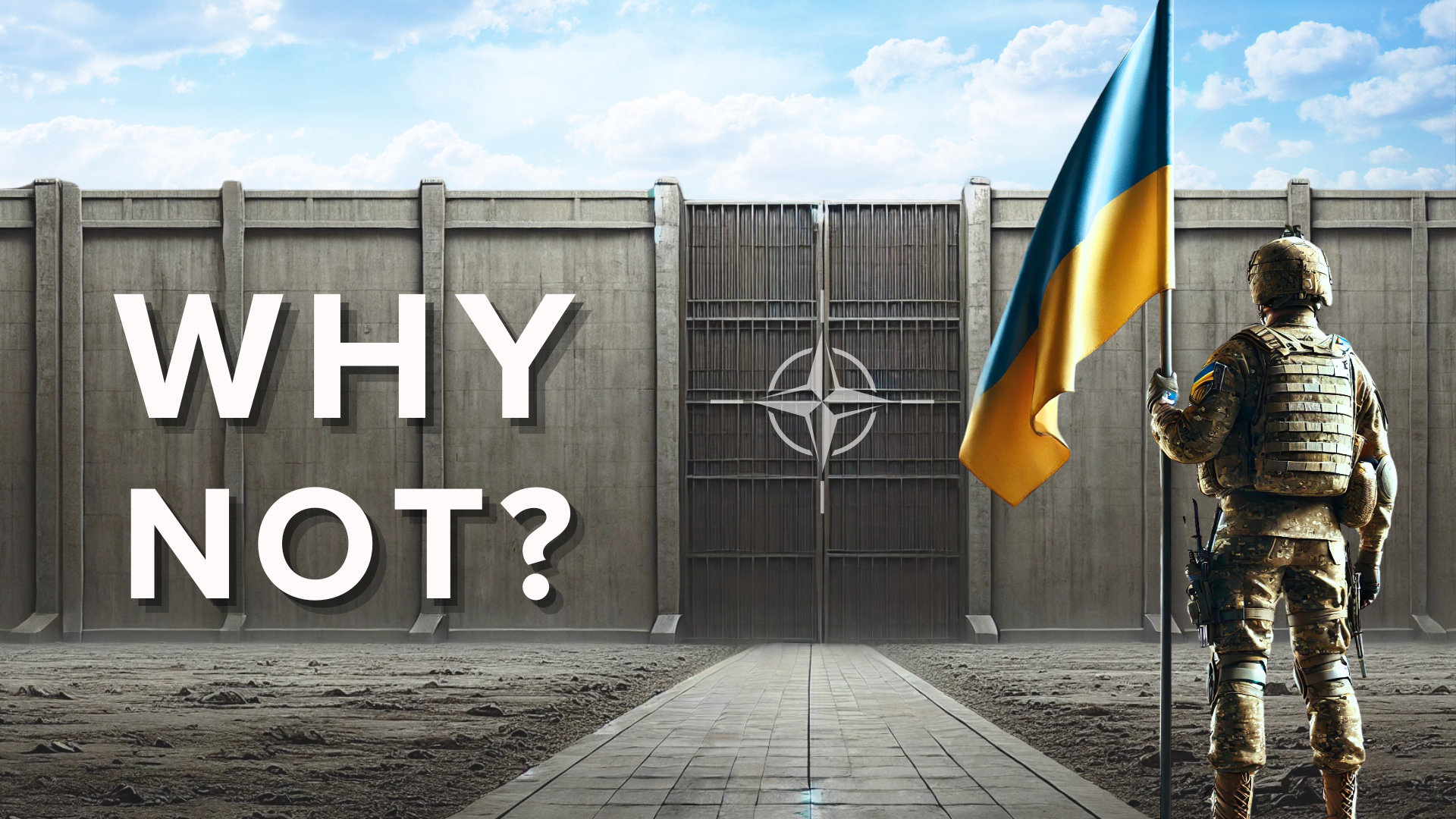
Currently, Ukraine is urgently asking the NATO alliance to accept it into its ranks. We've been asking for this for a long time, especially insistently since the beginning of the war, and now more than ever, as the russians seize more and more Ukrainian territory. Recently, President Zelensky presented a victory plan based on Ukraine receiving an invitation to join NATO. This is only an invitation, while real membership is still far off. It remains unknown when we will receive it, or if we will receive it at all. In my view, the process is difficult and lengthy, and possibly even entirely hopeless.
The issue lies in the fact that key alliance members – the U.S. and Germany – are not expressing decisive interest. And Hungary and Slovakia, whose elites have much sympathy for russia and putin, will also block this decision. For example, Hungarian Prime Minister Viktor Orbán blocked EU funds for arming Ukraine and withdrew from NATO's lethal weapons assistance program for Kyiv. In a social media post, Orbán called Zelensky’s victory plan “more than horrifying.” Slovak President Robert Fico has warned that Ukraine’s entry into NATO “would be a good foundation for World War III” and promised he “will never agree” to it.
There are other countries that do not want to quickly move forward toward Kyiv and are content to hide in the shadows. Countries like Belgium, Slovenia, and Spain quietly stand behind the U.S. and Germany. “They don’t want to,” said one NATO official. Another official confirmed that these countries only support the idea abstractly but would publicly oppose it as soon as practical steps are discussed.
The situation seems hopeless, especially now. I don’t know what needs to happen for this to move forward. Even the latest news about North Korean troops participating in the war on russia’s side – essentially meaning that another country is joining the war against us – does not prompt our partners to move faster. They’ll probably limit themselves to “expressing concern and serious worry.”
Our partners condition NATO membership on significant reforms in Ukraine's military sphere, social life, economy, legal system, and judiciary. These issues in Ukraine are being addressed too slowly, and many good steps are reversed, negating the progress made. Cases of abuse and corruption in legal institutions look particularly appalling to ordinary people. Take, for example, the “prosecutors’ case” with their fake disabilities. Those who were supposed to stand guard over the law and order were the first to violate them. With such a "background," it’s hardly worth talking about moving forward within respectable society. And, worst of all, there is no appropriate, severe punishment for such violations, even in times of war! Punishment so that others aren’t tempted. Ukraine’s entire criminal code needs serious revisions; otherwise, a teenager who stole a trinket will still get five years in prison, while an official who stole millions will get little more than a regular dismissal. Many of these high-ranking criminals will then go abroad, continuing to live luxuriously, unhidden. And all of this tarnishes the country’s reputation even further.
On the other hand, let’s ask ourselves – why are the Baltic states, like Lithuania, Latvia, and Estonia, in NATO while Ukraine is not? Because, even when they were part of the Soviet Union, they wanted this path and fought for it. They already understood what russia is like, hated it, its language, and everything connected with it.
I’ll share a telling example from the story of a woman I know. Once, she went to Lithuania for a funeral and went to buy a wreath. When it came time to pay, she found she didn’t have Lithuanian currency, so she offered rubles. But the vendor replied: “I’ll give you the wreath for free, but I don’t want to see that trash” (pointing at the rubles). That’s an example of national consciousness in an ordinary worker. It is likely at the proper level among Lithuanian high officials as well. But for us, where half the country was russified, where the Verkhovna Rada was filled with traitors and turncoats, where the south, east, and center, including the capital Kyiv, mostly spoke russian or broken “surzhyk”. Once in Kyiv, I boarded a trolleybus and asked to “pass the fare,” and most passengers turned to look at me, as if to see who this “country bumpkin” was speaking Ukrainian. Back then, Ukrainian was considered a rural language, while it was prestigious to speak russian in the city. Now, the moskal has beaten us with this “prestige.”
It all began with language. The russians seized Crimea, advanced into Donbas, justifying its actions with the desire to protect russian-speakers. This narrative has been maintained to this day. Allegedly, we “oppress” russians and russian-speaking Ukrainians. But there’s silence about the fact that they destroyed Ukrainian culture and language for over 70 years. Language is our identifier during our greatest trials, our soul, embracing our culture, history, customs, and traditions, dreams, and aspirations. The russians know this well, which is why they were so determined to eradicate us with fire and bullets.
Could residents of the mentioned southeastern regions of Ukraine have voted, if given the chance, for NATO membership? No, because they called the moskals brothers. And these “brothers” stabbed them in the back. Only now have millions of people awakened, understanding who the russians really are. Only now have millions started speaking Ukrainian. Or rather, they have started learning to speak it. The Ukrainization process in eastern Ukraine will take a long time. Not just one year, as entire generations were russified over decades. Just as much time will be needed to recover. I’m very glad that the process has begun. That’s what matters. And time will help.
In his statement, Zelensky emphasized: if we are denied NATO membership, if we are denied the protection of our sovereignty, then Ukraine has the moral and legal right – and more importantly, the real ability – to restore its nuclear programs and create nuclear weapons. I remind you that the Budapest Memorandum is not in effect. We gave up our nuclear weapons in exchange for guarantees from the U.S., the UK, and russia, that Ukraine's sovereignty and territorial integrity would be preserved. Some distanced themselves, while another guarantor started a war of conquest.
This statement by Ukraine’s President made a lot of noise in the West. It may serve as a signal that it's time to take decisive measures to support Ukraine, rather than just condemning and deeply worrying. Meanwhile, Ukraine needs not only to restore its nuclear capability but also to develop domestic missile and ballistic production in general. To become one of the most modern and powerful armies in the world, so that NATO would request our membership. I understand that this sounds unrealistic right now, but it’s something we need to strive for and work towards. And I believe that it will happen in the future. Our army is already showing outstanding results, and the experience gained in fierce battles is invaluable, as is the understanding that peaceful life is impossible without strong protection.
And maybe we should take a little lesson from Israel, which listens to the West’s advice and instructions, nods along, but does its own thing when necessary. And we, too, need to do our own thing – to fight the moskal without looking back.
Glory to Ukraine!
Author: Myroslav Hrekh