


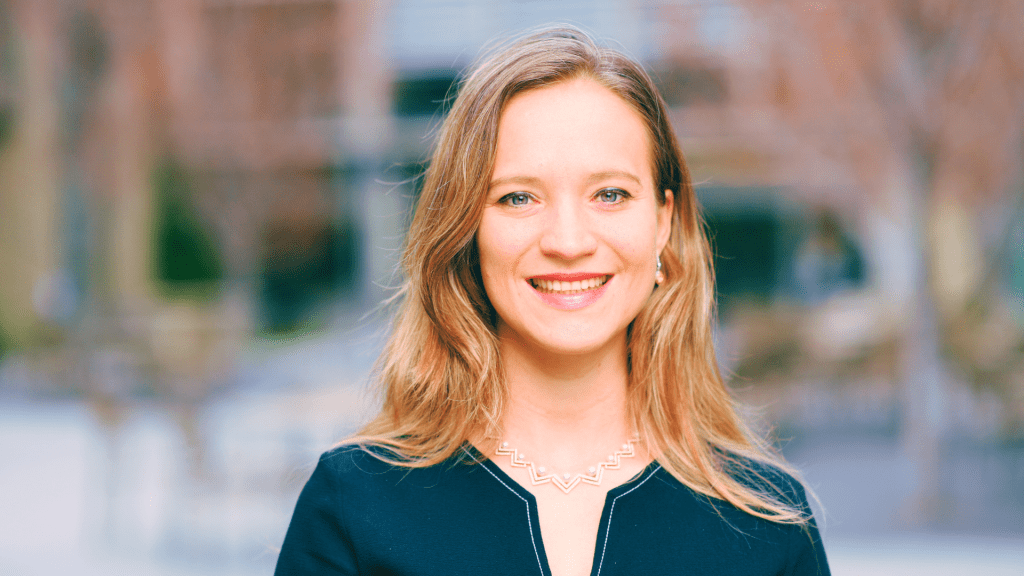
This conversation with a finance professor at the Haas School of Business at UC Berkeley, who stands at the intersection of science, innovation, and societal impact, left a lasting impression of calm optimism. Anastasiia Fedyk has reached the pinnacle of academic achievement and now explores the impact of artificial intelligence and big data on modern business processes. At the same time, she actively supports Ukraine daily, creating initiatives that change the lives of thousands of people. Her work combines cutting-edge technologies with a deep understanding of humanitarian needs, and her contributions to social projects serve as an example of true responsibility to both her country and the world.
This discussion is not just about challenges and achievements but also about the belief that every action can lead to significant change.
L.S. (Lukian Selskyi): It seems logical to begin our discussion with one of the most talked-about topics globally – artificial intelligence and its impact on the future, which so many people fear today. Do you share this fear of the unknown?
A.F. (Anastassia Fedyk): Not at all! The primary focus of my academic work is new technologies. Initially, I planned to dedicate my research exclusively to communication technologies, but I’ve since expanded it to include new technologies, particularly AI (artificial intelligence). Specifically, I study how companies invest in AI and how AI can benefit these companies.
L.S.: Yes, everyone seems to be diving into AI. Is it more of a trend, or is it truly a gateway to groundbreaking technologies?
A.F.: Few people realize that AI isn’t a new phenomenon. Yes, it’s highly relevant today, but companies have been investing in artificial intelligence for the past 10 years—not just in ChatGPT; there are other methods too. Overall, scientists have been working on artificial intelligence and the statistical methods underlying it for about 60 years. However, its commercialization only began around 2010-2012, with milestones like the ImageNet Challenge, Netflix algorithms, and Google Translate. Since 2022, we’ve seen a new phase in the development of this field.
L.S.: Could you provide an example of practical, professional assistance that AI offers?
A.F.: For instance, when an auditor visits a warehouse, they don’t open every single box. They check 10–20% of the boxes to get a general sense of the situation. AI, however, can point them toward specific suspicious areas—for example, where the data doesn’t match up. This allows the auditor to focus directly on where checks are necessary without wasting resources or time examining the entire inventory. This illustrates AI’s instrumental utility: when a company uses artificial intelligence for auditing, it encounters fewer problems, audits take less time, and, ultimately, the company requires fewer employees.
L.S.: Regarding the last point—reducing the workforce in companies—this seems to be a clear and fairly rapid trend.
A.F.: Only in specific industries. For instance, we see it in auditing, but not necessarily in other fields. When a company begins using artificial intelligence, its operational capacity often increases because the company starts developing new products. Most businesses use AI not to shut down their operations but to create something new. Take the example of medicine. Experts from Moderna acknowledged that without AI, it would have taken them several years to develop the COVID-19 vaccine. With this new technology, the process took just 63 days!
Additionally, in companies using AI, the number of patents and trademarks has increased over the past decade, indicating the creation of more new products. These companies grow, which generates a need for more employees to implement these products.

L.S.: What about the ratio of employees to a specific project or process? Does that decrease?
A.F.: No, it doesn’t decrease; it remains the same. My co-authors and I were surprised to find that metrics such as revenue per employee have stayed constant. At least, that’s what we’ve observed during the first decade of corporate investment in artificial intelligence.
L.S.: How do you measure whether companies have been using AI over these years?
A.F.: To work with AI, you need people who understand it. That’s why we base our measure on the employees in each company who work on AI. To do this, we analyze a massive amount of resumes—500 million, to be exact. By studying these, we can see who these workers are, which companies they work for, and what they specialize in.
L.S.: So, to summarize, you don’t foresee a significant reduction in the workforce within companies?
A.F.: Not yet, and I don’t expect it in the near future. Of course, things can always change. Initially, companies use AI for new projects, and only after capturing a portion of the market can we talk about efficiency. For instance, over the past 10 years, we haven’t seen companies significantly increase their product prices. Instead, they’ve increased their product volume. Prices have remained nearly constant. But that doesn’t mean it will stay that way. Industries leveraging AI are becoming more monopolized, so it’s possible that monopolist companies will eventually raise prices.
L.S.: Energy supply is also a pressing issue. Is this becoming a problem now?
A.F.: Yes. Chips, processors, electricity—these all pose challenges. While there are newer methods that may work better, they require more computational resources.
L.S.: How can people address the monopolization of AI? Today, we see 3–5 major players emerging as market monopolists in AI usage. Does this pose risks to market freedom?
A.F.: Yes, monopolization is advancing in two directions. There are companies producing AI and those using it. For example, Moderna, which develops COVID-19 vaccines, or Caterpillar, which manufactures tractors—both are capturing larger market shares, leading to increased concentration in their industries.
L.S.: So, they also use AI. But these companies are leveraging specific AI tools provided by other companies, right? They’re not creating their own AI?
A.F.: Even when companies buy AI tools from others, they invest in their own human resources to develop and adapt those tools. For example, when GlaxoSmithKline started using IBM Watson, they hired employees that same year to work on their own AI. In large companies, these processes usually occur in parallel. Companies use market-available solutions but customize them for their own needs. If you simply take IBM Watson and don’t optimize it, you won’t get much out of it. But if you hire someone knowledgeable in AI and combine that expertise with a technology from another company, such as IBM, it all works much better for you. That’s why companies usually purchase market-available technologies but hire employees to adapt them.
L.S.: So, using a kind of "subscription" isn’t advantageous?
A.F.: You don’t need to develop everything from scratch, but you do need to adapt it to your needs. Let me give you an example of our work with Economists for Ukraine. We have one project that we haven’t launched yet but have already developed—a bot named Victoria, which counters Russian disinformation. For instance, when someone tweets false information, Victoria responds with factual information. It can also answer questions. This tailored model was created by one of my students, and it was crucial to train the model using verified data (articles written by our own team) to ensure that the system wouldn’t propagate Russian disinformation. However, the student didn’t develop the model from scratch; they took existing algorithms and adapted them for specific tasks.
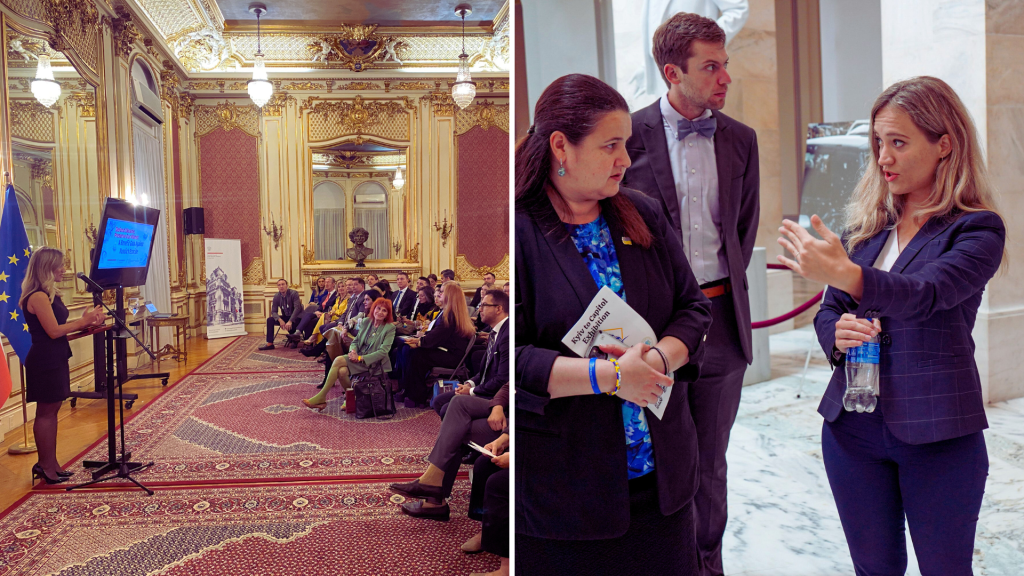
L.S.: Your work is complex and fascinating, but there must also be a personality behind it. And that personality has Ukrainian roots.
A.F.: Absolutely! I was born in Chernivtsi. I moved to the U.S. with my family in 1999. My family is academic—both of my parents came to pursue their PhDs. My father attended Washington University in St. Louis, Missouri, while my mother pursued her PhD here at UC Berkeley Haas. I also finished high school in Berkeley and then enrolled at Princeton University. After graduation, I worked for two years at Goldman Sachs in New York. Later, I earned my PhD at Harvard and returned to Berkeley. I’ve been here since 2018, teaching general finance to MBA students at the business school. I met my husband at Princeton; we have one son, 5-year-old Sebastian.
L.S.: Is your husband Ukrainian as well?
He’s half British, half Italian. But he supports Ukraine so much that he left his own business and now devotes himself entirely to volunteering. He founded the AI for Good Foundation—a social nonprofit that uses digital technologies to implement projects solving social issues. He’s been working on this since 2015, but since 2022, he has dedicated all his free time and focus exclusively to Ukraine.
I also help as much as I can—spending about 10 hours a week outside of my research work. For example, one of our programs is Witness, a platform for documenting war testimonies. Another is We Are the Power, a platform that helps people find assistance, also developed by our team. Additionally, we’ve established four educational centers for children affected by the war in Sumy, Odesa, Mykolaiv, and Kharkiv. Now, we’re beginning to open centers for veterans as well.
L.S.: You generate a lot of Ukrainian initiatives, projects, and processes around you. Tell us about them.
A.F.: Honestly, it all started in 2022, like it did for many others supporting Ukraine. In February, my husband, my co-author on many academic papers, Tetiana Babina (originally from Donbas), my friend Tetiana Balyuk, and my colleague Yuriy Gorodnichenko came together on a Zoom call to figure out how we, as economists, could be useful to our country. We wanted to do something that was both needed and within our expertise.
The first thing we noticed was that people fleeing the war needed help finding information. That’s how our platform We Are the Power was born—it helps people meet basic needs. It works like Google Maps. For example, someone who moves to a city they don’t know can use it to find any service, from grocery stores to veterinarians. Our idea was to provide information about existing services and locations. It’s not for those needing free food or animal supplies but for those who have money but don’t know where to go.
Later, with the help of a grant, we added another functionality to the platform—requests for assistance. This is for people who either don’t have the money to pay or can’t go to the store themselves. Here, we connected those in need with those willing and able to help. For example, someone might need free medicine, and someone else might be ready to donate 50,000 UAH to cover it.

L.S.: What about advocating for Ukraine?
A.F.: At the beginning of the full-scale invasion, we joined the Yermak-McFaul group. This is an international working group of independent experts on sanctions against Russia. Initially, we shared our thoughts on the topic on the Berkeley Blog, then in renowned media outlets like The Washington Post and LA Times. We began giving interviews to BBC, Bloomberg, Deutsche Welle, and many others. The more we do, the more we see how much more needs to be done.
For example, James (my husband) noticed that war testimonies were mostly shared on social media, which is unreliable and makes it difficult to find specific information. So we created the platform Svidok.org (Witness). It’s like a war diary, similar to Anne Frank’s story. You never know whose diary might become the most important later. That’s why we built this platform to make it comfortable for people to simply write their journals.
L.S.: Many people aren’t ready to share their tragedies and traumas. Have you managed to build trust?
A.F.: It’s truly challenging. But there are many people who care about preserving their personal and collective history. Our team works tirelessly to reach out to them and let them know about Witness. People who were keeping handwritten diaries later digitized them when they learned about our platform. One woman holds a special place in my heart—I call her our Anne Frank. She’s from Zalyman, a village near Balakliia that was under occupation. Her diary chronicles her entire life, unembellished and unedited: “Here are our children with disabilities, here’s where the bombing hit, here we are planting a garden, here Uncle Kolya was captured after sneaking out at night to eat Russian rations.” She continues to write, adding new stories several times a week.
For me, her story is invaluable! She’s not a scholar or a journalist. Yet, by documenting her memories, this woman is essentially creating history for us. The entire initiative has been worthwhile just to find someone like her. Because this is about us Ukrainians and our path to victory.
Original text published in Ukrainian.
Author: Lukian Selskyi