


June 2025—the traditional Pride month—found Ukraine caught in a vortex of opposing trends. On the one hand, the very center of Kyiv had just hosted the first Equality March since the start of the full-scale war: shorter, held under heavy security, yet nonetheless public and loud. On the other, Draft Law No. 9103 on civil partnerships—long awaited by the LGBTQ community since 2022—still lies in parliamentary drawers, blocked by conservative deputies and pseudo-traditional “values.”
Between these poles lie the lived stories of Ukrainians who feel the cost of visibility every day: IT specialists, engineers, singers, photographers, soldiers, and human-rights defenders. Some remained at home; others sought a new path in San Francisco or New York. The protagonists of this article agreed to share what it means to be LGBTQ Ukrainians in 2025: to survive the disrupted Equality Festival in Lviv, endure bullying in the army, organize a march under rocket fire, and still sing about love. Their voices form a living map of a movement that—despite the war—insists equality is also a frontline, and victory there is no less vital for Ukraine’s future.
“Silence is death”
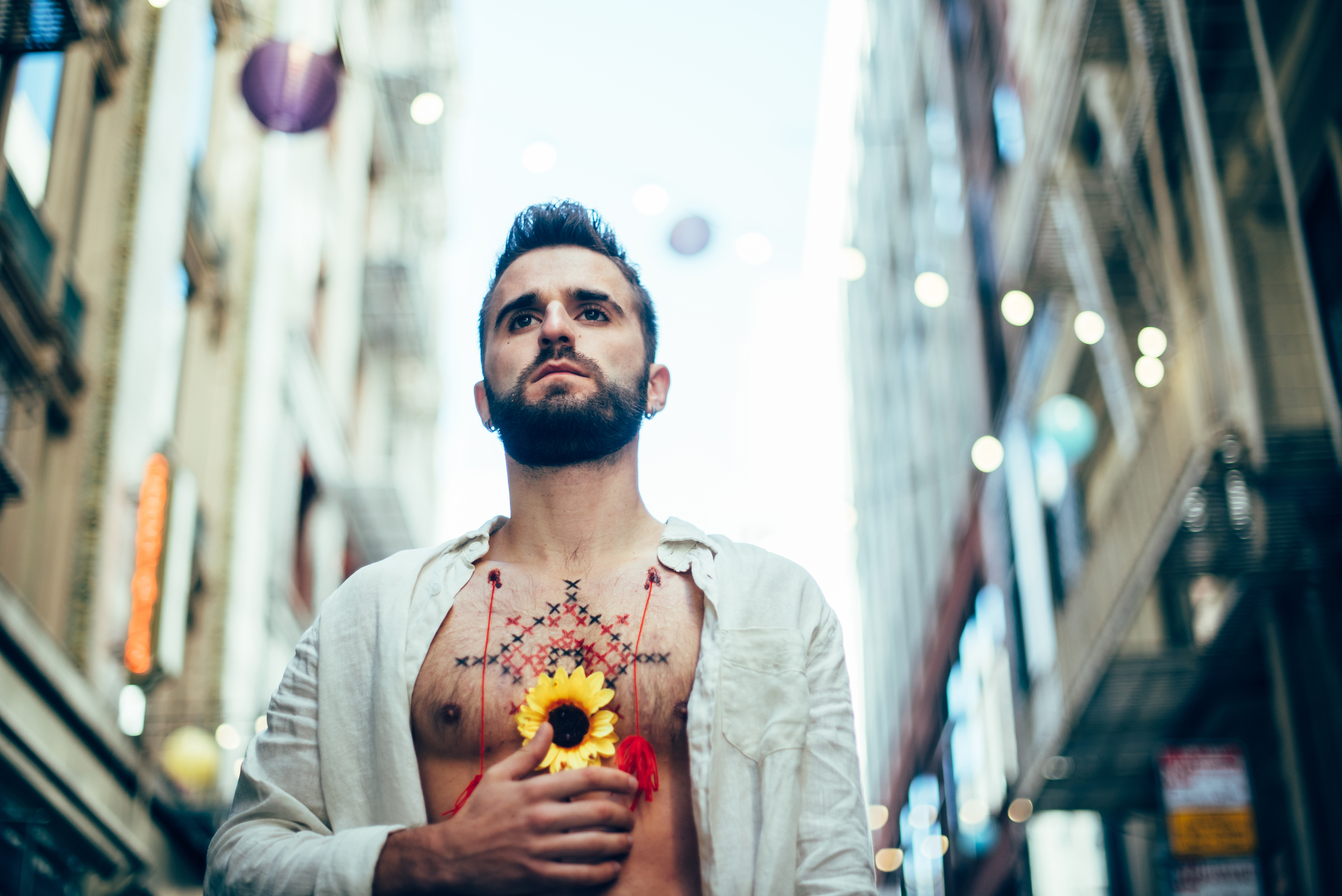
Ukrainian singer and blogger Bohdan Andruk, known by the stage name ANDRUX, has lived in San Francisco for more than ten years. His songs “Misto Leva,” “Shche Raz,” and “Kimnaty” stream on Ukrainian platforms, while his benefit concerts raise funds for the Armed Forces of Ukraine. Behind the outward success lies a path toward self-peace that began only after he moved to the United States.
“The process of accepting myself was very long and painful, because the church baggage sometimes knocked me off my feet. I grew up in a religious family, so coming out to myself felt like jumping into the hell of my own mind,” the artist recalls. During his first months, Bohdan lived “in observation mode,” carefully gauging how safe it was to be an openly gay man in his new country. Even in multicultural, super-liberal California he encountered invisible barriers.
“Homophobia isn’t always overt physical violence. It’s body language, looks, the change in people’s tone when you say you’re gay. The classic scenario is when someone who’d been chatty and friendly suddenly falls silent and steps away. It’s both sad and funny.” Bohdan admits that sometimes those very Ukrainians from the diaspora who turned their backs on him at first later returned—having noticed his success—with requests for help; self-interest, it turned out, could outweigh their “traditional values.”
The worst persecutor, the artist says, lived inside him: “An LGBT person who denies their own orientation—that is worse than any bullying. You belittle and suppress yourself every single day. It’s toxic and exhausting.” Even so, self-irony and sociability helped him get through school without physical violence, though classmates’ ridicule—and his own internalized homophobia—left a deep mark.

Today ANDRUX turns his personal story into music and activism. In his new tracks he doesn’t focus on an “LGBTQ agenda” but on love and acceptance—concepts, he says, “more timely than ever when the world is drowning in hate.” To skeptics, he simply suggests checking out his Instagram profile @andruxmusic and hearing the work for themselves.
His chief demand of Ukraine is tough penalties for discrimination, because homophobia, he insists, “is not a right to an opinion; it’s an obvious offense.” “LGBT people were, are, and will remain an integral part of society. Period. No ‘buts,’” the singer concludes. His story is a reminder that silence kills: only spoken-aloud traumas turn into strength, and visibility becomes the first step toward equality without borders.
“I serve and I won’t be silent”

Dmytro Liaskovetskyi was only eighteen when he enrolled as a cadet at the Hetman Petro Sahaidachny National Army Academy. “My main motivation was to serve my country at its most critical time.” For the first years he hid his orientation completely, knowing it could cost him his career—and even his safety—in the army. Later, after winning the trust of a few comrades, the secret stopped feeling like a burden. It was precisely then, however, that Dmytro faced the harshest pressure: commanders threatened him with physical violence, and daily bullying was meant to force him to resign voluntarily. Eventually the prolonged psychological onslaught led to a suicide attempt.
After the incident that nearly ended in tragedy, Dmytro worked with a professional, attentive psychologist who helped him through the darkest period. Soon he was transferred to another National Guard unit, yet harassment and occasional humiliations did not end. When his interview with Deutsche Welle about homophobia in the military drew public attention, certain officials tried to demote Liaskovetskyi. His current commander, however, defended him and stopped the unfair reassignment. In Dmytro’s view, it was precisely public visibility that compelled the military leadership to act responsibly: “When problems are talked about, they stop being taboo.”
Personal challenges for him now are to build a stable, loving relationship with a civilian partner while balancing the front line and a fragile private life. The systemic challenge, he says, is “to change the attitude toward LGBT+ people in the military, which still remains conservative.” That is why Dmytro follows the fate of Draft Law No. 9103 with more than academic curiosity: “Adopting civil partnerships would officially formalize relationships and grant social, medical, and legal benefits on the same footing as other families—this sense of security directly affects combat effectiveness,” he explains.
Despite the traumatic experience, Dmytro’s guiding philosophy runs through his story: patriotism means not only loving one’s country but also respecting every individual who defends it. “Ukraine draws its strength from diversity—there must be room for everyone.”
Trauma as the Seed of Creativity

When photographer Danylo Vegera recalls his first serious encounter with homophobia, he starts by describing himself as “a Crimean with a spiritual bond to the peninsula,” yet also someone for whom the word safety has long been tied to the park near the Dnister Hotel in Lviv. In the summer of 2016, Danylo and his partner were on their way to a cultural Pride event when a group of young men began to follow them. “I heard a shout, some homophobic slurs. We decided not to react. But when I glanced back, a glass bottle was already flying at us. By some miracle it missed. We just ran and never made it to the event,” he recalls. Later it turned out those same attackers were part of the crowd that shut the event down, and the internet filled with threats toward the organizers and guests.
That summer was a cold shower for Danylo: “To stay ‘okay,’ you either keep silent or have a steel psyche,” he says of his remedy for daily hatred.
The following year he moved to Kyiv. Pride 2017 proved how many caring and courageous people live in the capital, but even after the march he still had to hide his symbols in the metro, because similar “lads” were everywhere hunting participants with rainbow face paint or badges.
The hardest part, however, is annexed Crimea. Since publicly supporting Ukraine’s Armed Forces and speaking out for LGBTQ rights, Danylo has received many threats from people on his native peninsula, including those linked to the occupation authorities and police: “They made it clear: if I show up at the Crimean border, I’ll be thrown in jail immediately.”

Eventually the artist chose to transform pain into something constructive, launching an international photo project that documents the many faces of homophobia—from Kyiv marches to the neon streets of San Francisco. “Life events made my photography more dramatic,” Danylo says of his early aesthetic. Each image is paired with a short story about its subject: “That way the viewer sees a person, not a ‘label.’”
America has become an environment where Danylo can “breathe with full lungs”: the local community helps with exhibition spaces, fundraising, and technical equipment. “Without that support, my work would be impossible. I never stop marveling at this country!” he admits.
The contrast between Lviv and California is especially vivid on parade days. “In San Francisco I go to Pride and I’m not afraid. But the moment I step into BART—the local rail metro—I still automatically tuck away my little rainbow flag out of habit. Obviously I need more time to believe it’s truly safe here,” Danylo smiles. In his view, the LGBTQ topic in Ukraine is still “in its formative stage.” Yet he believes the creative industries can shake society out of stagnation: “We need large-scale collaborations with the international community, big cultural projects. Only through culture and enlightenment can people’s attitudes change.”
Danylo offers one clear piece of advice: unite and create large initiatives. “Only together can we break the silence,” he repeats at the end of the conversation—like a mantra that helps him get through the nightly news from the front.
“Don’t give up!”
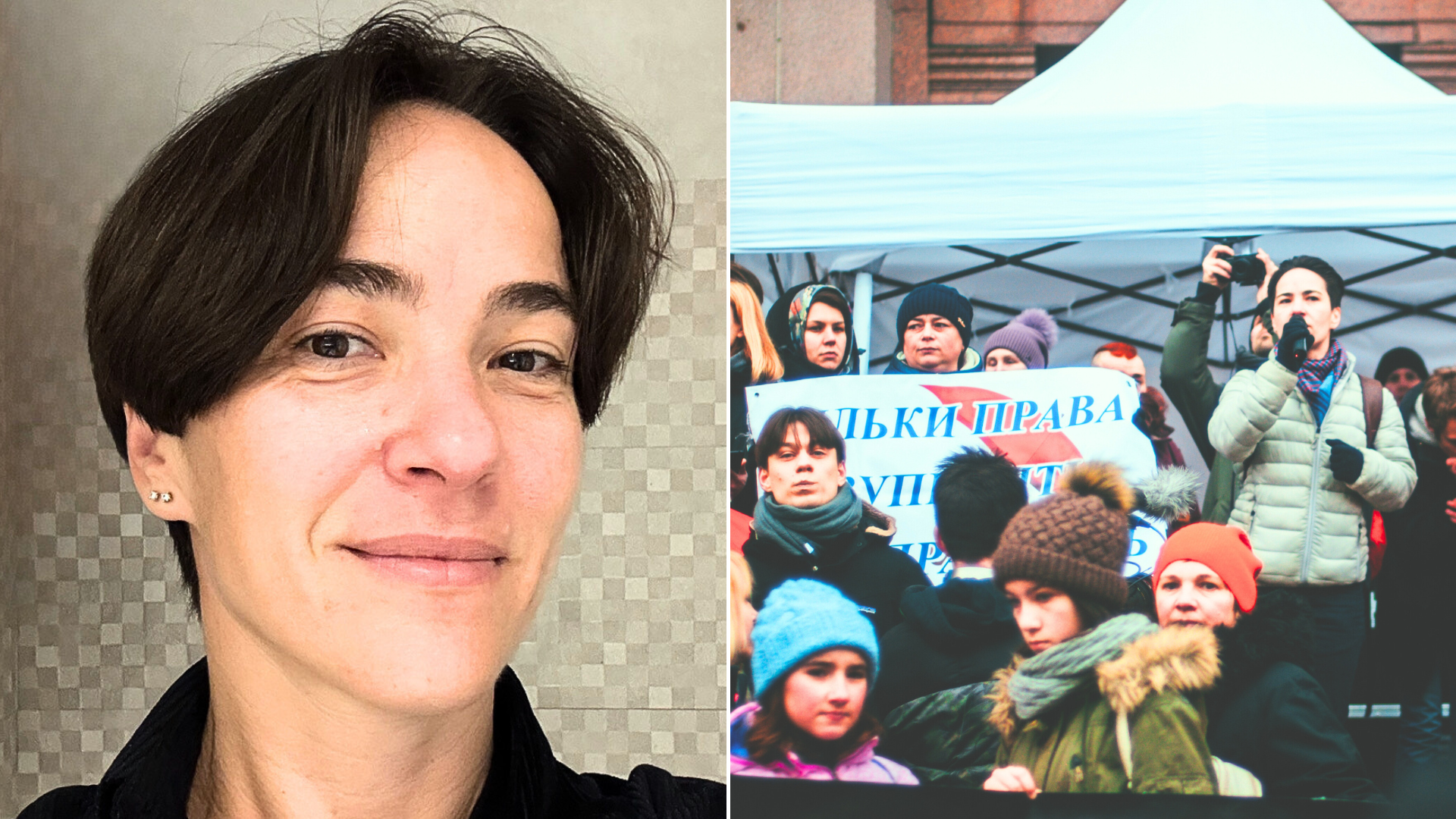
The Equality Festival in Lviv, scheduled for 19–20 March 2016, became both a shock and a point of no return for Olena Shevchenko, founder of the NGO Insight. The event never even began: on Saturday, about two hundred members of far-right groups in balaclavas surrounded the Dnister Hotel, where roughly seventy guests and speakers had gathered.
“The hotel threatened to ‘burn us in the boiler room,’ a court hearing on banning the event was set for ten p.m., and the next morning radicals in balaclavas were bussed in and started the assault,” she recalls, adding that such a scenario would have been impossible without the city authorities’ tacit consent. While activists waited for the police—only a single patrol arrived, an hour late—the attackers chanted “Kill, kill, kill,” hurling stones and bottles. In the end, law-enforcement officers evacuated the participants by bus to an undisclosed location to save them from the weekend-long manhunt the radicals had announced on social media. Not one of the assailants was ever charged. For Olena, the main lesson of that grim day is crystal clear: no matter the scale of hatred, retreat is not an option.
Over the following years, the tools of pressure grew more sophisticated, the activist explains. “Now we see cyber-attacks, bogus complaints, leaks of personal data far more often. Radicals ‘rationalize’ discrimination and use war rhetoric to legitimize violence.” What has not changed is the authorities’ reluctance to log and investigate hate-motivated crimes.
According to Olena, security for LGBTQ activists remains unstable: public events still run the risk of attack, even though media and human-rights solidarity has grown. “The state still lacks a hate-crime response system—this is a critical gap that civil society can no longer fill on its own.”
Paradoxically, the full-scale war has thrown the issue of equality into sharp relief. LGBTQ soldiers have become a “voice for change,” and the community’s public visibility has increased. Yet the legal system lags behind: part of society and many MPs deem the topic “ill-timed,” even though LGBTQ fighters are dying at the front without basic rights.
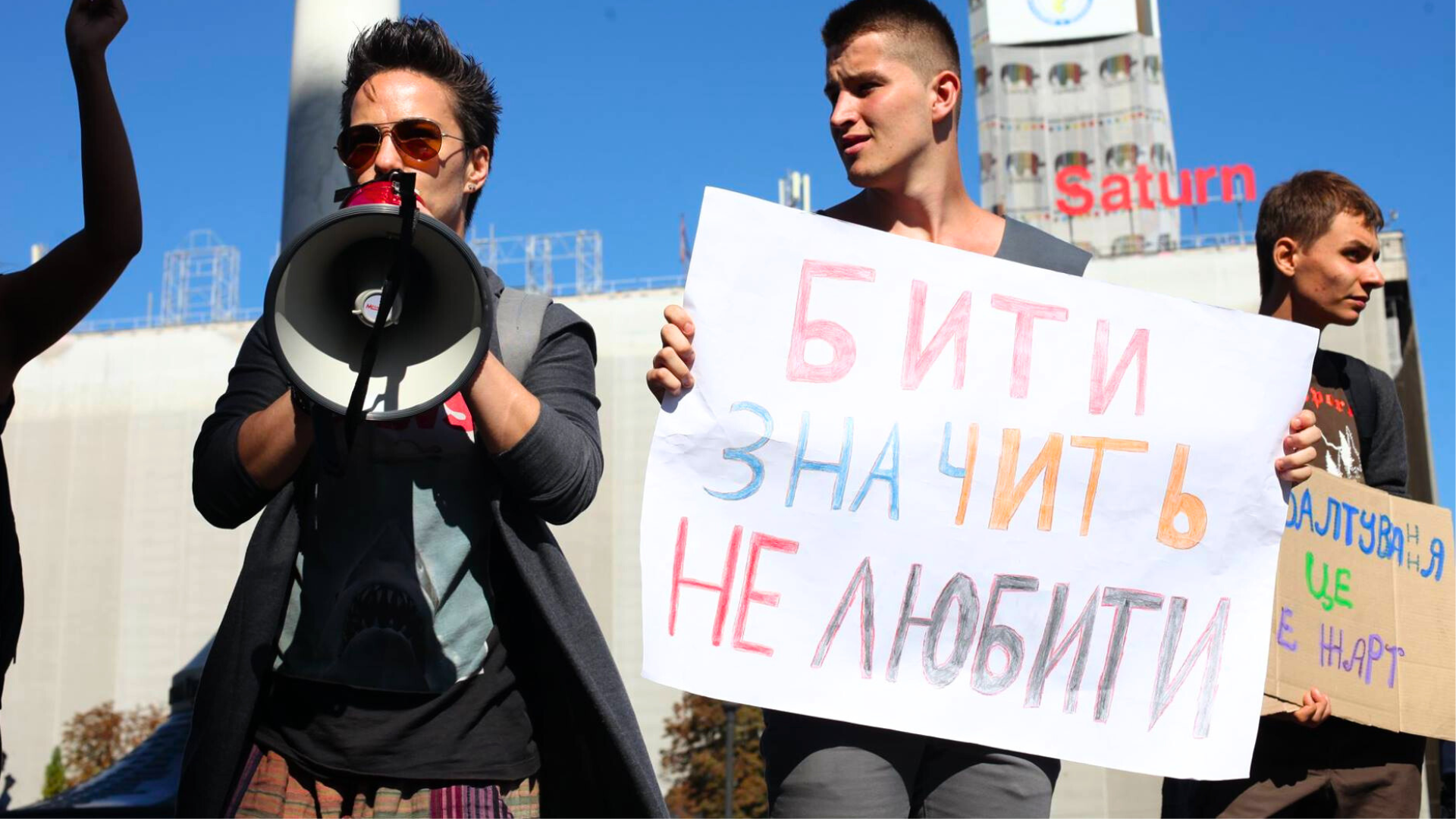
Olena Shevchenko is seeking allies among veterans’ initiatives because “people who fight and volunteer must have equal rights regardless of orientation.” Official bodies still ignore the issue, so the activist proposes joint public actions to break stereotypes and show that LGBTQ soldiers are just as much a part of victory. As for external support, her priorities are clear: political pressure on the government to pass laws, technical and legal protection for activists, and funding for local initiatives in the regions. “International solidarity amplifies our voice and forces the state to act,” she concludes.
Common Challenges
Despite different professions and continents, all the interviewees describe three equally painful problems. The first they name is mental health. Soldier Liaskovetskyi recalls how prolonged bullying in the unit and threats from commanders “created unfavorable conditions,” which eventually led to a suicide attempt—after his transfer an attentive psychologist literally pulled him out, who “was there at the moments when it was needed the most.” Singer ANDRUX adds that the homophobic “church baggage” and an inner ban on being oneself turn into “daily bullying by one’s own consciousness.” These personal stories are confirmed by a recent study on LGBTQ refugees from Ukraine: the greatest demand is precisely for psychological assistance, and the level of anxiety is significantly higher than among LGBTQ people who have not experienced forced displacement.
The second common point is the legal vacuum in Ukraine. Draft Law No. 9103, which was supposed to equalize the rights of opposite- and same-sex couples, has been lying in parliamentary drawers for more than two years; even after a positive conclusion by the relevant committee, the votes are still lacking. Drifting in parallel is the anti-hate Draft Law No. 5488, which introduces criminal liability for hate crimes. Without these two laws the state has no mechanisms either to protect the families of fallen LGBTQ soldiers or to bring attackers to court. Dmytro voices a similar opinion: civil partnerships “will give a feeling of security and stability, which is important for effective service.” In the spring of this year the Council of Europe held a two-day training in Kyiv for officials precisely on harmonizing Ukrainian anti-discrimination legislation, but so far this remains only recommendations.
The third challenge is cultural visibility. Photographer Danylo Vegera recalls how the attack in the Lviv park made his photography more dramatic, and how he managed to turn the experience into something constructive. ANDRUX calls his own concerts and TikTok clips a way to show that love and acceptance are more timely than ever. Both are convinced that it is precisely large cultural collaborations and public stories that can break the silence.
So what can someone who wants to support the Ukrainian LGBTQ community do? First, put pressure on the Ukrainian authorities: sign petitions, write letters, and demand the adoption of Laws No. 9103 and No. 5488. Second, donate and support the projects of our protagonists. Third, do not be afraid to discuss the problem: invite the protagonists to speak in your communities and spread their stories. And finally, if you are a psychologist or a volunteer—join the online support groups that are now being formed for LGBTQ Ukrainians.
Patriotism is not only love for the flag but also respect for everyone who holds it—Dmytro Liaskovetskyi reminds us of this. ANDRUX from sunny San Francisco adds: love has no gender, and when the world is drowning in hatred, only love and harmony can save it. The camera of Danylo Vegera and the resilience of Olena Shevchenko translate these words into action, showing that equality is another front. It is impossible to win it separately from victory in the war, because it concerns the same value—freedom.
About Author:
