


 The Ukrainian Bandurist Chorus of North America (UBC), one of the oldest cultural ensembles in the Ukrainian diaspora, has been awarded a 2025 National Heritage Fellowship by the National Endowment for the Arts (NEA) — the highest honor in the United States for folk and traditional arts.
This was reported National Endowment for the Arts (NEA).
The award ceremony took place on September 17 at the Library of Congress in Washington, D.C. Among the other recipients were artists and tradition bearers from Haitian, Japanese, Mexican, Creole, Native American, and other communities.
"For us, it’s about keeping alive a tradition that goes back centuries.The bandura carries history, memory, and the voice of Ukraine through generations", shared members of the ensemble.
According to Reuters to to the chorus, the award recognizes not only musical excellence but also the cultural mission that UBC fulfills as an ambassador of Ukrainian heritage overseas.
“We are deeply grateful to everyone who has been part of this journey—from the first immigrants who brought the bandura here after World War II to the communities that still uphold it today. This award belongs to all of you!” the UBC added.
The ensemble was awarded the 2025 National Heritage Fellowship for its exceptional commitment to preserving the Ukrainian kobzar tradition, promoting Ukrainian language and culture through the art of bandura, and contributing to intercultural dialogue in the United States.
 During the ceremony, the chorus performed the Cossack song “Na synomu mori” (“On the Blue Sea”) — a reminder that the mission of the ensemble goes beyond preserving music. It is also a tribute to the thousands of abducted Ukrainian children and prisoners of war.

The Ukrainian Bandurist Chorus of North America is not just a choir — it is a living link to Ukrainian history. The ensemble traces its roots to 1918, when bandurist Vasyl Yemets founded the first bandurist chorus in Kyiv. After the bandura tradition was banned in the USSR and artists were persecuted by Soviet authorities, the musicians went into exile. In 1949, the ensemble relocated to the United States as an intact artistic group, settling in Michigan thanks to impresario Sol Hurok and attorney John Panchuk.
Today, UBC consists of more than 50 performers aged 16 to 70. They combine vocal performance with playing the bandura — a unique instrument that blends features of the harp and lute and has between 34 and 65 strings. Most members reside in Michigan, Ohio, and Pennsylvania.
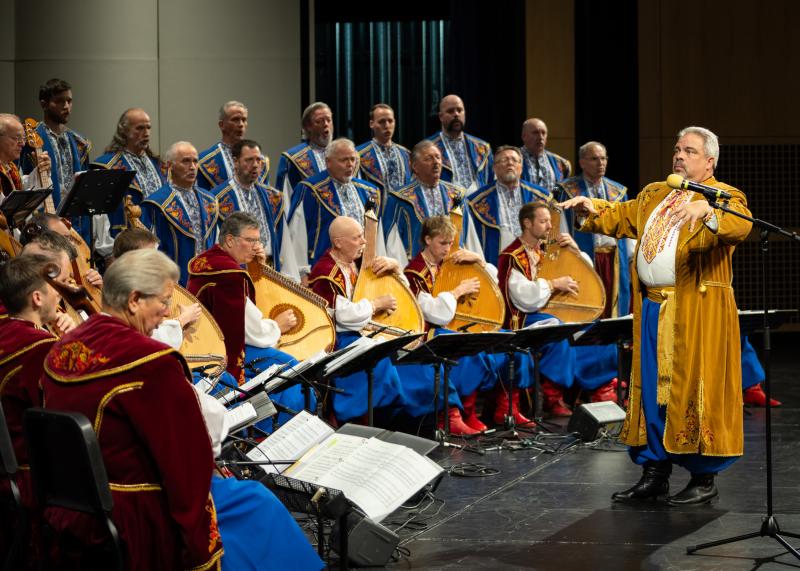
The bandurists have toured the U.S., Canada, Europe, Australia, and Ukraine, recorded over 40 albums of sacred and folk music, and engage in active educational work. Performances take place in traditional Ukrainian attire, and the repertoire includes historical dumy, Cossack songs, and contemporary pieces.
Background: The National Heritage Fellowships program by the National Endowment for the Arts is the highest federal honor in the U.S. for folk and traditional arts. Established in 1982, it recognizes individuals or groups with outstanding achievements in preserving cultural heritage and passing it on to future generations.
Nominations are submitted publicly, typically by community members, folklore and arts experts, etc. A review panel evaluates the candidates, followed by a recommendation from the National Council on the Arts. The final decision is made by the NEA Chair.
Photo: Photos: Stefana Ivaskevych, NEA, Ukrainian Bandurist Chorus of North America, marisonechko
Author: Inna Mikhno