


The US is experiencing an internal crisis of governance, which has already affected the supply of weapons to Ukraine. On the external front, there is an avalanche of challenges: Russia is again issuing ultimatums, North Korea is threatening "offensive actions", and NATO allies are diverging in their positions on sanctions. Against this background, the Pentagon recalled 1939, the beginning of World War II, reminding that history can repeat itself.
The US has stopped arms exports worth more than $5 billion due to the shutdown
Due to the government shutdown, which has been going on in the US for 40 days, exports of American weapons worth more than $5 billion have been threatened.
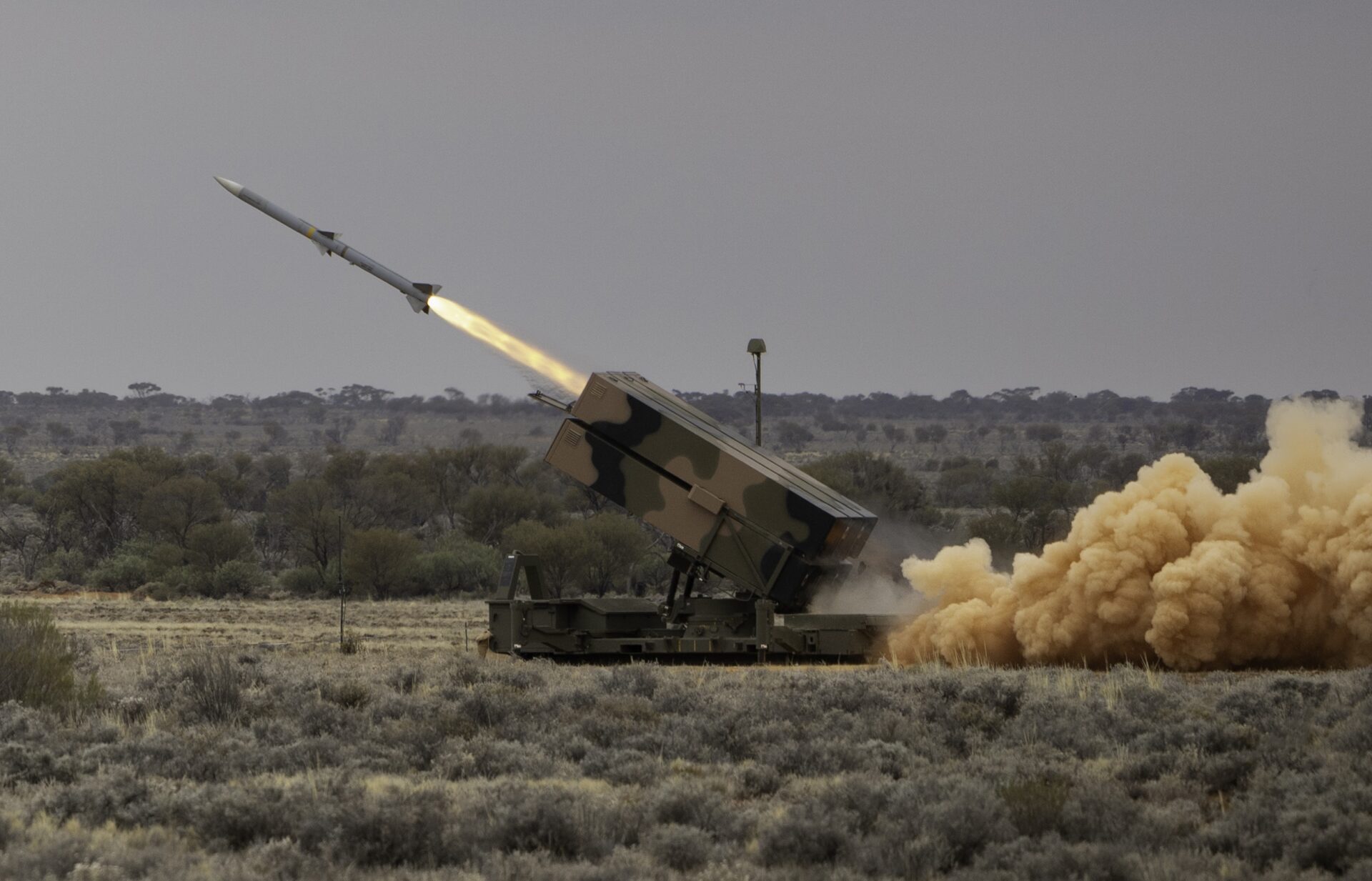
As reported by Axios, the supply of HIMARS, Aegis and AMRAAM missiles intended for Denmark, Croatia, Poland and Ukraine has been delayed. The State Department said the Bureau of Political-Military Affairs is now operating at a quarter-staff rate, effectively paralyzing contract approval procedures. Officials say the delay is harming allies’ security and undermining trust in the United States as an arms supplier.
Senate Foreign Relations Committee Chairman James Risch said the bureaucratic gridlock is giving “China and Russia an advantage,” while the U.S. defense industry is losing momentum.
Arms sales are usually smooth sailing, but Congressional shutdowns and staff cuts have made it impossible to keep lawmakers informed.
Washington acknowledges that the delay in delivering critical systems poses additional risks to NATO partners and, most importantly, to Ukraine, which needs to quickly replenish its arsenal.
US denies Budapest’s claim of “indefinite” exemption from sanctions
The White House has denied claims by Hungarian Prime Minister Viktor Orban that the country would be granted an indefinite exemption from sanctions on Russian energy imports.
As reported by Reuters, a representative of the Donald Trump administration clarified that the agreement will be valid for only one year and provides for mandatory diversification of purchases. Hungary also pledged to buy about $600 million in American liquefied natural gas to reduce its dependence on Russian supplies. The comment contradicted a statement by Foreign Minister Péter Szijjártó, who called the agreement “indefinite” on social media.
During the negotiations, Orban sought to obtain a long-term exemption from sanctions, citing Budapest’s critical dependence on Russian oil and gas. According to the IMF, in 2024 Hungary received 74% of its gas and 86% of its oil from Russia.
However, Washington insists that the agreement is temporary and does not change the general policy of pressure on Moscow. The White House demands that Hungary gradually reduce the share of Russian energy carriers and join European initiatives on energy security.
Lavrov put forward conditions for new negotiations with the United States
Russian Foreign Minister Sergey Lavrov said, that he is ready for new negotiations with US Secretary of State Marco Rubio, but only on condition that the “interests of the Kremlin” are taken into account.
In a comment to Russian media, he noted that the previous meeting, canceled by Washington, can still be resumed if the parties “agree on the principles of future dialogue.” Lavrov stressed that the basis for the agreements should be the alleged agreement reached at the summit between Donald Trump and Vladimir Putin in Alaska, where, according to him, the United States “guaranteed the constructiveness of Kyiv’s position.”
The Russian Foreign Minister accused Brussels and London of trying to “impede the dialogue between Moscow and Washington” and force the United States to “put military pressure” on Russia. He stressed that he maintains personal contacts with Rubio and is ready to meet “when the need arises.”
The American side has not yet commented on this statement, but sources in diplomatic circles indicate that Washington is not considering a format for negotiations without the participation of Ukraine.
North Korea threatens “offensive actions” due to military cooperation between the United States and South Korea
North Korea threatens to take “offensive actions” in response to security talks between Washington and Seoul.
As reported by Reuters citing North Korean media, North Korean Defense Minister Noh Kwang-chol said the country would “act decisively to protect peace by demonstrating strength.” He criticized the visit of a U.S. aircraft carrier to the port of Busan, calling it a provocation that “increases tensions on the Korean Peninsula.”
The minister also condemned a joint visit by the U.S. and South Korean defense chiefs to the demilitarized zone, calling it an “open display of hostility.”
Pyongyang has traditionally used such statements as an element of political pressure ahead of allied military exercises. Recently, the DPRK has stepped up missile tests, trying to demonstrate its ability to strike quickly.
Washington noted that the allied actions are “deterrent in nature” and not aimed at escalation. However, Pyongyang’s rhetoric once again points to an escalation of confrontation in the region, where the U.S., China, and the DPRK are vying for strategic influence.
Pentagon chief compares current situation to 1939
U.S. Secretary of Defense Pete Hegseth saidthe country must urgently shift its defense procurement system to a “wartime track,” comparing the current global situation to 1939.
Speaking to defense industry leaders in Washington, he stressed that “enemies are gathering, threats are growing, and America must act quickly.” According to Hegseth, the United States must be ready to “resolutely defeat any enemy that challenges America.” He called for an increase in the pace of modernization as rivals actively introduce new technologies.
The Pentagon chief stressed that the world is approaching a “tipping point” similar to the beginning of World War II or the height of the Cold War.
“Our adversaries are not sitting idly by. They act quickly, their ambitions are grandiose, and we react too slowly,” he stressed.
Hegseth said the United States must prepare for a potential conflict in order to prevent it through force.
His speech was the toughest since his appointment and testified to the growing readiness of the United States for a global confrontation.
Author: Danylo Pievchev