


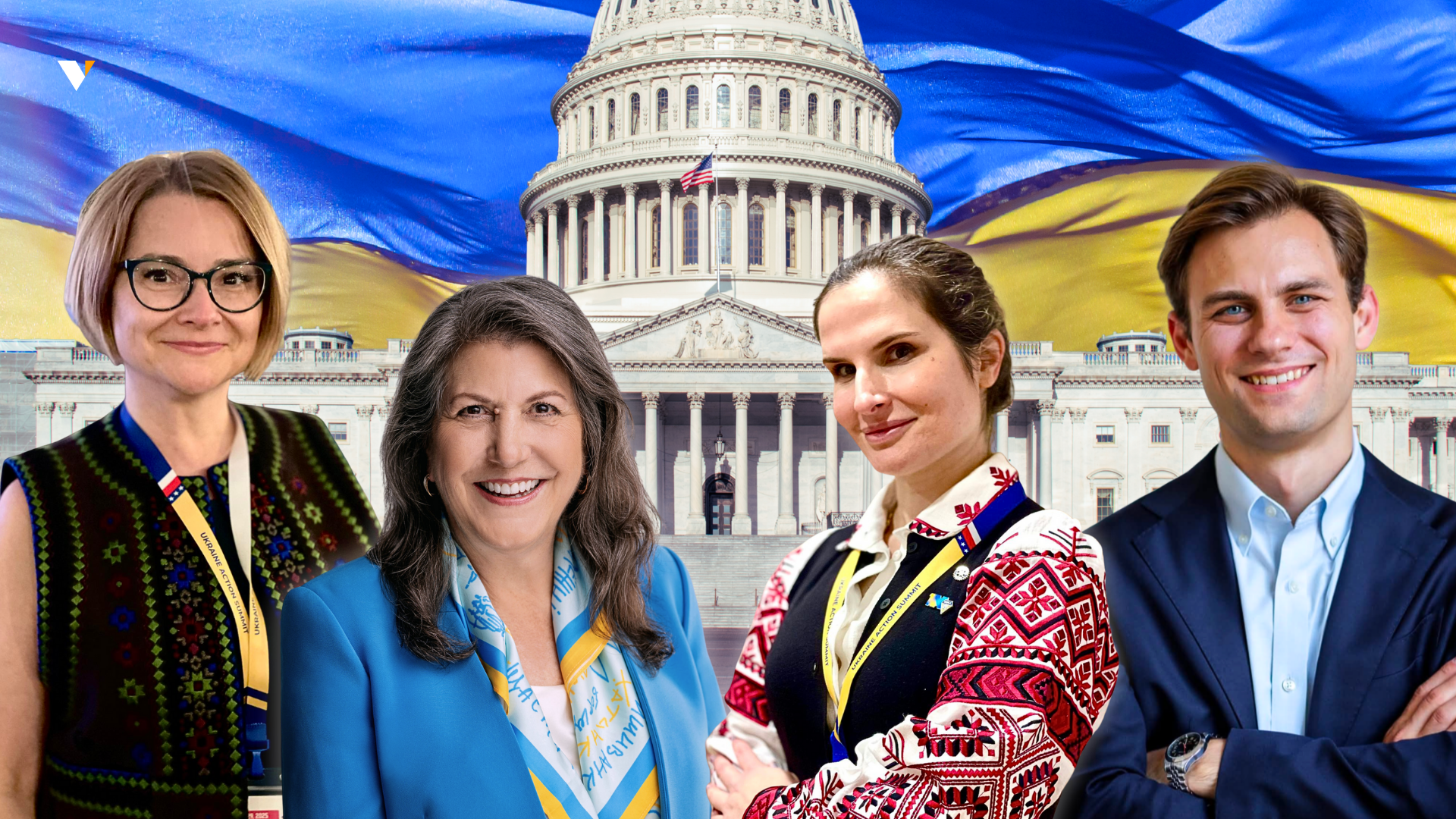
This time, the Ukraine Action Summit took place under conditions in which American political dynamics are moving faster than at any time since the start of Russia’s full-scale invasion. In Washington, not only have administrative priorities changed – the logic of decision-making, the channels of influence, the internal configuration of party support, and even the way different groups in the United States understand Russia’s war against Ukraine have all shifted. Against this backdrop, the Summit has evolved from an event aimed at shaping public support into a platform capable of genuinely influencing political processes and legislative initiatives.
This year’s fall gathering brought together more than seven hundred delegates and around fifty organizations who came to Washington at their own expense – and this became an important signal for Congress: the level of civic engagement, now entering the fourth year of the war, is not weakening but, on the contrary, demonstrates the maturity, self-discipline, and strategic thinking of the Ukrainian-American community. Despite the shutdown, which paralyzed part of the work of federal institutions and required an emergency overhaul of logistics, delegates held more than four hundred meetings on Capitol Hill – and this, in effect, created a new dimension in the interaction between the Ukrainian coalition and American lawmakers.
In this context, it is particularly telling that the key topics of the Summit – the return of children abducted by Russia, sanctions pressure on the Russian energy sector, the transfer of frozen Russian assets to Ukraine, and security guarantees – became not merely part of an informational package that delegates brought into lawmakers’ offices, but the basis for real political shifts. Already during the Summit, several members of Congress joined an updated version of the REPO Act, intended to unlock the use of Russian sovereign assets. In this way, the Summit has ceased to be simply a vehicle of civic advocacy; it increasingly resembles a structured mechanism for civic influence on U.S. foreign policy.
Such an effect does not arise by itself. It becomes possible thanks to the work of those who consistently shape advocacy narratives, prepare delegates, identify political windows of opportunity, and maintain an ongoing dialogue with different layers of the American government – from staffers to senators. That is why the four conversations presented below are not just interviews. They are a cross-section of four different levels of this mechanism: strategic, political, organizational, and humanitarian. Each of these levels has its own logic, tempo, and internal responsibility, but together they show how Ukrainian advocacy in the United States has moved to a new level of professionalism and political weight.
What follows are four voices that help explain how and why this has happened.
Erin McKee: “Speaking to America Simply but to the Point. Ukraine Must Win Not Only the War, but Also the Peace”
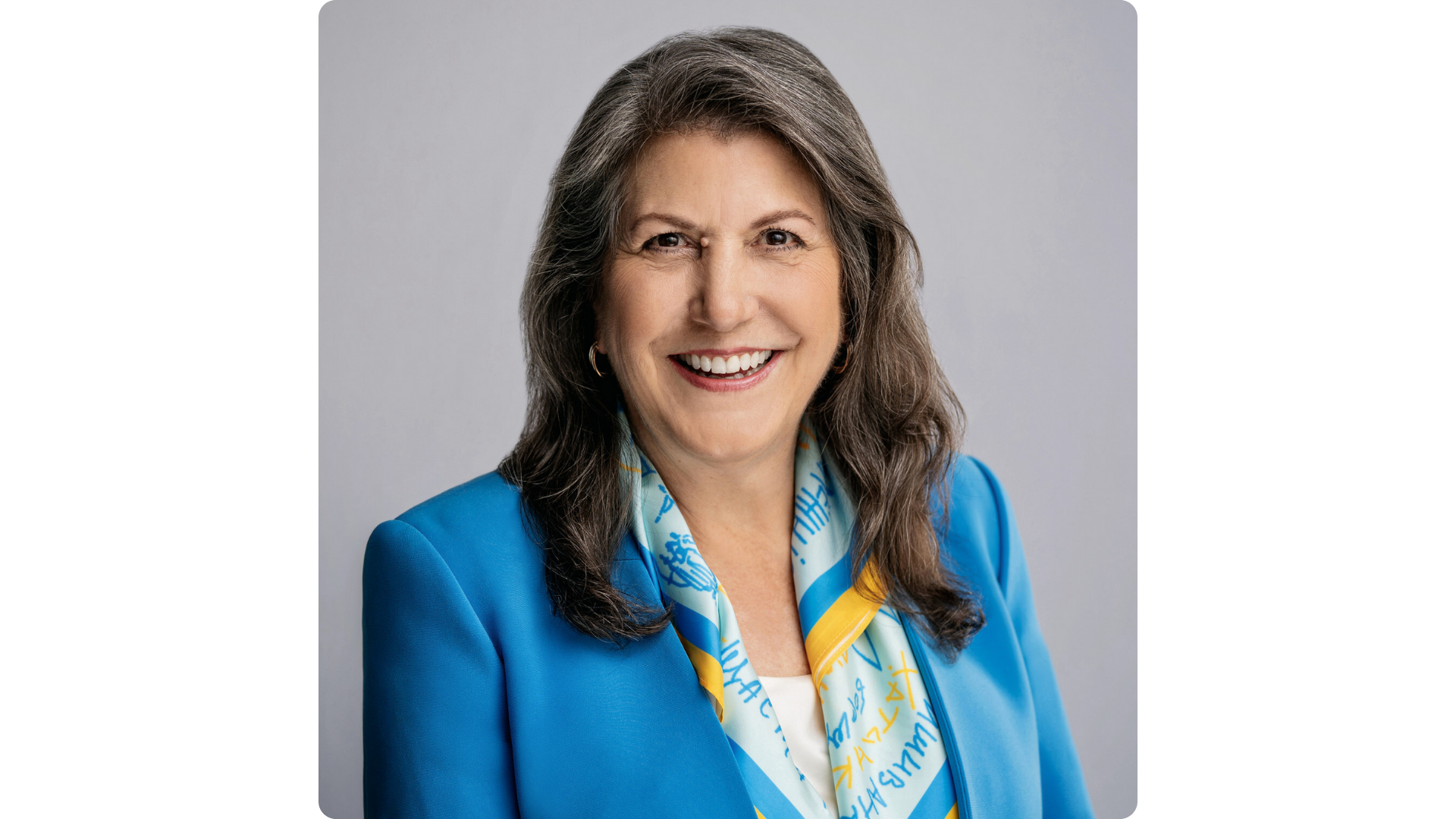
Erin McKee, photo by Nova Ukraine
Ambassador Erin McKee, CEO of NOVA Ukraine, views the current moment with a clear eye: after almost four years of full-scale war, America’s attention has not disappeared, but it is now forming in a different register – and that demands a different approach. “We now have almost four years of war behind us. And the stories about Ukraine that we have to tell need to be of a different character, in a different tone,” she notes. According to her, it is no longer enough simply to remind people about events at the front; it is necessary to explain what Ukraine is fighting for and why U.S. support matters not only for Ukraine’s victory, but for America’s own future. “We must constantly keep in Americans’ minds the idea that Ukraine is not only fighting a war. Ukraine is fighting for peace. And helping Ukraine to secure that peace is also good for America, for American business, and for global stability.”
In her assessment of advocacy work, McKee starts from the premise that Americans, including politicians, do not need slogans or pre-scripted talking points. “When you speak to Americans, you need to speak simply. They don’t want to hear canned messages. They respond best when you speak from the heart and from your own experience.” She explains that it is this live, personal intonation that allows one to move beyond dry statistics and helps the American audience – both voters and lawmakers – hear Ukraine as a country fighting for the very principles that once shaped the United States itself. In her words, the Ukrainian diaspora, regardless of generation, has enormous potential: “Ukrainians in America have experience, they have families in Ukraine, or they themselves were forced to leave the country because of the war. They are the ones who can remind us of our shared humanity, our shared struggle – and make it about humanity, the future of global stability, and proof that might does not equal right, rather than about numbers or talking points.”
At the same time, McKee stresses that emotion is not the only instrument. She emphasizes that concrete facts, measurable indicators, and the consequences of supporting Ukraine for American taxpayers remain decisive for Congress. “In the end it all comes down to facts and to what supporting Ukraine means for the American taxpayer: supporting jobs, business, security, stability. You have to back this up with numbers, and only then tell a story so that it sticks in their memory.” For her, this is not a contradiction but the right sequence: facts create a rational foundation, and the story makes that foundation unforgettable.
Ambassador McKee reminds us that a personalized approach to each office is critically important. “Know who you’re talking to, and address them from their point of view.” This means understanding the economic specifics of a district, a member’s professional background, and the interests of their voters. “If you’ve come from Iowa or another agricultural state, you need to talk about the importance of agricultural exchange, about what we can offer Ukraine so that together with us it can help feed the world.” This ability to build a bridge between the Ukrainian issue and local American interests is what shapes effective advocacy.
Separately, she highlights a topic which, in her view, can cut through almost any political barrier. “The abduction of Ukrainian children is happening on a scale we have never seen before. The way Ukrainians are being treated is part of an attempt to erase Ukraine as a nation by stealing its future.” She calls this the most painful and universally understandable theme: “There is no more terrifying crime than stealing the future of an entire nation. You can try to erase a country with missiles, but when you kidnap children, brainwash them, strip them of their identity, that is a crime worse than any missile fired.”
In the end, her main thesis remains exceptionally clear and strategic: Ukraine needs not only to win the war, but also to lay the foundations for a lasting peace – and it is precisely this argument that is now best received by American audiences. “The more we are able to support now, the easier it will be for our children and future generations to live in peace.” Her position goes beyond tactical advocacy: it is closer to a vision of how Ukrainian-American interaction can be structured not only to achieve victory today, but to prevent another war in the future.
Doug Klain: “The Success of Advocacy Is Measured in Action. Congress Moves When Voters Move It”

Doug Klain, photo from Facebook Doug Klain
Doug Klain, Deputy Director for Policy and Strategy at Razom for Ukraine, views the events of the Summit first and foremost through the prism of political dynamics in Washington – what is actually moving and what is stalled somewhere between the administration and Congress. His assessment begins with an observation which, in another context, could sound like a joke but in fact accurately captures American political reality: “At the same time that Senator Lindsey Graham was calling for a ‘Russia Week’ in Congress, we were having a ‘Ukraine Week’ on Capitol Hill.” For him, this contrast is not just political theater; it is an indicator of how the atmosphere around the Ukraine issue has changed.
At the same time, Klain stresses that the delegates who came to the Summit created an important argument simply by their presence. “More than 700 voters from across the country came to Washington at their own expense. They paid for their own trip here. They came to support Ukraine at a very important moment.” He recalls an episode that vividly illustrates the political tension around Ukraine. Congresswoman Marjorie Taylor Greene saw a group of Summit participants carrying Ukrainian and American flags and publicly wrote that “here are Ukrainians trying to steal the money of American taxpayers.” Klain notes: “She somehow ignored the fact that these were Americans who believe in supporting our ally – Ukraine. They came here to advocate because they sincerely believe in it.” For him, this is not just a random attempt to demonize Ukraine on social media, but a symptom of a permanent information struggle for the American audience – and a counter-narrative that is being formed by the citizens themselves.
Despite this, he emphasizes that tangible results from the Summit appeared literally in the first hours. “I have already received word that new co-sponsors have joined the bill to implement the REPO mechanism – REPO 2.0, which is aimed at channeling Russian state assets to help Ukraine. I saw that John Cornyn from Texas and Ruben Gallego from Arizona have already signed on.” In his view, this is a direct consequence of the political pressure generated by the Summit, and further proof that advocacy works when done systematically. The Razom team, he says, will continue working on this in the coming weeks to “make maximum use of all positive shifts.”
When discussing the organization of the Summit, Klain highlights an important feature: the diversity of people engaged in advocacy is not a weakness but a strength. “Americans from all walks of life, from every corner of the country, come here to speak in support of Ukraine. And each of them brings their own story, their own reason to support it.” According to him, these individual stories create the moral weight of advocacy, while professional organizations shape the strategy and set priorities. “We say: look, we are already working in Washington. We understand well at what stage the legislation stands. If you go and support this particular bill, your advocacy can help push it through to passage.” This is an example of how the right combination of civic energy and institutional expertise works in practice.
Klain also reminds us that many of the key issues now being publicly voiced by the administration did not originate “from above” but from within Congress itself – thanks to ongoing dialogue between citizens and lawmakers. “The issue of abducted Ukrainian children was first raised here, in Congress. Even before President Trump started talking about it, there were members who introduced resolutions condemning Russia’s abduction of Ukrainian children and calling to secure their return as part of any arrangements with Russia.” He emphasizes that this became possible because citizens came to offices, told their stories, and built pressure – and as a result “the administration learned about these issues from Congress.” It is a precise reminder of how American democracy functions: it is often the lower level that initiates the upper.
The most sensitive topic Klain identifies is the relationship between the position of Congress and that of the White House in the context of the new administration. He does not conceal it: “In the current Republican-controlled Congress, a lot has changed, especially when it comes to Ukraine. Many bills do not move forward if members of Congress do not feel they have a ‘green light’ from the White House.” This is evident in the case of the sanctions bill: “Congressional leadership is not bringing it to a vote until it gets approval from the Trump administration.” That is why, he says, one of the most important tasks right now is “to understand where there is a political opening for a member of Congress to move something they already believe in and that their voters support.”
At the same time, Klain draws attention to an important structural fact: support for Ukraine among Americans has not decreased – it has grown. “According to the latest Harvard CAPS / Harris Poll, 73% of Republicans and 72% of Democrats want sanctions against Russia and support supplying weapons to Ukraine. These are record numbers for both parties.” This is due in part to administration actions on sanctions and arming allies, but to a large extent also to the fact that “across the country there has always been a stable, deep core of support for Ukraine. And right now it is particularly visible.”
For Klain, the conclusion is clear: Ukraine’s place in Washington no longer depends on news cycles or spikes of emotion. It has become embedded in political reality and rests on a network of citizens willing to invest time and resources in their advocacy. It is precisely their presence, their stories, and the structured work of organizations like Razom that creates an effect that gradually changes policy – not with slogans, but through persistent, daily engagement with those in power.
Mariyanna Tretiak: “Emotion Opens the Door, but Facts Decide. Advocacy Has Become More Mature”

Mariyanna Tretiak. Photo by Olha Noshyn
Mariyanna Tretiak, Chair of the Board of the American Coalition for Ukraine (ACU), is among those leaders who see the Summit not as an isolated event, but as part of an ongoing process that develops from meeting to meeting. There is no pathos in her assessment, only a firm fixation on how exactly Ukrainian advocacy in the United States is evolving. “Every Summit develops. The most interesting thing is that every time we are a bit bigger, every time we come up with organizational improvements,” she says. It is from this sense of gradual growth that her account of the political dimension of the event begins. In her words, it is now clear that “Ukraine enjoys growing support – compared to six months ago. This concerns the position of both the White House and Congress.” She emphasizes that today far more people in positions of power are prepared to openly call Russia an aggressor and a perpetrator of crimes – and this, in itself, is a serious shift in political tone.
Tretiak dwells in detail on how the shutdown affected the work of the Summit. In her view, the crisis situation created a new opportunity. “The shutdown added an enormous amount of last-minute stress. We had to find another venue. It was important for us to bring people here so that their voices could be heard. After all, we cannot advocate for Ukraine only when it’s easy.” It was precisely the desire to be heard, she says, that determined the course of all the meetings. Despite the logistical difficulties, delegations managed to meet with most offices. “The meetings were slower and not so rushed. The shutdown gave us more opportunity to talk.” It was a rare situation in which an administrative disruption created space for more substantive conversation.
A special place in her account is given to the personal experience of the Pennsylvania delegation. Tretiak recalls their meeting with Senator David McCormick’s staffer – a person who “already knows a lot about Ukraine” because he is responsible for defense policy. “And at the end of the meeting Senator McCormick himself came to see us for a minute. That was very good, and he spoke with us. It was clear he was busy, but he still came to say hello.” She also stresses that the meetings with Republican members of Congress from Pennsylvania were positive and constructive. They discussed sanctions, Russian assets, and the fact that Ukraine is a partner. “We have a Pennsylvania code. We live near Philadelphia, we all support our football team, so to all Pennsylvanians we say: Go Birds,” she adds with a slight smile – but behind this stands a precise understanding that local identity opens doors where formal arguments may not.
Tretiak names the key condition for effective advocacy as the ability to identify what exactly matters to a given politician. She cites the example of a Congressman who is a farmer and is genuinely moved by stories about Ukrainian farmers, their work, and their ability to continue feeding the world despite the war. “In reality you need to find what is important for your Congressman or Senator and talk about that.” This is the key to ensuring that a conversation does not crash against indifference or fatigue.
Tretiak devotes considerable attention to delegate preparation and the internal discipline of the community. ACU, she says, tries to equip delegates with clear, comprehensible guidance on how to communicate with any lawmaker, regardless of their party or political emphasis. She formulates a simple but strategic rule: “We tell them that the meetings should be emotional. Emotions make it possible to attract attention. But then a politician operates on cold calculation.” She calls the ideal proportion quite concrete: “I think the best mix is 30% emotional, 70% informational.” If you walk in with emotion alone, but without facts, the work stops; if you come only with numbers, they will not resonate. It is a model that grew out of several years of advocacy experience.
Tretiak underscores that Ukrainian organizations today are relying much more broadly on themes that can resonate with different groups of voters – not only humanitarian issues, but also the persecution of Christians, the abduction of children, the destruction of families. This is an attempt to build “narratives that create connections with any member of Congress.” At the same time, she reminds us of a simple point that is often underestimated: in America, the voice that truly matters is that of the voter who lives in a member’s district. “In America, the voice of somebody who lives here carries a great deal of weight. If I live in Pennsylvania and go to a Congressman from another state, why should he listen to me?” This is why ACU is building a wide-ranging network across the country, finding people in every district and turning them not just into participants but into bearers of their community’s voice. “Not everyone can come to the Summit. One person from a district may be able to attend, but they bring letters or petitions signed by hundreds of people. And that person says: I’m not alone in this room, I am representing my community.”
In the political dimension, Tretiak points to a trend that can indeed be called key: the White House is closely watching Congress’s position. “We see that the White House is changing its thinking on Ukraine. But the White House listens to Congress. And it is to those people in Congress that we need to deliver our information, to do more to reach them.” She believes that in the near term, it is precisely those members of Congress who have close ties to the administration who can become conduits for Ukrainian messages into the White House. According to her, there is already visible growth in the number of those who support sanctions and the bills that the coalition is advancing.
All of these observations add up to a clear picture: Ukrainian advocacy in the United States has become more mature, precise, and systematic. Tretiak shows that its strength does not lie in loud statements, but in organization, preparation, strategic attentiveness to detail, and the ability to build relationships that last longer than any political cycle.
Maryna Baydyuk: “Advocacy Is Not an Episode. It Is a Constant Presence – and Today It Works”

Maryna Baydyuk. Photo by Olha Noshyn
Maryna Baydyuk, President of United Help Ukraine and one of the key coordinators of the Ukraine Action Summit, speaks about advocacy from the position of someone who sees not individual meetings, but the entire system in motion: how offices interact, how attitudes change, how political pressure forms, and how quickly words turn into decisions. She starts with what can be measured: “We had more than 452 meetings. That’s a record number.” There is no exaggeration in her voice – it is a fact that shows the scale not only of the event itself, but of the Ukrainian presence in Washington. And this presence, she says, is gradually changing how members of Congress – especially Republicans – talk about Ukraine.
Baydyuk focuses less on the number of meetings than on the tone she heard in offices. “When we ask: do you support American assistance to Ukraine, do we need sanctions, the answer is no longer ‘yes, but…,’ it’s simply yes.” She underscores: “That doesn’t mean everyone will vote for every bill, but the mood has changed. The tone is clearly different.” She reminds us that just a year ago some offices were either skeptical or cautious. Today, she says, “many Republican offices are saying: yes, we support sanctions, we support pressure on Russia. And that is an important change.” Her impressions are especially valuable because she is one of those who have been walking into those offices again and again over the past years, often at times far less favorable for Ukraine.
Baydyuk explains that this feeling did not arise by itself. It is the product of systematic coalition work. “We were united by the same messages, the same goal, the same position.” It was this unity, she says, that prevented Congress’s attention from being scattered and kept Russian narratives from finding weak points. Equally important, however, was the human presence. “We met with lawmakers, we went to their districts, we explained that helping Ukraine is not only about Ukraine. It’s about America’s security and about global stability.” And this continuity, in her words, is what creates the greatest trust.
In her assessment, Baydyuk combines two perspectives – political and human. She recalls how delegates used emotional arguments, but did so in the right way. “When you talk about doctors who come to Ukraine as volunteers, or about fallen soldiers, or about how Antytila have gone back to the front again – that always triggers a real reaction.” At the same time, Baydyuk insists: “Emotions are important, but they have to be honest. And they must reinforce the information.” She agrees that the best formula for advocacy is a combination of human story with analysis and facts. That way, she says, you give a lawmaker an understanding not only of why something is morally important, but also why it makes political sense.
A crucial part of her account concerns the topic of Ukrainian children abducted by Russia – a subject that is now moving to the forefront in many offices. “We talked about abducted children in every office. This is a topic that needs no explanation. Anyone who has a child immediately understands that this is a crime that lies beyond any politics.” Baydyuk notes that this subject has a special ability to unite different parts of the political spectrum and often becomes the point from which a longer and more complex conversation about sanctions, frozen assets, and military aid begins.
Baydyuk also speaks about the uniqueness of this year’s coalition approach. She stresses that the sense of teamwork was unprecedented: “We were very united. We knew what tasks we had to accomplish. We spoke with one voice.” According to her, this is what produced such a powerful effect in Congress. When a lawmaker hears the same argument from people from different states, with different backgrounds, from different organizations, it becomes a signal that this is not the position of a small group, but a genuine societal consensus.
What caught her eye especially was how many delegates were able to talk not only about the war, but also about the broader picture. “We framed issues of global stability, the future of America. We said that helping Ukraine is an investment in the future of the United States and in its security.” And when such messages are delivered by people of different ages, professions, and regions, they do not look like a political campaign – they look like the position of a community.
Summing up her impressions, Baydyuk explains why she considers this Summit the most successful to date: “This was the most successful Summit precisely because we were united. We spoke together. We stood together. We understood what we wanted to achieve.” Behind this statement lies a deeper understanding: Ukrainian advocacy in the United States has long ceased to be a mere reaction to events – it has become structural, predictable, and capable of influencing political decisions in the world’s leading democracy.
What This Means for Ukrainian Advocacy
The perspectives of the four interviewees – Erin McKee, Doug Klain, Mariyanna Tretiak, and Maryna Baydyuk – come together into a coherent picture of how Ukrainian advocacy in the United States has changed. There are no contradictions in these conversations; there are only different levels of a single process: strategic, political, organizational, and humanitarian. Together they show that Ukraine’s presence in Washington is no longer an episodic reaction to crisis, but has become a permanent factor in American politics.
Their assessments make it clear that this Summit did not function as a symbolic gesture, but as a mechanism of direct influence. New co-sponsors for sanctions bills, the change in tone in Republican offices, the emergence of real political openings for advancing REPO 2.0, growing attention to the issue of abducted children, and clear signals from voters – all of this indicates that the American political system responds precisely where advocacy is systematic and personal.
What remained central is what each of them underscored: Ukrainian advocacy works when it combines emotion with facts, local context with global risks, and human stories with political rationality. It works when voters from their own districts show up. When different organizations speak with one voice. When Ukraine’s presence in Washington does not end between Summits. And when the message is constructed not around what “Ukraine needs,” but around what aligns with the interests of the United States itself.
The Summit does not solve everything. But it shows that the Ukrainian community in the U.S. has learned to engage with the American political system on its own terms. And it is precisely this – not the size of the delegation and not the number of meetings – that will determine whether Ukraine will have real leverage in Washington tomorrow.
About Author:
