


To stay silent and be ashamed of one’s own thoughts, or to defend freedom of choice to the very end, even from prison cells. Without hesitation, more than half a century ago, he chose Ukraine and exile.
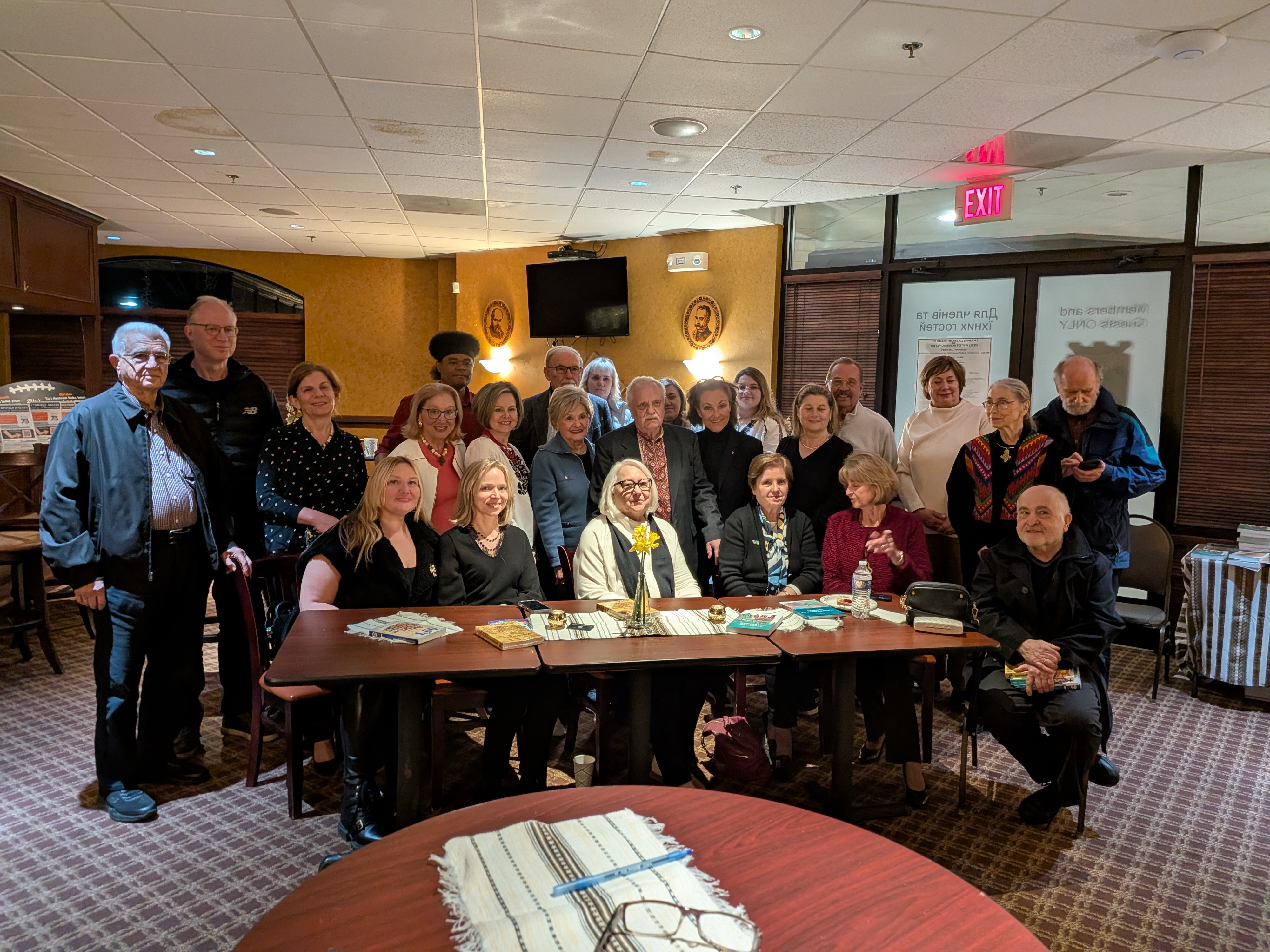
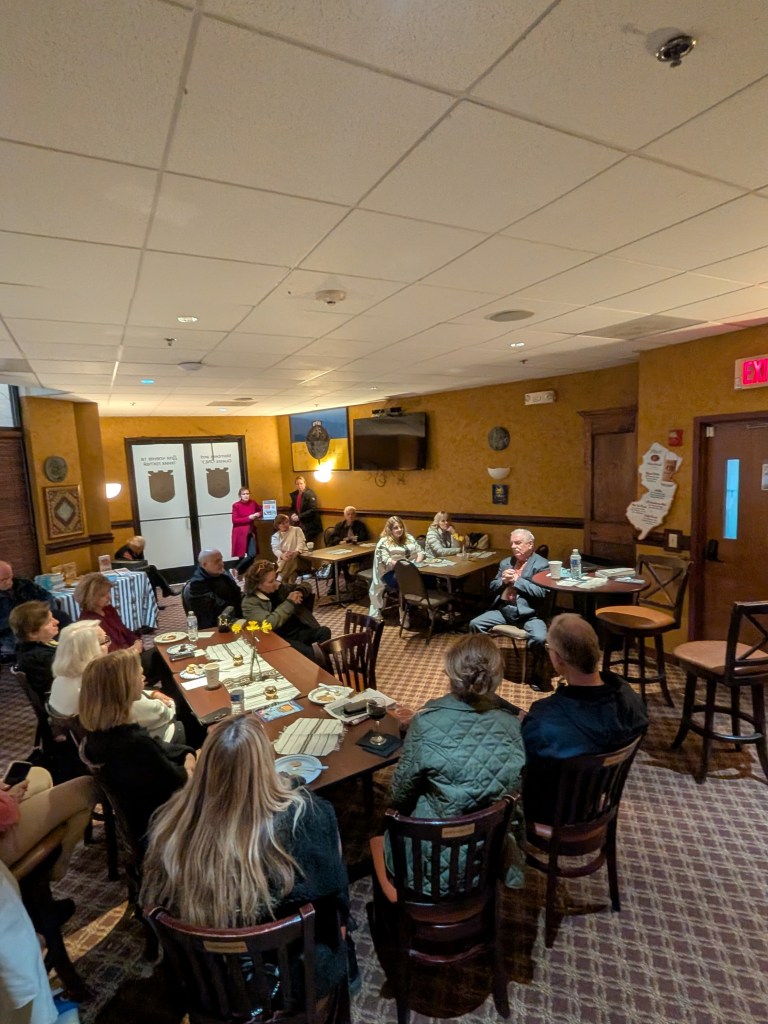
Mykola Horbal is a legendary man who remembers how an independent Ukraine was won not from someone else’s words and not from the pages of books, but through his own fate, passed through captivity and resistance. An evening of remembrance with this great Ukrainian, organized by the Ukrainian National Women’s League of America, took place in Whippany, at the Ukrainian American Cultural Center.
The gray-haired man immerses himself in the past, drawing thoughts out of memory. And this is not just a dry chronology of the past, but real fragments of life, stitched through with pain, dignity, and an almost incomprehensible inner strength. The strength of a man who passed through pain, interrogations, prison transfers, humiliation—and did not lose the most important thing: the dignity to remain himself. Convicted three times, sentenced to 33 years, he served 16 years in labor camps. Today he speaks about it lightly and, it seems, even with pride, because he is certain: it could not have been otherwise.
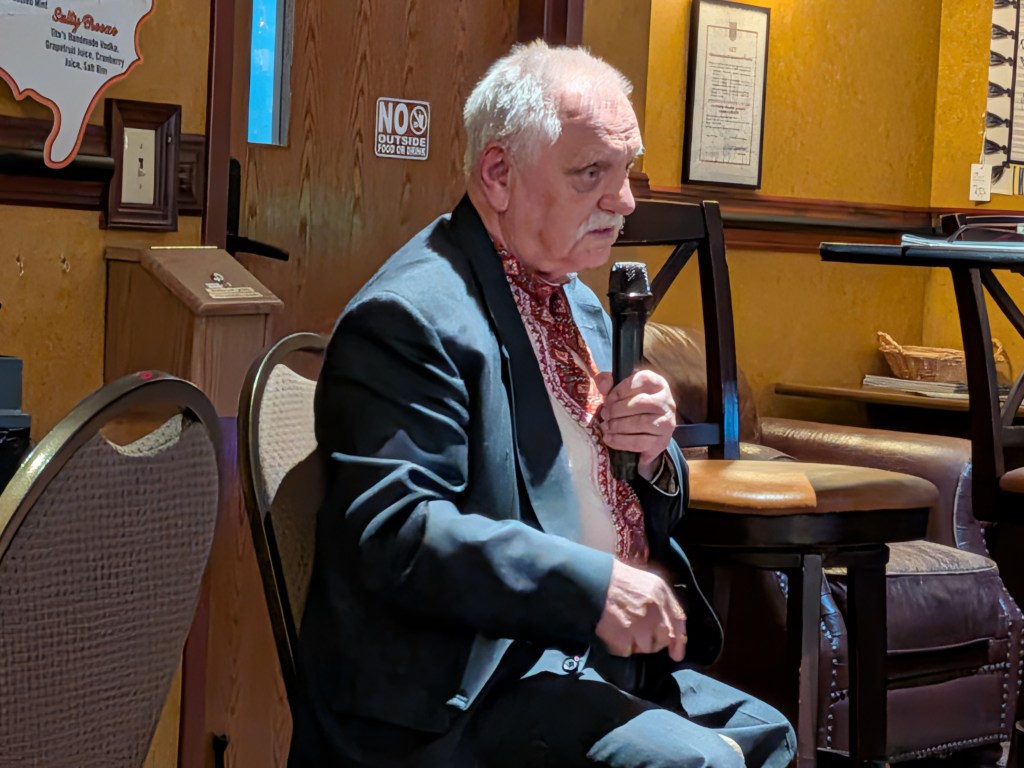
Mykola Horbal was born into a Lemko family in western Ukraine, in an ordinary household. His childhood was not easy—it was the postwar period, when many families lived in fear of Soviet rule. From an early age, he saw how people could be persecuted for their views, yet he was not afraid to live freely, without betraying his convictions.
A musician by profession, he loved studying history and tried his hand at journalism. For this he received his first sentence as an “especially dangerous state criminal.” The result was his first five years in labor camps and two years of exile. His draft of the poem Duma displeased the KGB. In addition, he was friends with Volodymyr Ivasyuk, Viacheslav Chornovil, and Vasyl Stus—all under close surveillance and forever bound by the same threads.

Later, he recalls, new articles and new prison terms were found for every “political” prisoner. But even that did not frighten him.
“I only thought about how to keep writing, how to bring our patriotic views to the people. To this day I do not know how those recordings were distributed or how they spread around the world. But those recordings worked, because people feared us and supported us,” he says.
And if he had to live his life over again, Mykola Horbal says, he would not hesitate for a single moment and would do exactly the same. Because, as he is convinced, God Himself loves kind words.
“Even in places created to humiliate a person, a kind word remained proof that humanity was still alive. For example, once Nadiia Svitlychna spoke about me on the radio, and the guards themselves came to look at me, and then even brought me a sack of sweets. Or later, in the 1990s, when I was running for the Kyiv City Council from the Helsinki Union, one day on the street voters were persuading me to vote for myself. Behind that funny incident there was, in fact, trust, and that cannot but be heartening,” the writer recalls.
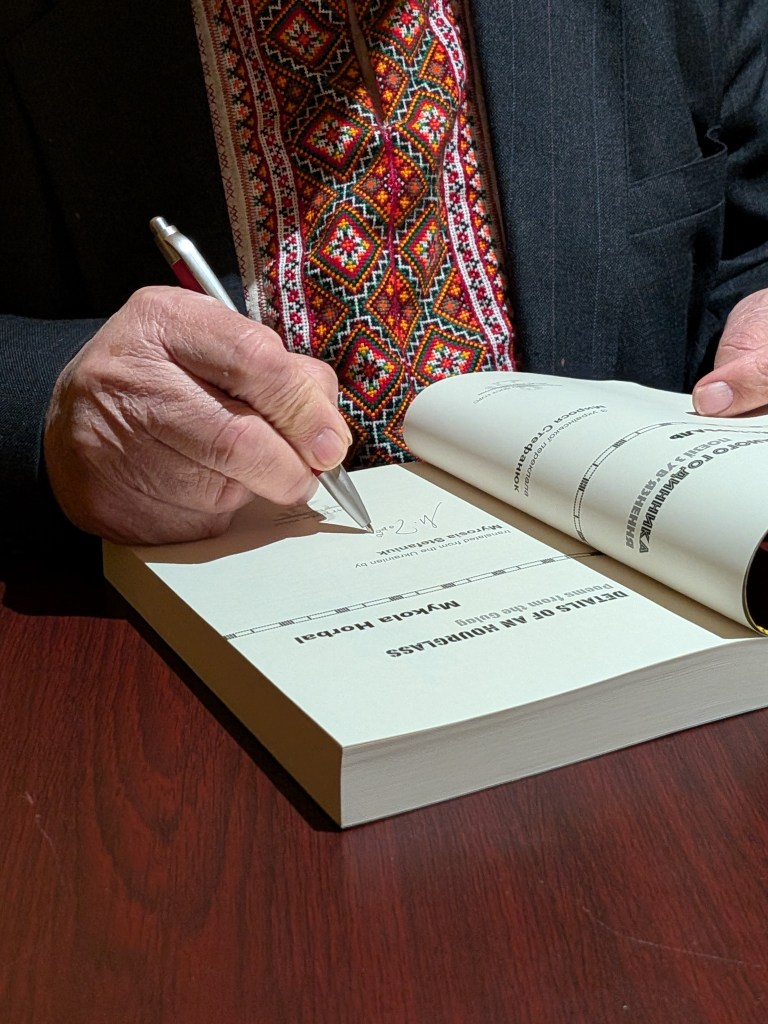
Mykola has not hundreds of such stories, but thousands. Most of them found their way into his books. The best known is considered to be Along the Roads of the Patriarch.
“It so happened that Yosyf Slipyj and I walked the same roads of exile. That is what the main idea is about,” Horbal says.
A separate pain in these recollections is the last camp in Moscow—a death camp. It was there, according to Mykola, that people died; it was there that the names of Stus and Lytvyn are heard, and the atmosphere of constant pressure, deadly exhaustion, and the presence of the KGB even in so-called “interviews” can be felt. “Four people died there. How I survived—I do not know…” This phrase was spoken without pathos. And that is exactly why it sounds especially terrifying and powerful.
Sometimes history is remembered not only through events, but through sensations. Not through dates, but through smells. Not only through names, but through the color of cloth on the body. Mr. Mykola said that he remembers the day of his release—August 23, 1988. He remembers how he was let out and taken to Kyiv. He remembers the striped pajamas. He remembers the prison smell. This detail sharply, almost physically, brings one back to the reality of what he endured: freedom came not as a solemn gesture, but as an exit from a space that remained on the skin, in the memory, in the lungs for a long time.
Listening to Mykola Horbal, one understands that memory is also a form of resistance. When a person preserves the truth of what was lived through, that person does not allow evil to become the norm, or lies to win completely. And perhaps that is why, even decades later, it is so important to listen to these testimonies—slowly, attentively, with gratitude.
Because as long as such voices are heard, we know the price at which truth endured. And as long as this memory lives, the spirit of freedom cannot be considered defeated.
Text and photos by Tamara Zaiats