


Putin's statements about the reasons for the war against Ukraine and his willingness to compromise contrast with real assessments of the situation on the battlefield. Western analysts note the lack of strategic successes of the Russian army despite significant losses. Moscow's information propaganda campaign is increasingly at odds with verified facts from the front.
Putin again shifted responsibility for the war to Ukraine
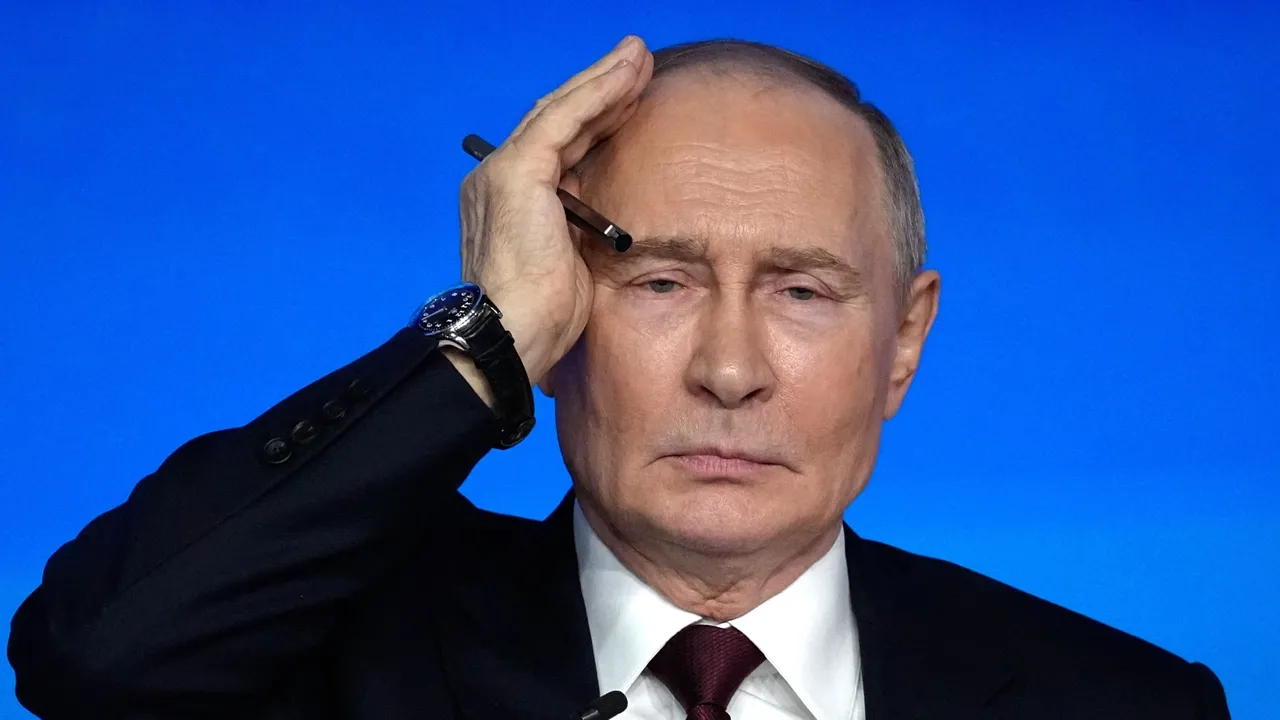
Kremlin leader Vladimir Putin said, during a live broadcast that he does not consider himself responsible for the deaths of Ukrainians and Russians in the event of the US peace plan being disrupted. Answering a question from an NBC News journalist, he repeated the thesis that Ukraine allegedly started the war after the 2014 "coup d'état". According to him, Moscow is only “ending” the conflict, which he claims was imposed with the support of Western countries. Putin also once again mentioned the Minsk agreements, accusing Kyiv and the West of “deception” in them.
At the same time, Putin spoke positively about the efforts of US President Donald Trump to peacefully resolve the war. He said that in Anchorage the parties “practically agreed” with Trump’s proposals and were ready to compromise. “Therefore, to say that we are rejecting something is absolutely incorrect and has no basis,” Putin said. At the same time, these statements were made against the background of the lack of public confirmation from other participants in the negotiation process.
The narrative of “Russian victory” is at odds with reality on the front
Despite the Kremlin’s statements about alleged large-scale successes, the situation on the front does not confirm the thesis of a strategic breakthrough by Russia. As The Washington Postnotes, Moscow presents tactical advances as major victories, although they are mostly of no strategic importance. Russian troops capture small villages, fields and ruined industrial zones, without taking control of key cities or transport hubs. In 2025, Russia failed to capture a single major city.
Ukrainian President Volodymyr Zelensky publicly denied claims of the capture of Kupyansk, appearing in the city after a successful counterattack by the Ukrainian Armed Forces. “The reality speaks for itself,” he said in a video from the front line. The publication notes that Russia is paying a huge price in human losses for minimal territorial gains. The Kremlin’s propaganda statements about “inevitable victory” contrast with actual data from the battlefield, where the strategic situation remains unchanged.
The US Treasury Department has lifted sanctions on a number of Russian companies
The US Treasury Department has lifted restrictive measures against seven companies and two individuals that were previously listed on sanctions lists due to ties to Russia. The decision was made by the Office of Foreign Assets Control (OFAC), as stated an official statement by the department. The list includes companies from various jurisdictions, including Veles International Limited, Hi-tech Koneisto International Oy and ETASIS A.S. Sanctions were also lifted from Russian citizen Dmitry Bugaenko and Finnish citizen Evgenia Dremova.
Previously, these legal entities and individuals were subject to sanctions under Executive Order 14024. It allowed the imposition of secondary restrictions “for participating in significant transactions related to the Russian military-industrial complex or for facilitating prohibited activities of Russia.” The reasons for lifting the sanctions are not specified in the OFAC statement. The decision was made against the backdrop of protracted discussions in the United States regarding the effectiveness and further configuration of sanctions pressure on Moscow.
Trump signs defense budget for Ukraine
US President Donald Trump has signed the National Defense Authorization Act for fiscal year 2026, which provides $400 million in support for Ukraine. The White House also reported this, specifying that the document covers a wide range of security spending. The law funds programs of the US Department of Defense, intelligence activities, the State Department, as well as projects in the field of nuclear security. Assistance to Ukraine is included as part of the overall defense package.
In addition to the international component, the law also contains domestic provisions, in particular, an increase in the base salary of American military personnel. The document also expands the powers of the US government in matters of national security, foreign policy and the judicial system. The signing of the budget took place against the backdrop of active discussions in Congress regarding the US role in Russia's war against Ukraine. Funding for 2026 consolidates the continued American participation in supporting Kyiv.
EU agrees €90 billion loan for Ukraine
European Union leaders have agreed to provide Ukraine with €90 billion in loans to support its economy and defense capabilities. The decision is intended to provide financial support to Kyiv as it faces a budget deficit expected to hit its budget next spring. However, EU countries have failed to agree on using frozen Russian assets to secure the loan. The differences within the bloc have shown the different levels of readiness of European capitals for a direct confrontation with Moscow.
The European Commission and EU leaders have said the loan will cover about two-thirds of Ukraine’s financial needs in 2026-2027. European Council President António Costa said: “We have reached an agreement. The decision to provide €90 billion in support to Ukraine for 2026-2027 has been adopted.” The EU has promised to continue to hold Russian assets under sanctions. Refusing to use them immediately means additional costs for European taxpayers through interest on loans.
Photo: cloudfront.ne
Author: Danylo Pievchev