


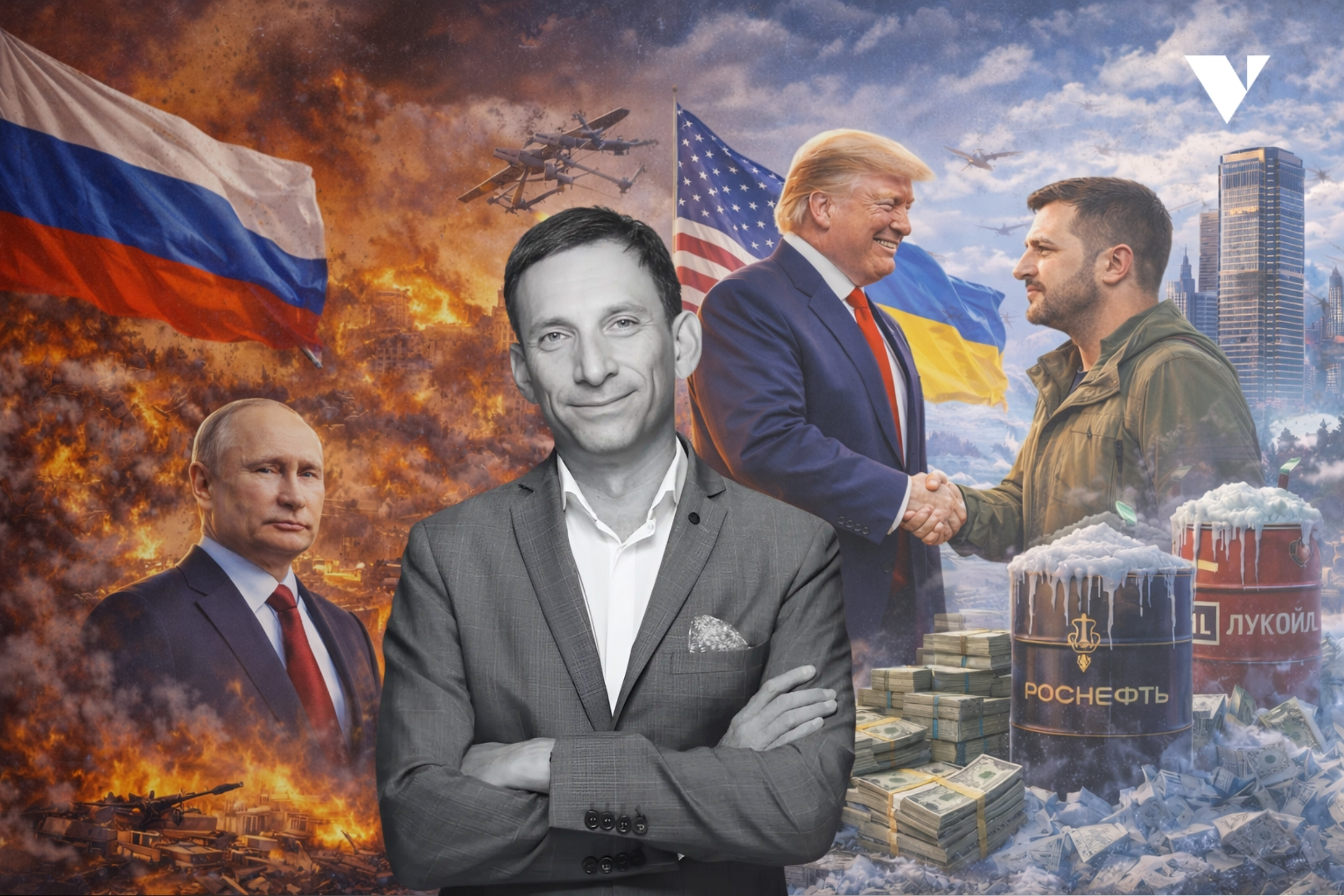
After meeting with advisers to the leaders of countries that support Ukraine, Volodymyr Zelensky expressed hope for a swift conclusion to peace negotiations. Indeed, discussions are taking place among Ukrainian and American negotiators, between Ukraine’s national security advisers and those of European countries, and among chiefs of general staffs. A meeting of leaders of the so-called “coalition of the willing” is also expected soon. I hope that during this meeting we will hear not only words of support for Ukraine in the coming years of war, but also learn about concrete actions aimed at strengthening that support.
At the same time, this entire negotiation process is unfolding within a framework I would call the “Swiss peace summit model.” At that time, Ukrainian diplomacy managed to gather leaders of dozens of countries at one of the finest mountain resorts of the Alpine country. Volodymyr Zelensky shared his peace plans, and the guests of the luxury hotel expressed sincere support for the Ukrainian president and his team. It was a genuine success of Ukrainian diplomacy.
Yet even then many asked a logical question: was this a summit about peace, or rather about supporting Ukraine’s resilience? Because one cannot talk about peace without the participation of the leadership of the country that launched this aggressive war. Russia, of course, was not invited to such a summit, and President Putin expressed no desire to take part in the representative forum. Then, as now, Putin was focused on the war against Ukraine, not on searching for paths to peace.
The current situation differs from that period at least in that the U.S. approach has changed fundamentally. President Joe Biden cut off all contacts with Putin after the start of the full-scale invasion of Ukraine. President Donald Trump, by contrast, not only restored these contacts but also drew his Russian counterpart into a negotiation process.
And what do we see? We see the Kremlin’s desire to drag this process out. This became especially evident after the latest talks between Presidents Donald Trump and Volodymyr Zelensky in Washington. To avoid responding to any joint understandings that might have been reached by the presidents, Putin concocted an entire dramatic story about the shelling of his residence in Valdai. As a result, instead of coordinated positions, we got new forecasts and reports about the Kremlin’s “review of its negotiating position.” So now we do not even know at what level Russian-American contacts on peace are continuing — if they are continuing at all. And beyond that: details can be negotiated endlessly. But what do details matter when we do not know the answer to the main question — does President Putin even want to end the war?
But if we are precise — we do know. President Putin does not want the war to end and is doing everything possible to keep President Trump from taking new, sharp actions against Moscow. Can we say that nothing is working for him in this direction?
No, we cannot. The current “peace process,” with all these meetings and the “shuttle diplomacy” of Witkoff and Kushner, was activated by the Kremlin solely to prevent the implementation of U.S. sanctions against Rosneft and Lukoil and to stop Europeans from confiscating frozen Russian assets for Ukraine’s benefit. Yes, sanctions were eventually imposed. But Putin managed to save his money — with no small help from the United States. The White House persuaded Europeans that confiscating assets would derail President Trump’s phantom “peace plan.”
However, Europeans did find money for Ukraine — their own. And this came as an unpleasant surprise for Putin, who cannot fail to realize that over the next two years the Ukrainian economy will not “collapse.” And Russia’s?
If Putin were aware of the risks, he would likely be ready for real negotiations to end the war. But the Russian leader has never paid much attention to the economy: what is the economy compared to his geopolitical delusions?
And perhaps it is precisely in Putin’s unwillingness to acknowledge the economic realities of the coming years that the answer lies to the question of whether the war can be ended. Yes, reaching an agreement with Putin will not work — no matter how optimistic Trump’s or Zelensky’s statements about the negotiation process may be.
But depriving him of the money and resources to continue the war may well be possible — even if not at the pace all of us would like.
Author: Vitaly Portnikov
