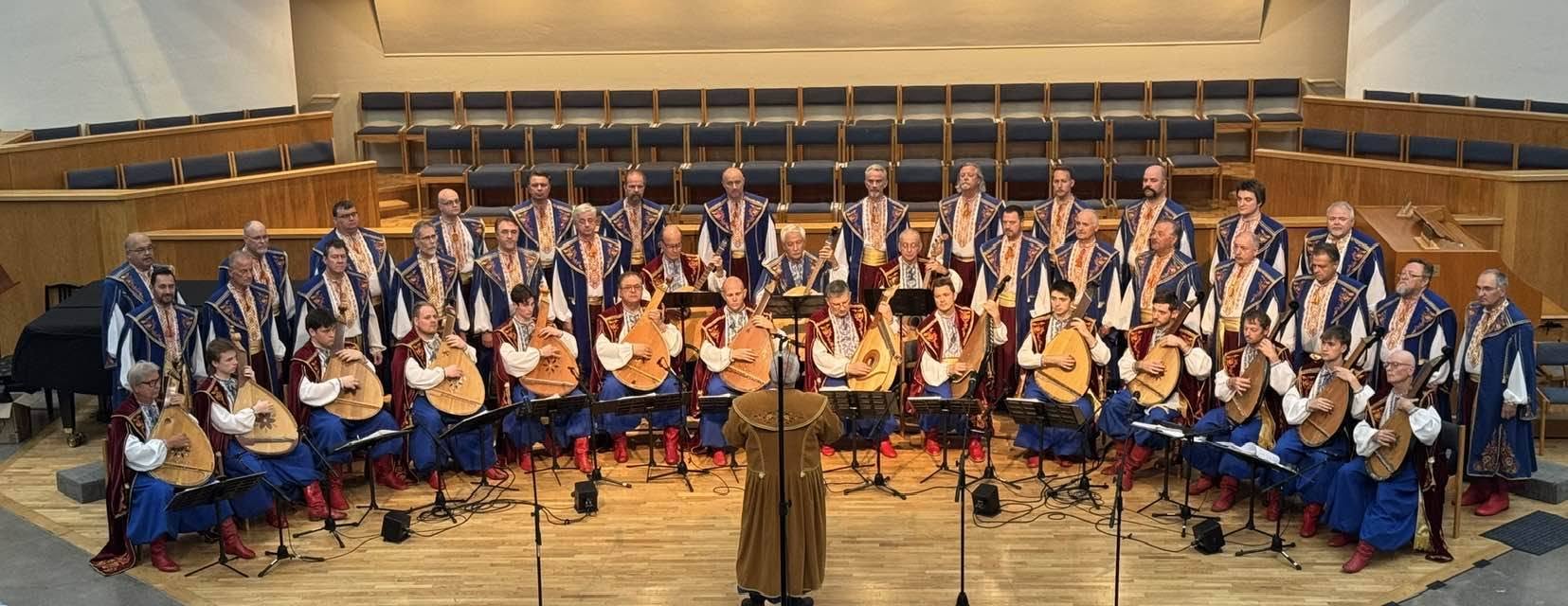
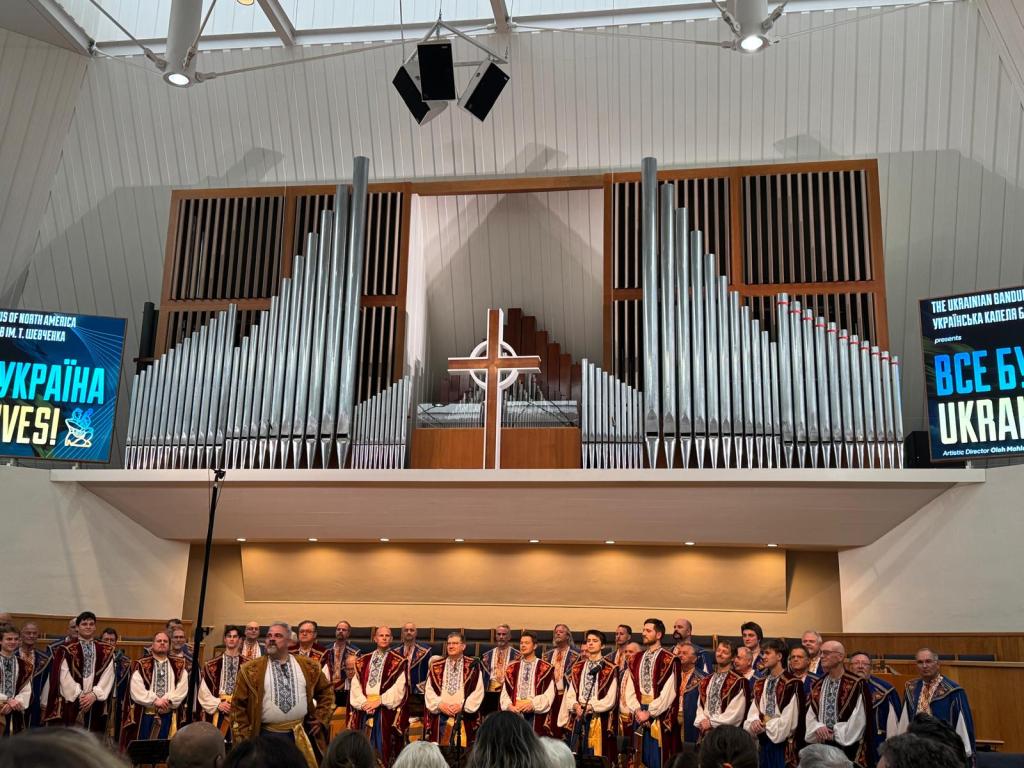
The concert began with the song “Prayer for Ukraine,” which people listened to while standing, and after it ended, they applauded for a long time.
As already mentioned, the bandura is a historic Ukrainian instrument with a heroic past. Therefore, history cannot be avoided here. The Bandurist Chorus continued its performance with songs about the campaigns and deeds of the Zaporozhians, the resilience and determination of the Sich Riflemen, and the courage of the warriors of the OUN and UPA, filling our hearts with memories of the past and pride in our glorious ancestors. The first part of the concert ended with the song “Indivisible Family,” about the unity of Ukrainians in the struggle for their independent state.
During the concert intermission, there was informal communication with members of the chorus, who spoke about themselves and about the successes and achievements of the ensemble. All of them are Americans of Ukrainian descent who live in the United States and Canada and have loved the bandura and Ukrainian song since childhood. There is even one Japanese member who does not speak Ukrainian but very much loves playing the bandura.
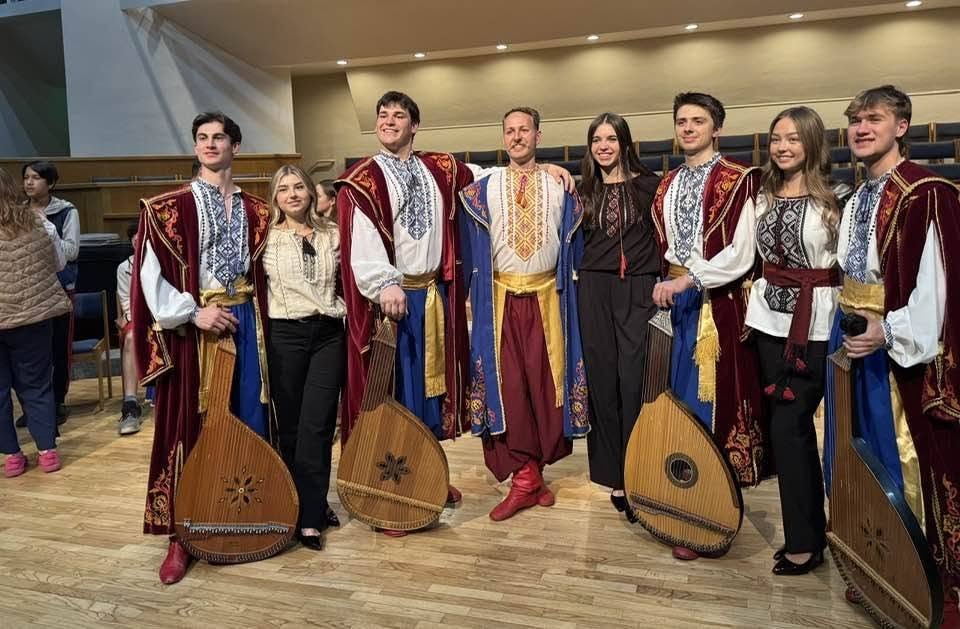
They gather together several times a year for rehearsals and concerts. This year, the chorus held five concerts: one in Phoenix, Arizona, and four in California — in San Diego, Los Angeles, Sacramento, and the last one in Berkeley.
During the intermission, singer Nazar Kolivoshko told us a brief history of the chorus. In 1902, the Ukrainian writer, ethnographer, and composer Hnat Khotkevych created an orchestra of bandurists in Kharkiv for the first time. Their chorus traces its origins to 1918, during the brief period of Ukraine’s independence. At that time, the process of popularizing singing and playing the bandura was developing rapidly.
However, the ideals of the bandurist — faith, truth, freedom, and human dignity — began to threaten the newly created Soviet Union. Repressions and persecutions began. Many bandurists were arrested, sent to the Gulag, had their fingers cut off so they could no longer play, and many were executed. Hnat Khotkevych was killed in 1938, and his compositions were banned. The activities of bandurist associations came to an end.
Then the Germans came. They sent the surviving members of the chorus to a labor camp and forced them to travel to other camps with concerts. They were made to work to the point of exhaustion. More than 365 performances were held in one year. Some bandurists’ fingers were worn down to the point of bleeding.
After the war, fearing future reprisals by the Soviet authorities, the artists remained in camps in Western Europe, and 17 of them later moved to Detroit. There they resumed their work, creating the Bandurist Chorus, which exists to this day. The ensemble has toured around the world and has performed many times in Australia, Europe, and Ukraine.

“The chorus had a unique ancient bandura, unlike any other. When it was shown in Kyiv in 2012, everyone was surprised. They said: ‘There is no such bandura; this is some kind of dinosaur.’ Now such banduras have been restored in the Kharkiv choir. This is how we suffered for the opportunity to play the bandura and sing Ukrainian songs, preserving and developing an ancient folk tradition. We are glad that so many people came to listen to us,” Nazar Kolivoshko said.
The second part of the concert began with the melody “Homin Stepiv.” With the song “Carpathian Sich Riflemen,” the chorus reminded those present of the struggle for the reunification of Zakarpattia with Ukraine in an independent state. The performers also did not avoid the issues of the current war with the eternal enemy — Russia — linking them to the events of the past. These themes were heard in the songs “The Spirit of Cannons Is Strong,” “Brother Ukrainians,” “March of the Fallen,” and “Oh, the Village Can Be Seen.” The song “Sleep, My Little Swallow,” in which a young soldier of the Armed Forces of Ukraine says goodbye to his beloved as he goes into battle against the moskali, was especially moving. Performed by four soloists of the chorus, the song “For Ukraine” sounded like an anthem of invincibility and valor. The chorus ended its performance with a song about its brothers-in-arms, “Bandurist, Gray Eagle.”