


Ukraine is trying to convince Donald Trump’s team that Russia is not capable of quickly capturing the entire Donbas, while the intensity of hostilities remains high on the front and in the rear. Against this background, Kyiv is facing an acute shortage of missiles for Patriot systems, which is already affecting the capital’s defense against ballistic strikes. At the same time, Russian attacks are aimed not only at military and energy facilities, but also at Ukrainian ports, libraries, publishing infrastructure and civilian areas.
Patriot missile shortage weakens Kyiv’s defense against Russian attacks
Kyiv has found itself at increased risk of Russian missile strikes due to an acute shortage of interceptor missiles for Patriot. At least 15 people were killed, about 40 more were injured, and a children’s hospital and a school were among the damaged facilities during another massive attack on the capital. Ukraine used Patriots for much of the war to intercept Russia’s most sophisticated long-range missiles, but the interceptors are dwindling as the war in the Middle East demands them. The Ukrainian military said it shot down 39 of 44 missiles and 145 of 168 Shahed drones in the latest attack, but the ballistic threat remains particularly challenging.
The impact was particularly severe in Kyiv, where a nine-story building caught fire after being hit, trapping people inside. Residents of the damaged buildings gathered at aid stations the next morning to assess the damage as rescue workers continued to clear the rubble. President Volodymyr Zelenskyy declared:
“As long as Ukraine does not have sufficient anti-ballistic defense, Russia will not take peace seriously,” and also emphasized that “Patriot interceptors cannot be replaced yet… every additional missile saves the lives of our people.”
Kyiv resident Oleksiy Yarovskyy also linked the consequences of the strike to the lack of missile defense:
“The missiles probably would not have reached us at all if we had air defense missiles.”
For Ukrainians, the problem is compounded by the approach of winter, as Russian strikes on energy infrastructure last year left homes without electricity and heating, and damaged housing is increasingly difficult to use as a safe place to survive new attacks.
Russian strikes on Kyiv have heightened the debate over possible elections during the war
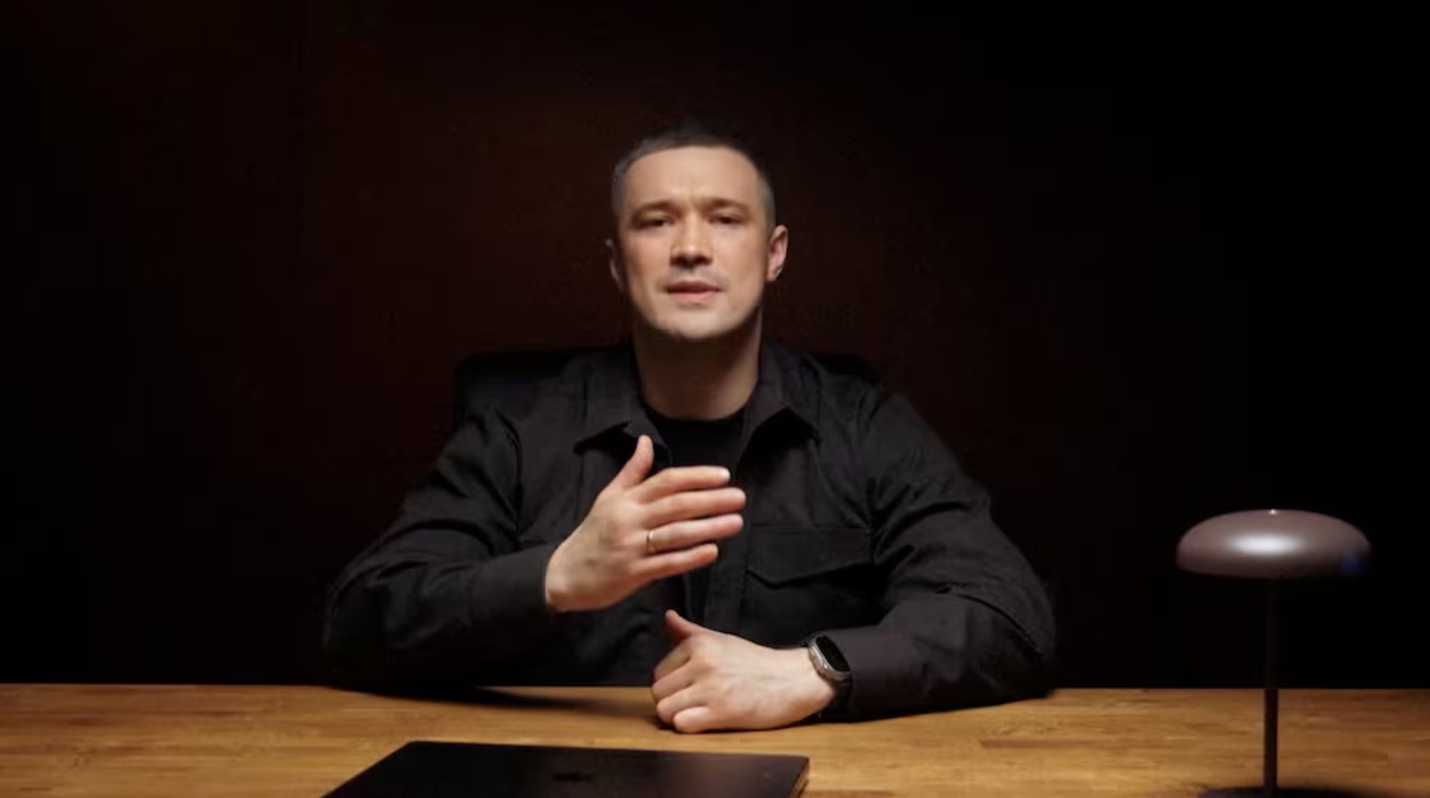
The Russian massive attack on Kyiv coincided with the escalation of the domestic political debate in Ukraine after former Defense Minister Mykhailo Fedorov called for elections during the war. The attack lasted several hours, killed at least 15 people in Kyiv and the region, and injured dozens. Against this background, some Ukrainian politicians have warned that holding elections during martial law could exacerbate internal contradictions and create additional opportunities for Russian information manipulation. Current legislation does not allow parliamentary elections during martial law, and organizing presidential elections requires resolving the issues of voting security, participation of the military, millions of displaced citizens, and people in occupied territories.
The debate over the elections unfolded after Fedorov was dismissed from the post of Defense Minister and his subsequent call for political change. Opposition MP Roman Lozynskyi stated:
“People understand that elections during wartime are in the hands of the enemy. This will be a war of all against all, a field for fakes and manipulations. A torn and already wounded society.”
Mykola Knyazhytskyi noted: “Elections divide society even in peacetime,” adding: “And elections under rocket fire will inevitably turn the issue of war and peace into the main subject of political bargaining. The winner will be the one who will most convincingly sell the simplest promise of a quick end to the war to society.”
At the same time, the Russian strikes demonstrated the acuteness of the air defense problem: the Ukrainian military shot down 39 out of 44 cruise missiles and 145 out of 168 drones, but ballistic missiles remain a serious threat due to the shortage of Patriot interceptors.
Keith Kellogg visited the Odessa port and got acquainted with the consequences of Russian attacks
Former special representative of Donald Trump for Ukraine Keith Kellogg arrived in Ukraine. During the visit , the American delegation visited the Odessa Commercial Sea Port and inspected the consequences of Russian attacks on the port infrastructure. The American side was presented with information on the operation of Ukrainian seaports in conditions of full-scale war, the extent of damage and measures to maintain the stable operation of the facilities. Special attention was paid to the safety of shipping and the functioning of the Ukrainian sea corridor.
The meeting also discussed further restoration of port infrastructure, sustainability of export routes, and attraction of international partners and private capital. Ukraine is interested in the participation of American companies in public-private partnership projects, in particular in the development of the port of Chornomorsk, road and rail networks, and water supply systems. The possibilities of using the American-Ukrainian Reconstruction Investment Fund to finance transport and logistics projects were also discussed.
“Russian attacks on port infrastructure are a blow not only to Ukrainian exports, but also to the stability of world food markets. Therefore, it is important for us, together with international partners, to ensure the continuity of exports and maintain access of Ukrainian producers to world markets,” said Minister of Agrarian Policy and Food Taras Vysotsky.
Deputy Minister Serhiy Derkach noted: “It is important for us that our American partners can see firsthand the conditions in which Ukrainian ports operate today… Our task is to strengthen port protection, maintain safe shipping, and ensure the sustainability of Ukrainian logistics together with our partners.”
Russia destroys Ukrainian libraries and books in occupied territories
Russian troops are systematically destroying Ukrainian libraries, books, and publishing infrastructure in occupied and frontline territories of Ukraine. According to the Ministry of Culture of Ukraine, since 2022, Russia has damaged or destroyed 906 libraries, and numerous cases of burning and seizure of books were recorded by witnesses. In Kapitolivka, after the liberation of the village, the librarian discovered that out of 16,500 books, only 4,500 survived, and publications on Ukrainian history and culture were deliberately thrown into the toilets. In other settlements, the occupiers confiscated books from local residents, forced children to bring them to school libraries, and then destroyed Ukrainian literature in boiler rooms.
Russian attacks affect not only libraries, but also the Ukrainian publishing and printing industry. In Kharkiv, warehouses and logistics centers were destroyed, and during one of the attacks, about 8 million books were burned, including 600,000 school textbooks; in total, up to 9.65 million books have been destroyed since May. In 2024, an attack on the Faktor-Druk printing house in Kharkiv killed seven workers, and in August 2026, Russian attacks continued with strikes on book and warehouse facilities. Verkhovna Rada deputy Maria Mezentseva-Fedorenko stated:
“Our books have been the target of dictatorships in the past. Throughout the 20th century, Ukrainian authors were persecuted and their texts censored. This large-scale destruction is not just about books. It is the robbery of our children’s future.”
The head of the Center for Civil Liberties, Oleksandra Matviychuk, called the destruction of books “part of Russia’s broader genocidal policy,” while poet and military officer Oksana “Ksena” Rubanyak stated:
“As a soldier, I defend our land. As a poet, I defend the written word. Because words survive even ruins. Every destroyed book is an attempt to silence a generation, but the Ukrainian voice cannot be burned or erased.”
Call for elections weakens former defense minister Fedorov
Former defense minister Mikhail Fedorov’s political bid to hold elections during the war failed to gain the expected support and, on the contrary, led to the curtailment of protests in his support. After Fedorov was dismissed from the government in July, protests were held in Kyiv and other cities, demanding an explanation for the government’s decision and the minister’s reinstatement. However, after Fedorov called for elections during the war, the protest movement quickly lost its scale: after thousands of participants, only a few dozen people remained in the center of Kyiv. Iryna Vasilyaka, a 22-year-old protester, told Reuters: “When we went out to protest, we did not go out with the idea that elections should be held. We were not here for that.”
Sociological data also indicate a lack of widespread support for elections before the end of hostilities. A poll by the Kyiv International Institute of Sociology conducted on August 5 showed that 57% of Ukrainians want elections to be held only after the war is over, and protest organizer and combat medic Dmytro Kozyatynskyi said he had no idea how to hold a vote when the military is at the front. Olena Prokopenko, a senior researcher at the German Marshall Fund, said that Fedorov could have positioned himself as a “statesman, a politician of the new generation,” but miscalculated, calling his move a “false start” that could damage his political capital. One opposition MP said on condition of anonymity: “This demonstrates that Fedorov does not have a presidential sense of the country.” At the same time, Volodymyr Zelenskyy’s rating, according to the data provided in the material, remains relatively stable at around 60%, and sociologist Anton Hrushetskyi explains this by the fact that Ukrainians largely continue to perceive him as a wartime leader.
The political review is based on a personal special issue of VM resident Orest Deychakivsky.
Photo: REUTERS
Author: Danylo Pievchev