


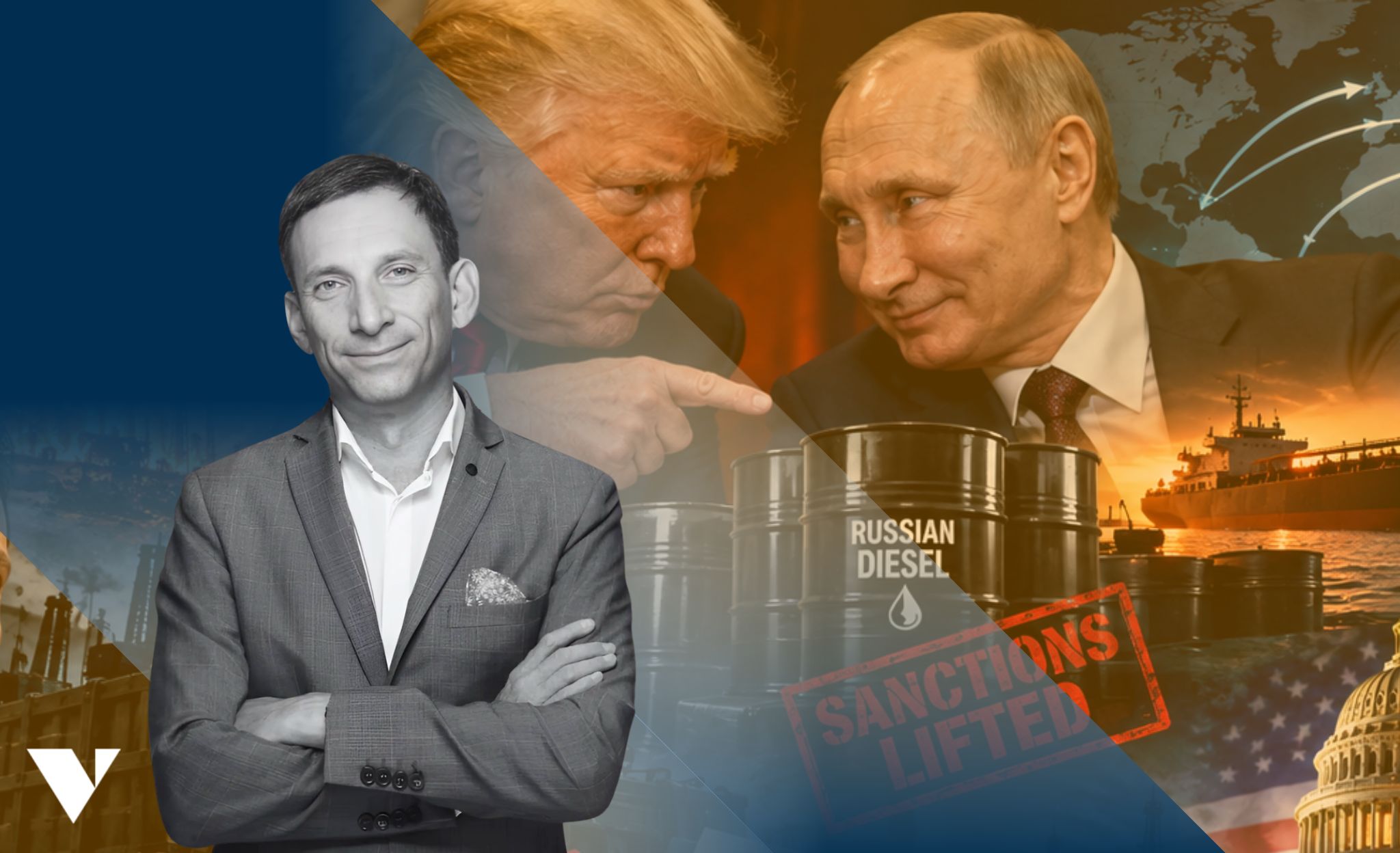
Following agreements between the American and Russian presidents on lifting sanctions on supplies of Russian diesel fuel, a crisis has emerged between the United States and Ukraine that, in its scale, cannot even be compared with the crisis that followed the clash between Trump and Zelenskyy in the Oval Office.
Now the American president is firmly demanding that Ukraine stop striking oil refineries in the Russian Federation and even replace the president who disagrees with him. Reports have already emerged that White House officials are blackmailing Kyiv with the possibility of withdrawing from the program under which American weapons are supplied with European funding, as well as cutting off intelligence sharing.
At the same time, what is happening cannot be explained by any formal political logic other than electoral considerations. Just a few weeks ago, the American president ceremoniously signed the “Graham Act,” which gives him the authority to impose sanctions on countries that purchase Russian energy resources. The main purpose of this law is to halt Russian energy exports to the global market and thereby force Russia to agree to end the war. At the same time, Trump is demanding that Kyiv stop restricting those exports through its own strikes on refineries and is praising Putin for supplying oil to the global market, even though these are illicit deliveries. Madness? If only that were the only contradiction.
The amount of diesel fuel Putin has promised to supply to the global market is negligible compared with the volumes the United States itself exports every month. Russian diesel cannot reach the United States because that is prohibited by law. Putin can sell diesel to other countries even without permission from the U.S. Treasury Department – before Ukrainian strikes, Russia exported up to 3 million tons of diesel fuel per month, while now the figure is around 300,000 tons with a gradual, modest increase expected. From a logical standpoint, it is impossible to explain why Trump and Putin needed this arrangement. That leaves us with speculation.
The main explanation is that Trump is trying in this way to prevent problems for Republicans in the midterm elections and hopes to lower diesel prices through high-profile announcements about agreements with Putin. But voters will react not to words, but to the numbers displayed at gas stations. And those prices are unlikely to fall because of Trump’s statements – at least not immediately.
Some explain the American president’s behavior by pointing to the desire of certain people in his circle to purchase the foreign assets of the Russian company Lukoil, whose value could decline while Ukraine continues striking Russian refineries. Under this theory, Trump and Putin reached the diesel agreement specifically to give the American president a pretext for demanding an end to the refinery strikes – a pretext supposedly unrelated to Lukoil. But when has Trump ever needed a pretext to change his position? He began talking about the need to stop strikes on Russian refineries long before his agreements with the Russian president.
And, frankly, we do not know what motives actually guided Trump. But we may find out. After the midterm elections, if control of Congress passes to the Democrats. Then, as various committees begin their work and their members try to find answers to this and many other uncomfortable questions for the American president, we may get a chance to understand Donald Trump’s real motives.
And that is precisely what the American president is trying to prevent.
Author: Vitaly Portnikov
