


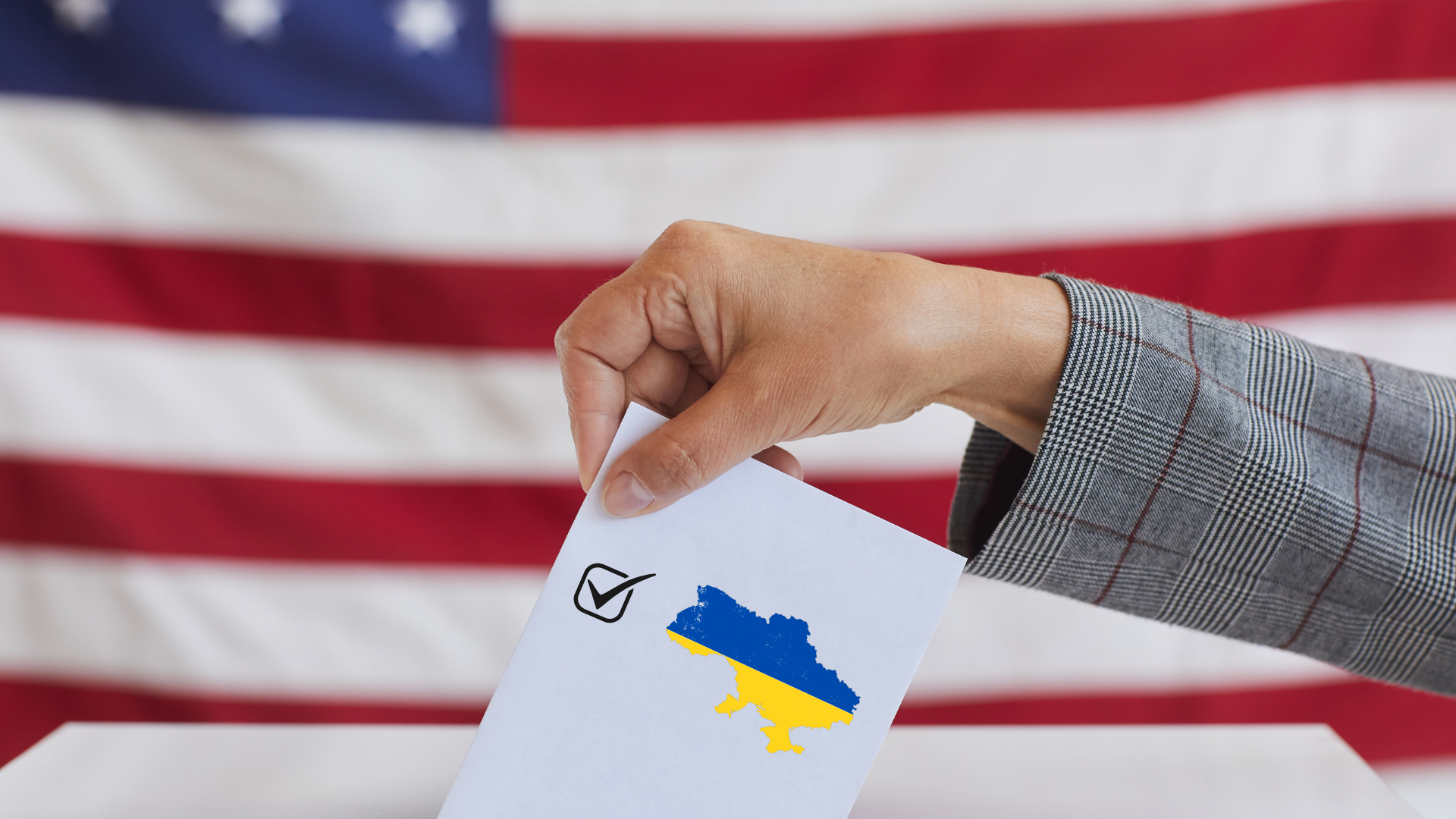
Voters in the United States and supporters around the world are holding their breath in anticipation of the decisive day, with over 4 million U.S. citizens already exercising their right to vote (or civic duty). As November 5 approaches, the pressing questions surrounding each candidate's campaign agenda boil down to a dilemma: WHAT will ultimately prevail—the current American system of checks and balances or the deepest political crisis in decades, which could paralyze life in the most powerful nation and trigger unpredictable global consequences?
Sociological arithmetic and multifaceted choice
As candidate ratings are calculated daily, the world's most powerful country swiftly approaches the point where its fate (and largely the fate of the entire world!) will be determined by a few thousand, or perhaps even fewer, votes in seven "swing" states: North Carolina, Georgia, Arizona, Nevada, Wisconsin, Michigan, and Pennsylvania. In fact, as most sociologists predict, votes in Pennsylvania (which has 19 electoral votes, the highest among these seven states) will be decisive.
As of November 1, according to an editorial in The Hill a publication striving for non-partisanship),
"The key divide over recent weeks has deepened. It’s the split between battleground states in the Sunbelt and the South on one side and the Blue Wall states on the other.
Overall, Trump is faring better in the former, while Harris is more competitive in the latter.
Trump has his largest advantage among all battlegrounds in Arizona, where he is up two points in DDHQ's average. Close behind are Georgia, where he leads by 1.9 points, and North Carolina, where he is up by 1.4 points.
DDHQ's forecast models give Trump a 65 percent chance of winning Georgia, while his odds in any of the three Blue Wall states [Michigan, Wisconsin, Pennsylvania—N.B.] don’t exceed 53 percent".
The numbers in the Electoral College are crucial here.
If Harris wins the three Blue Wall states, she will secure the White House even if Trump wins the other four battlegrounds—assuming all else remains unchanged.
Under this scenario, Harris would clinch victory with the narrowest margin: 270 electoral votes to Trump’s 268.
This means that every vote could be decisive. According to numerous sociologists, a clear national divide is visible between women (55% for Harris, 49% for Trump) and men (approximately the same ratio, but reversed) as well as between those with education beyond high school (favoring Harris) and those without (favoring Trump). These disparities reflect, above all, which issues are decisive on the agenda: the right to abortion (especially among women, who may also express solidarity with a female candidate), and voters' concerns over the state of the American democratic system and possible repercussions should Trump win, including a potential erosion of trust in the electoral and judicial systems and his intentions to reform these institutions (and others) according to his views. This argument likely concerns educated Americans the most, as those without higher education are generally less engaged with such issues.
It's already starting
Concerns about the stability of the American system have solid grounds, provoking unprecedented societal tension. For four years, in countless speeches and social media posts, Trump has never acknowledged his 2020 defeat, instead emphasizing that those infamous elections were rigged (remember, they took place during the pandemic!), rallying his supporters, many of whom are ready to do anything to see their candidate back in the White House.
Already as of this writing (November 3), over 200 lawsuits have been filed in courts of various levels, alleging suspicions or dissatisfaction with certain electoral procedures or fraud attempts in specific precincts. Most lawsuits revolve around the requirement (or lack thereof) to present identification at polling stations. In some states, this is legally required, while in others, like California, it is illegal for a polling worker to ask for ID.
“During what may be the most contentious (given that the margin between candidates fluctuates and remains within the statistical margin of error) elections in history... according to a Gallup poll, only 63 percent are ‘very’ (34 percent) or ‘somewhat’ (29 percent) confident that votes in the upcoming midterms will be cast and counted accurately." This is near-record low confidence, with a 45 percentage-point gap between Republicans (40 percent) and Democrats (85 percent) in their trust in election fairness”,notes Jonathan Turley in The Hill.
Moreover, violent incidents have already begun. In Oregon and Washington, two ballot drop boxes were set on fire, with incendiary devices discovered inside; in Washington state, 500 ballots were salvaged following the arson. Governor Jay Inslee of Washington has deployed the state’s National Guard to monitor polling sites from November 4-7, as reported by Julian Ventura in The Hill.
The instability is further fueled by russian special operations. Last week, U.S. intelligence traced the origin of a disinformation video circulated on social media. In the video, filmed in Georgia, a voter claims he is a Haitian immigrant with multiple IDs, suggesting he voted multiple times.
According to several U.S. intelligence agencies, this and other disinformation campaigns originate from the so-called "Agency for Combatting Injustice," the successor to the infamous Internet Research Agency founded by prigozhin in st. petersburg, which was exposed for interfering in the 2016 U.S. election and in several European countries (as reported CNN and The Hill).
As before, russian trolls do not directly advocate for a specific candidate. Instead, they amplify Trump’s narratives about immigrants and "internal enemies," aiming to inflame existing divisions within American society and undermine the public’s trust in the democratic system itself.
Will the final election outcome be decided in court?
No matter the official vote tally after November 5, it is already clear that if Trump loses, he and his supporters will challenge the integrity and transparency of the election, primarily through lawsuits. Following the 2020 election, he filed over 60 lawsuits and lost them all. The issue even reached the Supreme Court, which dismissed his case.
Will the judicial system hold up this time? Eric Segall a law professor at Georgia State University College of Law, expresses doubts.
Over recent years, the Supreme Court has ruled on five key issues favoring Republicans: two regarding abortion, one on gun ownership, and two specifically concerning Trump — his disqualification as a presidential candidate and his "partial" immunity (presidential immunity retained after leaving office regarding official acts directly related to presidential powers). These rulings were framed in ways that make criticism challenging, with timing carefully managed so that no hearings would occur on Trump’s three pending cases before the 2024 election, including charges of inciting his supporters to storm the Capitol on January 6, 2021, and mishandling highly classified documents.
Additionally, Trump’s legal team is reportedly better prepared this time for filings in lower courts, as noted by the article’s author.
This implies that, if victorious, Trump would have nearly unlimited means to pursue "internal enemies," comments Rebecca Beitsch in The Hill.
Harris, in contrast, positions herself against Trump’s vengefulness and chaotic behavior, promoting her central slogan: "I will be the president of all Americans, regardless of who they vote for".
"Trump will enter the White House with a list of his enemies. I will enter with a list of priorities for Americans", a widely shared Harris quote in the media (slightly condensed here).
She consistently asserts that she welcomes political debate, diverse opinions, and even disagreement; that she will listen to arguments from various political factions to find solutions to specific issues.
Whether these good intentions translate into beneficial policies for Americans and allies, given the current state of American society, remains an open question.
What should Ukraine hope for?
With Harris, the outlook is clearer: if she becomes president (overcoming the many overt and hidden manifestations of the U.S. political crisis, and marking the first time in U.S. history a woman would take the highest office), she will continue Biden's policies. She may even increase military aid to Ukraine and possibly lift the restriction on targeting russian military assets with American weapons, as a countermeasure to putin's escalating war—now joined, in effect, by north korea.
With Trump, it’s more complicated. Could he overcome his personal disdain for Ukrainian President Volodymyr Zelensky (who refused his demand to investigate Biden’s activities in Ukraine, an attempt that led to Trump’s impeachment by the House of Representatives in 2019)?
If Trump wins (either through the election outcome or by resolving the political crisis in his favor), he would likely seek a meeting with putin. Predicting the result of such a meeting is challenging, given their personal characteristics.
Trump and putin are by no means friends; they merely share certain personality traits and ambitions concerning their visions of world order.
Both show a complete lack of moral boundaries, disregard democracy as a system, scorn freedom of speech (unless it serves them), and shift responsibility for all problems onto genuine critics, opponents, and imaginary "enemies." Most notably, they both cling to an imagined past where they felt "great"; thus, they seek to impose an outdated version of “the future” on their societies and spheres of influence, rejecting political, social, and even certain scientific advancements to the extent they can.
Additionally, a number of russian oligarchs invested in Trump’s real estate in the 2010s, a factor that undoubtedly influences his candidacy.
Thus, predicting the outcome of their meeting is difficult. If they find common ground, they may push for an "end to bloodshed" on putin’s terms for Ukraine (possibly with putin agreeing to freeze the frontline).
However, if friction arises between them, Trump might implement a strategy reminiscent of Reagan’s plan to dismantle the Soviet "evil empire." This could include an arms race with russia, alongside a sharp increase in U.S. oil production to crash oil prices. If the USSR couldn’t withstand such pressure, how could a much weaker russia? Both measures would greatly benefit the U.S.: increased production of advanced weaponry would strengthen military power, while a boost in oil production would bolster the economy.
Which foreign policy direction prevails largely depends on which voter groups secure victory for Trump or Harris in the seven swing states: those for or against abortion; those with higher education versus those without; centrists or radicals, left or right; and the ethnic, religious, or racial groups that prove decisive in election statistics.
Furthermore, Congress’s role cannot be discounted. Let us remember how the current House of Representatives has hindered the White House’s support for Ukraine. If Harris wins and Republicans secure a House majority, it’s impossible to predict the obstacles they might create for both U.S. foreign and domestic policies, given Trump and his supporters' vengefulness.
This complex uncertainty and tension call on voters to approach their civic duty with utmost diligence, not only for the presidency but also for the candidates in both chambers of Congress (one-third of the Senate and the entire House of Representatives), as well as for governors, state legislatures, and even mayors.
Author: Nadiya Banchyk