


 Amidst a prolonged war and significant social upheaval, combating corruption remains one of the most complex and critical issues facing Ukraine. Despite numerous, sometimes extremely resource-intensive efforts to reform the anti-corruption system, results have been fragmented. The scale of the problem is so vast that a realistic assessment often pushes the sense of success further away. At the same time, many individuals continue to work tirelessly on creating transparent and accountable institutions in Ukraine. These efforts are often behind the scenes, with people working like bees every day.
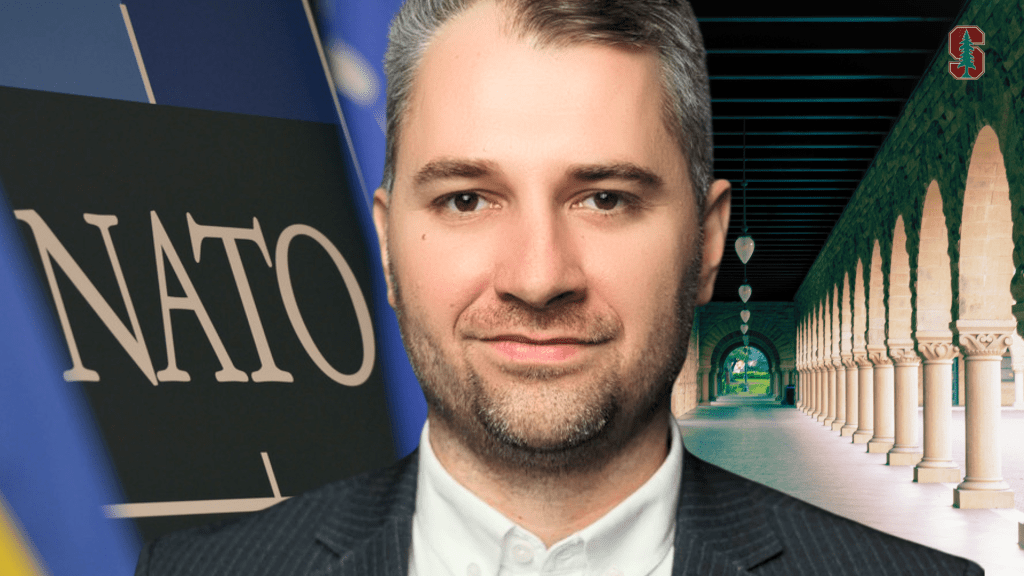
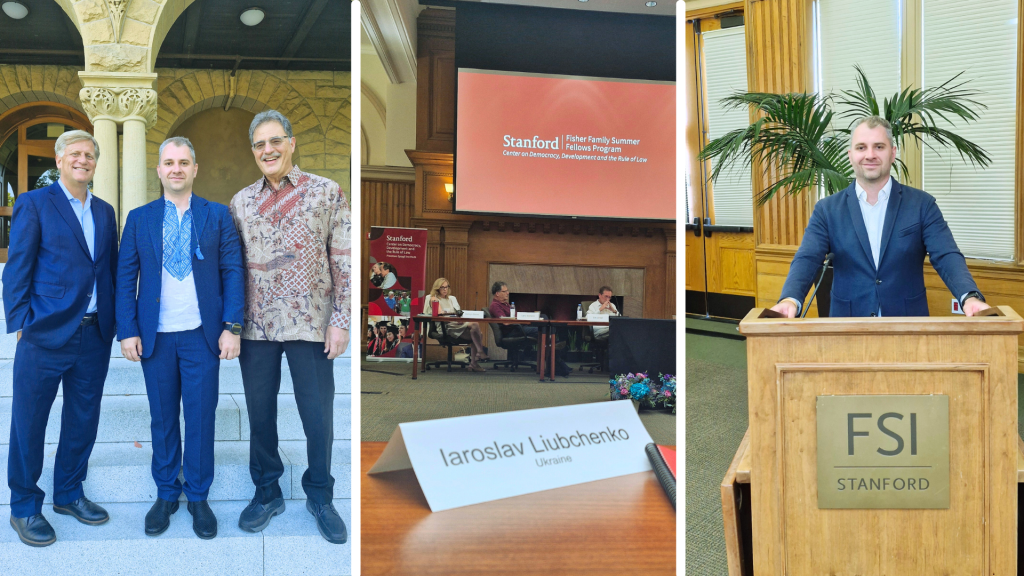
Our conversation with Iaroslav Liubchenko – recently the leader of the National Agency on Corruption Prevention (NACP) from 2020 to 2024, where he served as Head of the Legal Department, Deputy Head, and Acting Chair. Now he is focused on his role as an ideologue for integrating NATO standards into the Ukrainian system. The discussion took place at Stanford, where he is participating in the special program "Strengthen Ukraine Democracy Development," aimed at supporting Ukrainian public figures who understand the inevitability of change and the importance of timely implementation in Ukraine.
An evolutionary approach to reforms in Ukraine
LS: Mr. Yaroslav, discussions about changes in the public sector in Ukraine often revolve around drastic, revolutionary steps. Your professional background suggests you advocate for an evolutionary approach. Why do you believe gradual changes can be more effective?
IL: I am convinced that reform is an evolutionary process and does not occur spontaneously. Systemic changes cannot be based on one-time actions. For example, arresting officials for corruption does not solve the problem of corruption as a whole. Therefore, if we want to influence the system comprehensively, we need to change its foundations. Otherwise, multiple officials could be arrested in the same office over a short period for the same offenses. This shows that the issue is not limited to individuals but is embedded in the system that produces them.
LS: So, you believe it is necessary to address root causes rather than just fighting the symptoms?
IL: Exactly. All law enforcement agencies—the National Police, the Prosecutor’s Office, the Bureau of Economic Security (BEB), the State Bureau of Investigations (DBR), and the Security Service of Ukraine (SBU)—deal with consequences. However, very few structures work on the causes of corruption, and it is not a popular field. Like a physician focused on prevention rather than emergency surgery, our main goal at the National Agency for Corruption Prevention was to address root causes. We developed an anti-corruption strategy to be implemented by the end of 2025. For instance, some corruption risks arise because the state is not an effective manager. Often, it cannot manage assets efficiently, so some assets must be sold to prevent corruption schemes.
LS: Does such a strategy help better configure the system?
IL: Yes, the system should be designed to function reliably even without specific managers. If it is built chaotically, it resembles a typical Soviet approach, where work only appears to be done but does not yield real results. I support gradual improvement that does not undermine state foundations, which is especially critical during wartime.
 Challenges for Ukrainian state-building
LS:What systemic changes are most needed in Ukraine today?
IL: Public administration often resembles a complex bureaucratic machine that functions more due to inertia than effectiveness. Unfortunately, we have become accustomed to the state being the main employer, responsible for providing citizens with jobs, as was the case during Soviet times. However, the government should focus on its core functions, such as security, law and order, and defense. In other areas, it should defer to businesses and market relations, refraining from interference, particularly where it is an inefficient manager.
LS: Is this related to management approaches that are remnants of the Soviet era?
IL: Partly, yes. The main problem is that many people see the state primarily as a provider rather than as a service that performs critically important functions. In the Soviet approach, the state was viewed as this "provider".
LS:Does this mean the state apparatus needs to be reduced?
IL: Yes. The state should be "light" and maneuverable, especially during wartime. Certain functions and assets should be transferred to businesses. For example, many state-owned enterprises are inefficient, and instead of remaining a burden on the budget, they could be privatized or liquidated. The state should focus on what is inherent to it—defense, security, social issues, but not commercial activities.
LS:What other areas of management, besides state-owned enterprises, do you consider problematic?
IL: There are issues with the tax service, for example. Its role should be to administer companies and ensure convenience and benefits for them. However, when the goal becomes filling the budget at any cost, inspectors often pressure businesses and issue fines. This frequently leads to corruption, as businesses negotiate with inspectors to reduce fines, undermining the system's efficiency.
LS:How does this affect the stability of the state system as a whole?
IL: If agencies do not understand their purpose and we cannot measure their effectiveness, it is a significant problem. The state should not be a mere fiction where "they pretend to work." Every government body must have a clear purpose, function, and employees must understand their specific roles.
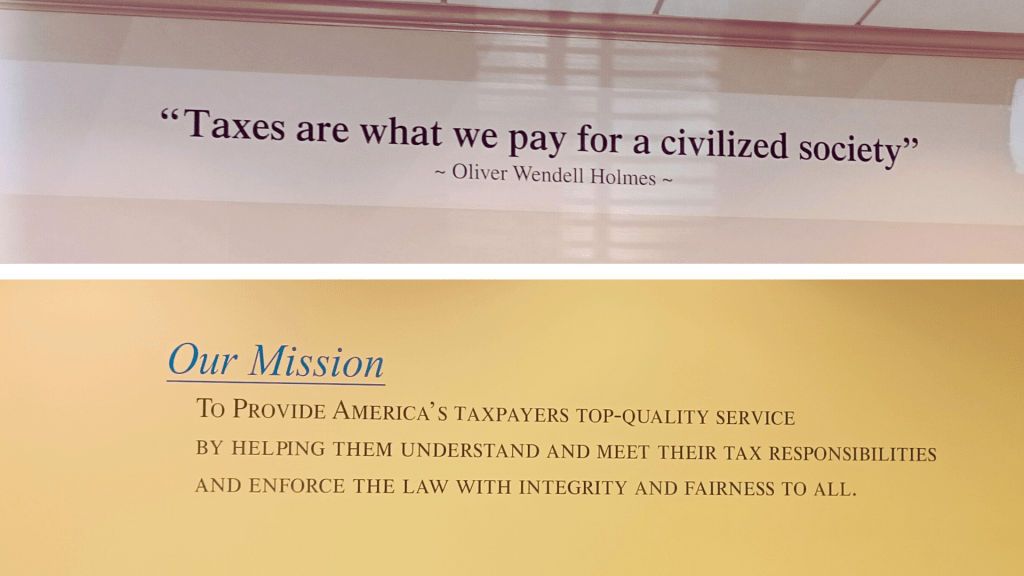
For example, in December 2023, I was on a business trip to Washington. Our delegation visited the Internal Revenue Service (IRS). I was impressed that their mission and values are displayed prominently at the entrance. This clearly defines why the organization exists and what benefits it brings to U.S. citizens. Such a mission and values should be implemented in the daily activities of each agency. This is the main responsibility of its leader.
LS:Could you give examples of effective public administration?
IL: We have a few projects that can be considered centers of efficiency. For instance, "Prozorro" and "Prozorro.Sales"—state procurement and sales systems that ensure transparency and reduce corruption risks. To date, "Prozorro.Sales" has has more than $2.4 billion (100 billion hryvnias) for state and municipal budgets. Positive results are also evident in the work of the National Agency on Corruption Prevention (NACP) and other reform-oriented projects.
 Corruption and the role of systemic changes
LS: Corruption, especially during wartime, remains one of the biggest challenges for Ukraine. Many processes that were hidden in peacetime are now becoming increasingly visible, giving ordinary people a fuller view of the catastrophe's scale. How do you assess the situation?
IL: Corruption is not merely the result of individual actions but a consequence of systemic issues. If corruption risks continue to arise, it indicates gaps in the governance system. For example, we have a problem with companies participating in state tenders despite failing to fulfill their obligations in previous years. This poses enormous risks to the budget and affects service quality.
LS: How can this be addressed?
IL: We need to introduce more flexible rules to disqualify dishonest companies from state tenders, especially in strategic sectors such as defense. If a company fails to fulfill a contract, it should be excluded from subsequent tenders for a certain period. This will protect the state and allow it to focus on cooperating with reliable performers. Additionally, anti-corruption bodies should focus not only on the consequences but also on the root causes.
LS: Are there examples of corruption practices commonly found in the state system?
IL: The state often performs functions that are not inherently its own, increasing corruption risks. In managing state-owned enterprises, for example, it is common for officials to make decisions not in the state's interests but for personal gain. Our task is to minimize or eliminate the state's involvement where it is ineffective and create conditions where agencies operate with clear objectives and are not dependent on individual actors.
LS: Would you say that you see corruption as a result of systemic failures?
IL: Exactly. When you see officials arrested for corruption being replaced by others who continue the same practices, it becomes clear that the system needs to change. Otherwise, we are merely chasing after consequences without addressing root causes. We need to create conditions where working for the state is prestigious and beneficial for citizens. Currently, there are numerous examples of people joining public service for personal gain.