


The newly elected U.S. President Donald Trump has not yet stepped into the White House but is already shaking the global order—so far, with fiery speeches.
 From "America First" to Flirting with Imperialism?
Numerous politicians, commentators, and even many ordinary people feared most that the new, yet familiar, President Trump would tread the well-worn path of American isolationism. This approach has deep roots in U.S. history, starting as far back as George Washington's time and occasionally surfacing in American politics—particularly during the early stages of World Wars I and II in the 20th century. In every case, history has shown that until the U.S. intervened decisively in these bloody global, particularly European, catastrophes, they could not come to an end. However, at least at this stage of his "half-presidency," Trump demonstrates in his numerous speeches and interviews completely opposite intentions. His claims regarding Canada, Denmark with Greenland, Panama, and Mexico suggest tendencies to turn the U.S. into an empire rather than isolating it from global issues.
Even before entering the White House, the 47th elected leader of more than half of the American people expressed aspirations to "make Canada the 51st state," either by purchasing or annexing Denmark's autonomous island territory of Greenland, imposing "sky-high" tariffs on imports from Mexico, and "restoring U.S. control" over the Panama Canal. The canal is part of the independent state of Panama, whose sovereignty over it was recognized by the 39th U.S. President, Jimmy Carter, in 1977. By a curious twist of historical circumstances, Carter concluded his 100-year earthly life just recently, on December 29, 2024, and the solemn farewell ceremonies to him—and the entire era he represented—presented a stark contrast to Trump's present-day narrative.
Of course, Trump is not yet the occupant of the White House and therefore bears no responsibility for everything that comes out of his mouth. However, the responses of the leaders of all the mentioned countries to his encroachments indicate, first, that he has no claim to any of the geographic entities he mentioned, and second, that these leaders took his words with utmost seriousness and will not allow jokes that could push the planet Earth toward total chaos.
All the aforementioned countries are U.S. allies, with Canada and Denmark long-standing members of NATO. The leaders of Canada (Prime Minister Justin Trudeau, who announced his resignation but managed to respond to Trump), Denmark, and Panama expressed their unconditional desire to remain U.S. allies. However, they emphasized the importance of preserving their sovereignty and resolving contentious issues through direct dialogue with the 47th president of the world's most powerful country.
At the same time, Trump’s fiery speeches resonated in Moscow and Beijing. russian propagandists latched onto Trump’s remarks, particularly those about Greenland, and—while criticizing and ridiculing him in their typical fashion—hinted that if he is permitted such actions, then they too might have the right to stake a claim on Ukrainian lands. The spokesperson for the russian dictator, Dmitry Peskov, openly stated that preparations for a meeting between his boss and Trump are already underway.
"If I were Vladimir putin or Xi Jinping, these speeches would sound like music to my ears," said John Bolton, former U.S. ambassador to the UN under George W. Bush and a former national security advisor to Trump who has since become one of his fiercest critics. (Bolton’s comments were quoted in an article by Jill Colvin and Rob Gillies in the Associated Press.)
The article also cites Trudeau’s chief advisor, Gerald Butts: “I think he [Trump] feels much less constrained than in his previous term. There are no restraints. This is Trump at his maximum.”
What truly lies behind the fiery words of the not-yet-fully U.S. president? Will a summit between the U.S. and russia take place, and if so, are Trump and putin genuinely prepared to divide the world?
Dividing the Arctic—or the World?
russian propagandists have focused extensively on Trump’s expressed intentions to seize Greenland, even suggesting he might resort to military force. Trump seems to be fueling these narratives. His eldest son, Donald Jr. (known for his explicitly anti-Ukrainian statements, far more direct than those of his father), recently traveled to Greenland "as a tourist" alongside Trump's fervent supporter Charlie Kirk. Kirk, who founded the pro-Trump group Turning Point-100 during the election campaign, led grassroots efforts to mobilize voters door-to-door in support of Trump. This trip appears to be a reconnaissance mission by ostensibly unofficial figures, potentially laying the groundwork for informal or semi-official channels for future dealings. A striking precedent for such actions is Rudy Giuliani’s numerous trips to Ukraine during Trump’s first presidency, aimed at gathering compromising material on Joseph Biden.
According to the aforementioned article’s authors, Kirk stated that beyond Greenland’s strategic location in the Arctic and its rich resources, "there’s another component. This makes America dream again that we, the U.S., are no longer the sad man with low testosterone slumped in his chair, letting the world walk all over us. This is a revival of masculine American energy." If this quote is accurate and not taken out of context (verification is impossible as the authors did not provide a source—hence, I reserve the right to skepticism), it represents an open call to lift the taboo on the use of military force for purposes far beyond defense. Kirk holds no official position (yet?), but... let us recall not just the 1930s but also the 2010s, marked by russia’s rabid anti-Ukrainian and anti-Western "unofficial" propaganda and its half-joking calls of "We can do it again."
In reality, Greenland is rich in natural resources and holds immense strategic importance. "Greenland is home to Thule Air Base [Pituffik], the northernmost U.S. military outpost, which plays a critical role in missile warning and space surveillance. Meanwhile, China and russia are making their own investments in the Arctic as new potential shipping routes emerge with the melting ice caps," note Colvin and Gillies.
"There’s a strong argument to be made that other NATO countries would be obligated to come to Denmark’s defense. This increases the likelihood of direct military force being used, even at some unthinkable level," says Michael O’Hanlon of the Brookings Institution (as quoted in the article).
Business Deals from a Position of Strength?
Most experts believe that Trump’s threats are a tactic to pressure Denmark and other mentioned countries to extract maximum benefits for American big business. Political scientist Ivan Preobrazhensky, quoted by the Russian-language edition of Radio Liberty in a segment dedicated to concerns about potential proposals to divide the Arctic among the U.S., russia, and China, argues that Trump’s saber-rattling is a means of coercing a deal that primarily benefits himself and his supporters in American corporations.
"People will talk about Donald Trump as a man who makes big deals, but it’s important to understand that he only makes deals in his own interests," Preobrazhensky states. "He clearly doesn’t plan to divide anything with anyone right now. Instead, he’s trying to ensure that by the time he takes office, Europeans are already softened up and ready for negotiations. Using additional—likely economic rather than military or political—measures, he aims to squeeze concessions that benefit American big business, which sees the Arctic as essential for competing with russia and China. This means aligning the interests of Canada and Greenland with American objectives, though not necessarily by compromising their sovereignty or changing borders. In this way, the U.S. could hypothetically control roughly half of the accessible Arctic territories."
However, John Bolton criticized these methods of negotiation, stating, "When you do things that decrease the likelihood of achieving your goals, it’s not skillful bargaining—it’s madness."
Meanwhile, Greenland’s leader, Múte B. Egede, responded to Trump’s remarks, stating that he is open to negotiations with Trump but emphasized that the island belongs to its people, not "to Americans or Danes." Such a stance could spark a separatist movement advocating for full independence for Greenland, currently a Danish autonomous territory. This, in turn, might trigger a chain reaction of separatist movements in other European nations, potentially leading to broader political upheavals.
"The Panama Canal Belongs to Panama and Is Not Up for Negotiation"
This was the response of Panama's President, José Raúl Mulino, to Trump’s intentions to "buy" the Panama Canal.
The Panama Canal, which connects the Caribbean Sea to the Pacific Ocean, was constructed by the United States in the early 20th century. During his first term, Trump celebrated it as a marvel of American engineering, placing it alongside the moon landing and victory in World War II, but he had never hinted at reclaiming it for U.S. control.
This time, however, Trump’s provocative statements seem rooted in concerns over Panama’s economic and geostrategic alignment with China.
"Trump shocked the world when he posted on his social network, Truth Social, claiming that the Panama Canal imposes 'excessively high fees and tariffs' on American commercial and naval vessels, suggesting the U.S. should take control of it. A year earlier, as the Republican presidential candidate, Trump lamented in an interview with Tucker Carlson that 'China now controls the Panama Canal,'" notes Philip Wegmann in the online publication Real Clear Politics.
In 2017, Panama severed diplomatic ties with Taiwan to establish direct relations with China. The following year, despite U.S. warnings about China’s "predatory economic activities," Panama became the first Latin American country to join Beijing’s Belt and Road Initiative—a massive infrastructure program aimed at expanding the influence of the Chinese Communist Party globally. Two seaports on either side of the state-owned Panama Canal are operated by a Hong Kong-based company, Wegmann highlights.
He further mentions that "discussions," as Trump himself called them, are already underway with Panama’s top officials regarding the canal’s future. Leading these semi-official negotiations is one of Trump’s closest confidants, Alabama Senator Tommy Tuberville, who has "developed a close relationship with Mulino and even attended his inauguration in July," writes Wegmann.
The effective takeover of the Panama Canal by China has been a concern for U.S. politicians long before Trump. However, Trump seems likely to pay greater attention to the Western Hemisphere overall.
"In fact, he speaks about 'the Western Hemisphere first' and America’s interest in the Western Hemisphere," Wegmann quotes Alexander Gray, former head of the National Security Council’s White House staff during Trump’s first presidency.
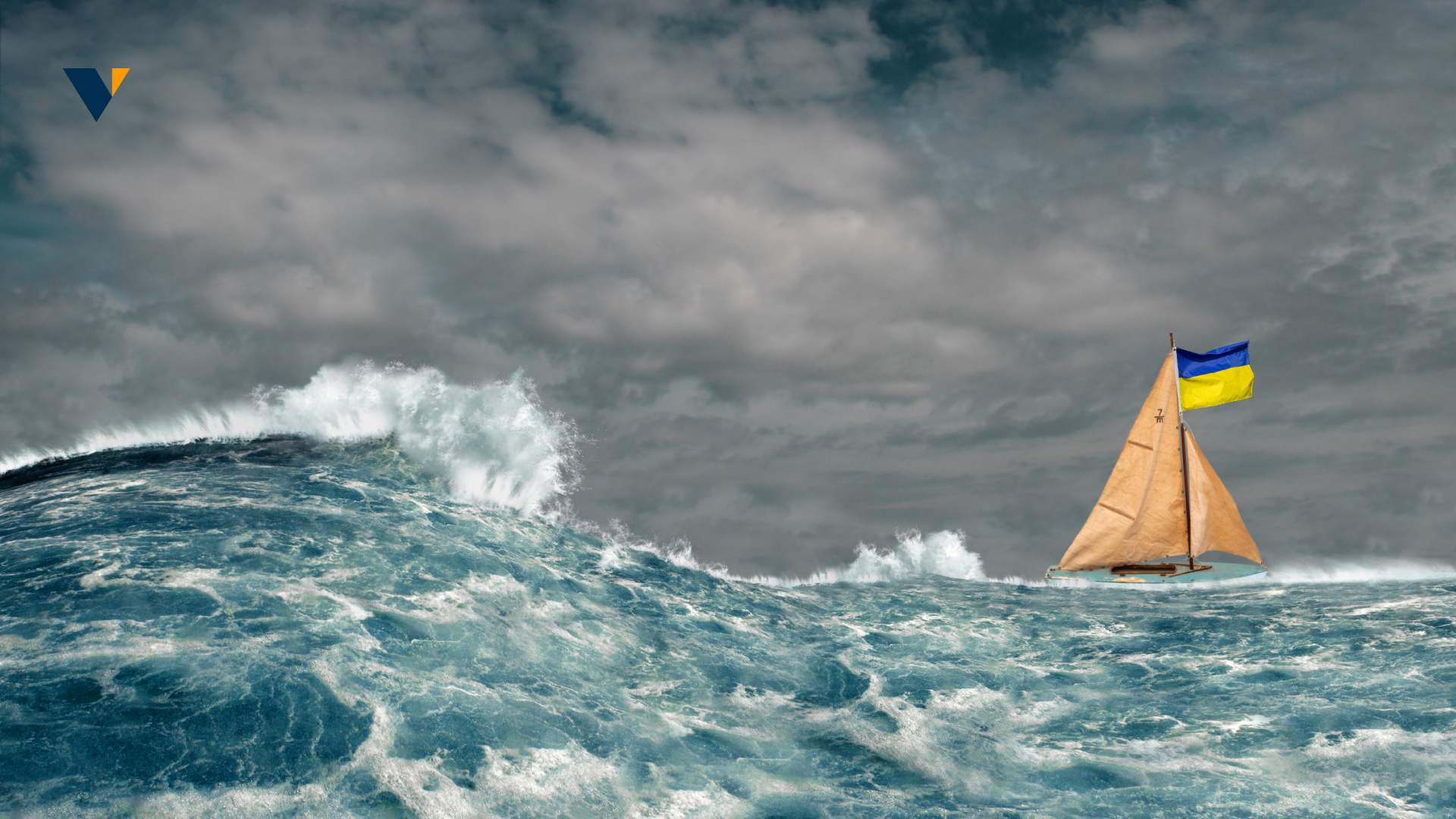
Ukraine – a Boat in a Stormy Ocean?
Where does Ukraine stand amid Trump’s aspirations, which seem aimed at dismantling the global order already shaken by putin’s regime?
At present, Trump’s policy towards Ukraine remains vaguely defined. He has no interest in Ukraine’s total defeat; however, based on numerous overt and covert statements, a Ukrainian victory over russia is no longer part of the equation.
Unlike Biden, who frames the war as an act of russian aggression aimed at destroying a global order rooted in shared values and collective resistance to the "Axis of Evil" (russia, Iran, North Korea—some in Biden’s circle also include China, though Biden himself seems to view China as oscillating between alignment with this axis and pursuing an independent policy due to its deeper economic integration with the U.S. and Europe), Trump approaches the russia-Ukraine war through the lens of his broader worldview: a series of isolated deals.
This perspective shapes his vision for ending the war as a three-way agreement between himself, putin, and Ukrainian President Zelenskyy. In this deal, all parties would be brought—through various means—to a compromise where each receives only part of what they originally sought. Trump’s appointed special envoy on Ukraine and russia, Keith Kellogg, has stated his intention to end the war "within the first 100 days" of Trump’s presidency but has not provided specific details.
According to numerous sources in the U.S. and Ukraine, the outlines of a potential plan include freezing hostilities along the contact line, imposing a 20-year moratorium on Ukraine’s NATO membership, and, in exchange, securing a lucrative arms deal for Ukraine and creating a demilitarized zone to be guarded by European peacekeepers.
This would mean: the occupied territories of Ukraine remain under russian control for an indefinite period, effectively turning them into vast "black holes" of russia’s black market. Similar to other territories under russian occupation, these regions would attract corruption and criminal activity globally, like a gravitational pull. The russian dictator would face no consequences for launching a war of aggression in the heart of Europe or for establishing a brutal repressive regime in his own country, which has destroyed and continues to destroy multiple generations of russians, leaving the nation devoid of any reasonable future—a situation that poses continued threats to Europe.
Whether the russian dictator would agree to Trump’s proposal, which involves deploying foreign (NATO!) troops in Ukraine to enforce a ceasefire, remains a significant question.
Trump has not yet assumed office, but he has already unsettled the world. How much he achieves—or fails to achieve—will largely depend on the small number of reasonable Republicans in both chambers of Congress. Given the narrow majority, just a few dissenting votes—or abstentions—could prevent Trump’s most radical ideas from being realized.
However, it is already evident that through the lingering fog of uncertainty, a new era of great upheaval is beginning to take shape—one in which Trump and putin may mirror each other in distorted reflections. In the best-case scenario—if russia’s war against Ukraine is frozen and the Ukrainian state survives—Ukraine, diminished by 20% of its rightful territory and exhausted by war, may become a small boat tossed about by the waves of a stormy ocean of global politics, drifting between the poles of global power.