


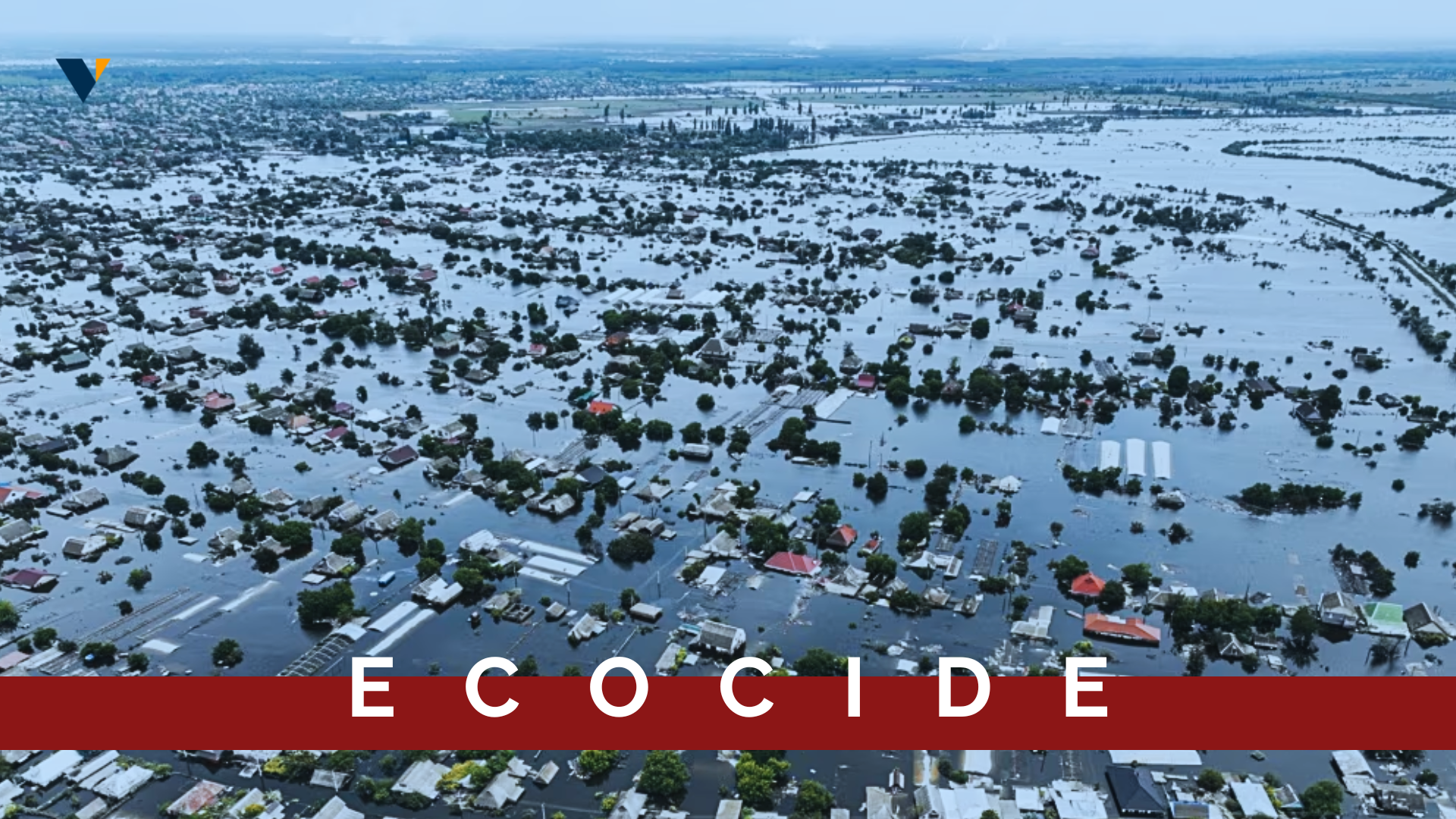
As Ukraine nears the third anniversary of Russia’s full-scale invasion, discussions continue to focus on the war’s impact on human lives, infrastructure, and global security. However, an often overlooked issue is the environmental destruction caused by the war.
This year’s conference at Harvard’s Ukrainian Research Institute (HURI), Landscapes of War, Landscapes of Victory: Ukraine’s Changing Environment, aimed to highlight this issue and showcase how Ukrainians are not only defending their land but also shaping its future.
Dr. Emily Channell-Justice, Director of the Temerty Contemporary Ukraine Program at HURI, explained the reasoning behind this year’s theme, stating that some of the most critical conversations about global environmental issues are now happening because of the war.
“For better or for worse, some of the most important conversations about environmental issues in the world are happening right now in the wake of the full-scale war in Ukraine and its impact on ecosystems,” she said.
She emphasized that the conference was designed not just to examine the damage but also to recognize the efforts of Ukrainians and their supporters in rebuilding and seeking justice.
“I wanted this year’s conference to reflect the major contributions being made by Ukrainians and their supporters—not only to rebuild Ukraine’s social environment so Ukrainians can live safely, but also to bring Russian actors to justice and hold them accountable for this environmental damage.”
The Environmental Front of Russia’s War
Environmental damage has become a key part of understanding Russia’s war against Ukraine. This destruction can be seen in two ways: the direct impact on nature and the broader effect on where people live.
One of the worst examples of environmental devastation is the Kakhovka Dam explosion, widely seen as an act of ecocide—the deliberate destruction of an environment by Russia. On June 6, 2023, Russian forces blew up the Kakhovka Hydropower Plant, releasing billions of gallons of water and causing severe flooding across southern Ukraine. Ukrainian officials blame the Russian military for the attack, which wiped out entire communities, ruined farmland, and even threatened the cooling system of the Zaporizhzhia Nuclear Power Plant. The long-term effects are devastating: poisoned rivers, abandoned fields turning into deserts, and a sharp decline in Ukraine’s food exports.
Russian military actions have also polluted Ukraine’s waterways and their previous occupation of Chornobyl stirred up radioactive materials, creating further risks for the European continent. Most recently, on February 14, 2025, a Russian drone strike targeted the protective shell of the Chornobyl Nuclear Power Plant, as Russia resorts to nuclear terrorism to threaten the West.
Beyond the natural environment, Channell-Justice highlighted the war’s impact on Ukraine’s social environment—the places where people live, work, and build communities.
“The war’s broader environmental consequences, when we take this approach, impact everyone who lives in Ukraine,” she noted.
Ukraine’s Fight for Justice
The conference emphasized that Ukraine is not just suffering from environmental destruction—it is fighting back by seeking justice and accountability. Ukrainian activists, legal experts, and environmental researchers are documenting the damage, pushing for international recognition of Russia’s actions as ecocide, and planning smarter ways to rebuild.
Channell-Justice stressed the importance of understanding how Russia is deliberately targeting Ukraine’s environment as part of its war strategy.
“I hope that people leave the conference with a better understanding of how Russia is exploiting the environment as a weapon and how Ukrainians are leading the fight for justice and accountability,” she said.
Bridging Disciplines
Despite its importance, the environmental impact of war is not widely discussed in Ukrainian studies. Channell-Justice admitted that she was not an expert in this area before planning the conference, which made her even more eager to highlight it.
“Especially for HURI’s audiences, this is a very underexplored area,” she acknowledged, adding that the innovations being developed in response to these environmental challenges are remarkable.
She explained that understanding the environmental impact of war requires an interdisciplinary approach.
“The ways environmental topics intersect with humanities, international relations, and other disciplines help us understand that we cannot separate these fields,” she said.
Ukraine’s Political Future
The conference also touched on Ukraine’s political future. Some critics argue that Ukraine’s democratic commitment is weakening because elections have been postponed due to the war. However, Channell-Justice argued that democracy is about more than just elections.
“It’s easy to point to the fact that Ukraine hasn’t had elections on schedule and say that’s bad for democracy,” she said. “But what’s harder to recognize is what’s happening inside Ukraine to support democratic institutions—judicial reforms, anti-corruption cases, and civic activism representing a wide variety of interest groups advocating for their rights.”
She emphasized that these efforts are just as important as electoral politics, especially given the ongoing threats to Ukraine’s sovereignty.
Expanding Engagement Beyond Academia
One of the key successes of this year’s conference was its ability to engage people outside academia. “We were fortunate to have attendees from the New England Ukrainian-American community,” Channell-Justice said.
“We were fortunate to have attendees from the New England Ukrainian-American community,” Channell-Justice said.
She stressed the importance of making academic discussions accessible to a broader audience, including members of the Ukrainian diaspora.
“It’s great when we don’t have an audience made up only of scholars and students,” she noted. “We represent just one aspect of Ukraine’s presence in the U.S., so the more we can ensure academic programming is accessible beyond universities, the better.”
As the Ukrainian diaspora continues to grow in the U.S., Channell-Justice hopes academic institutions will strengthen their connections with these communities.
“Fostering these relationships will be crucial in sustaining long-term engagement with Ukraine’s fight for sovereignty, democracy, and environmental justice,” she concluded.
Author: David Kirichenko