


Since Russia’s invasion of Ukraine in 2014, Ukrainian protestants were among the first to suffer at the hands of the Russian Federal Security Service (ФСБ). Reminiscent of Stalinist times, Russia’s full-scale invasion in 2022 brought even greater suffering to Ukraine’s Evangelical Christians. The Wall Street Journal also reportedthat Russia has been trying to “erase Evangelical Churches from occupied Ukraine.” While Ukrainian Evangelicals fight for their existence under Russian occupation, U.S. President Donald Trump called Ukrainian President Volodymyr Zelensky a “dictator” and “a modestly successful comedian.” Why haven’t American Evangelicals given much attention to the plight of Ukraine’s Evangelical Christians?
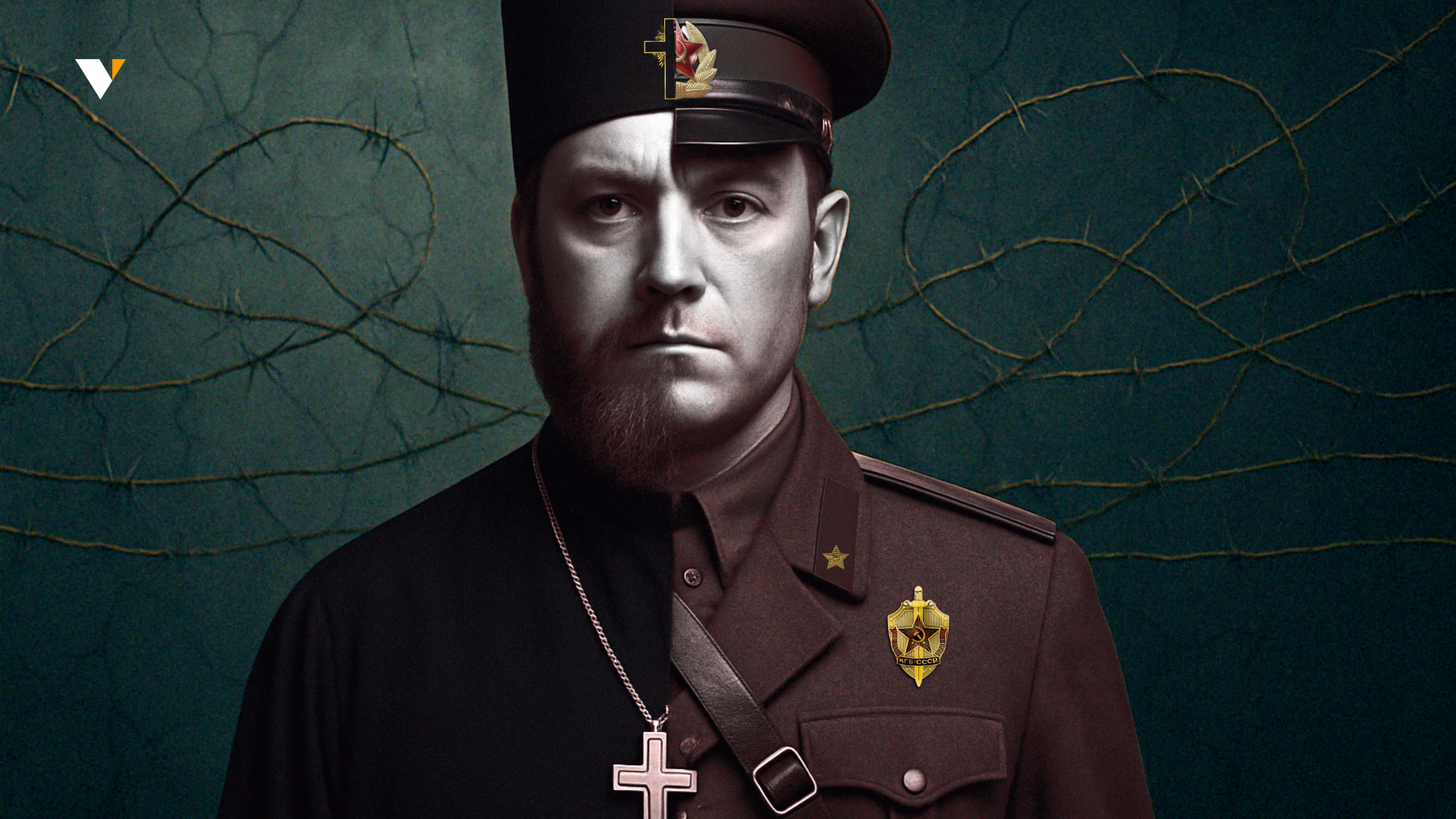
Russia has always strategically used religion as a tool for territorial expansion and control. The modern Russian Orthodox Church, as it exists today, was effectively re-established by Joseph Stalin in 1943 during World War II as a means to rally national unity and bolster state control. Since its revival, the Church has been closely intertwined with Soviet and later Russian intelligence services, notably the KGB/FSB, serving as a powerful tool to influence and monitor the population.
The collapse of the Soviet Union marked a new era of state and church cooperation. Religious freedom, incorporated into the Russian constitution, was challenged as early as 1993, through the lobbying of the Russian Orthodox Church. Since then, Russian government officials have made concerted efforts to control non-Orthodox groups --- banning religious minorities, requiring new churches to affiliate with recognized bodies, and passing the ‘anti-missionary’ Yarovaya laws. On the other hand, the Russian Orthodox Church has continued its role as the vicar for the state both domestically and internationally. As Lucy Ash argues in her book The Baton and the Cross, “the relationship between the Church hierarchy and political might has barely changed over the centuries.”
Russian Orthodox Church as the state oppression tool
Throughout its history, the Russian Orthodox Church has often acted as an extension of state power, advancing government narratives and reinforcing political control over religious and social life. Today, Vladimir Putin uses the fact that many Russians and Ukrainians share the same religion to falsely claim that Ukrainians and Russians are“one people” with intertwined fates, suggesting that Ukrainians do not exist. This bond, deeply rooted in religious ideology, dates back to St. Volodymyr’s (the ruler of medieval Ukrainian state Rus in 979-1015 - ed.) conversion to Orthodox Christianity. Over time, the Russian Orthodox Church positioned Moscow as the “Third Rome,” attempting to cement Russia’s claim over a legacy originating in Byzantium, including the history and heritage of Ukraine.
The Russian Orthodox Church serves the Russian leadership by pacifying the population and supporting whatever myths the Kremlin seeks to promote. The Russian Orthodox Church is deeply connected with Russia’s war machine as it is “betting on Putin’s tanks to preserve the institution of the church throughout the fallen empire.” Not only did Kirill, the Moscow patriarch, bless Russia's invasion but he previously served as a KGB spy in the 1970s. He also promised Russian soldiers who died in Ukraine that their "sacrifice washes away all sins."
Subjugating the Ukrainian people and having a monopoly over the state religion in Ukraine is a primary motivator for Putin to secure the backing of the Russian Orthodox Church. Historian Katherine Kelaidis argued that if Russia invaded Ukraine, the war would have religious undertones due to the influence ofRusski Mir—an ideology arguing for the supremacy of the Russian language and Orthodoxy among Slavic peoples. Through this ideological lens, Russia justifies atrocities committed on Ukrainian lands.
Russia’s attack on Evangelicals
One of the primary targets of Russian aggression has been Ukrainian Evangelicals. Despite comprising only 2-4% of the population, Evangelicals have been systematicall targeted since 2014Early in the conflict, four Pentecostal pastors were captured and killed, marking one of the first documented cases. To date, over 200 Evangelical church buildings have been destroyed, with many being repurposed for military use. In cities like Melitopol, where Evangelical buildings once outnumbered Eastern Orthodox, none remain open today.
According to Center for Strategic and International Studies, “Since the full-scale invasion of Ukraine in February 2022, Russian forces have been responsible for damaging or destroying at least 660 churches and other religious structures, including at least 206 belonging to Protestants.” In Luhansk Oblast under Russian occupation , “not a single Protestant church remains open for worship.” In the parts of Zaporizhzhia Oblast under Russian control, the occupational authorities also banned all Greek Catholic churches. Russian forces have implemented a deliberate strategy to dismantle religious networks, including repurposing churches, surveilling believers’ homes, forcibly deporting leaders, and eliminating “underground churches.”
Are people in the US aware of Russia’s war on non-Orthodox religions?
Despite these well-documented abuses, much of the U.S. public remains unaware of Ukrainian Evangelicals’ plight. As a poll by the Ukrainian Freedom Project indicates, awareness about the persecution of Ukrainian evangelicals increases support for Ukraine among GOP voters (GOP stands for Grand Old Party, i.e. Republicans - ed.). Polling from the Ukraine GOP Primary Voter Survey conducted in April 22–25, 2024, revealed that 66% of GOP voters reported knowing little to nothing about Russian forces torturing and murdering Ukrainian Christians for their faith in occupied areas of Ukraine.
Some Republican figures, guided by Trump’s anti-Ukraine rhetoric, overlook the suffering of Ukraine’s Protestant community. Instead, voices like Marjorie Taylor Greene and Tucker Carlson, who promotes Ukrainian regime change, focus on Ukrainian policies toward the Moscow Patriarchate Ukrainian Orthodox Church (i.e. the offspring of Russian Orthodox church - ed.), rather than addressing Russia’s targeted annihilation of Evangelicals.
Similarly, within the Evangelical world, the support for Ukraine has been mixed. Dmytro Bintsarovskyi categorized Evangelical views into 4 fields: calls for appeasement, encouraging withdrawal of Russia from Ukraine, cautious support, and unconditional support of Ukraine. Another growing voice is that of the Christian Nationalists, who tend to perceive Putin warmly and do not view religious coercion negatively. Excluding this last group, historically evangelicals have been active promoters of religious freedom abroad.
Evangelicals’ political weight in the US
In the 20th century, U.S. evangelicals rose from a previously apolitical group to an important group in forging the U.S. foreign policy. Driven by their passion for foreign missions and subsequently religious freedom, evangelicals took a greater interest in foreign policy in the mid-1970s. In his popular Foreign Affairs article, , Walter Russell Mead argued that “Evangelical power is here to stay for the foreseeable future, and those concerned about U.S. foreign policy would do well to reach out.” Through their influence, legislation such as the International Religious Freedom Act (1998), The Sudan Peace Act (2002), and The North Korea Human Rights Act (2004) were passed.
Likewise, driven by the Biblical mandate to continue blessing Israel, Evangelicals have been Israel’s most reliable ally. Compared to the general population, they have been more likely to support Israel, and less likely to criticize their actions. Their theological views have been put into action through their Israel lobbying groups such as AIPAC and Christians United For Israel (CUFI), which have actively shaped current U.S. foreign policy.
Since 2022, evangelicals have been actively lobbying for Ukraine. Organizations such as the Ukraine Freedom Project , headed by Steven E. Moore, a former chief of staff in the U.S. House of Representatives, have been active in bringing Ukrainian Evangelical persecution to the forefront; even presenting to the Helsinki Commission. The Southern Baptist Ethics and Religious Liberty Commission also played an important role in urging House Speaker Mike Johnson to unblock the latest Ukrainian aid package. More recently, evangelicals successfully lobbied Trump to reverse his termination of a program tracking abducted Ukrainian children.
Evangelicals in Ukraine
In Ukraine, evangelicals have been getting more involved in the war effort. Ukrainian American Mykhailo Pavenko, who is originally from Donetsk Oblast and has served as a volunteer Protestant chaplain since 2014 in Ukraine, said, “The Protestant churches in Ukraine have done an incredible job of being involved in this tragedy as a ray of hope and light.” Members of Pavenko’s family were among the first to be killed by pro-Russian militia in 2014 for their religious views in Sloviansk.
Although primarily engaged in humanitarian work, many Evangelicals have taken on roles in chaplaincy and, at times, the military. With historical ties to the US Evangelical community through missionary work, Ukrainian Evangelicals could be highly effective in shaping American public opinion and support for Ukraine.
A great example of this occurring was during the stalling of the last American presidential aid package in early 2024. Ukrainian evangelical leaders traveled to the U.S. multiple times, met with prominent figures, and signed public statements with the Southern Baptists’ Ethics and Religious Liberty Commission, urging for Ukrainian aid. This culminated with Baptist’s Pavlo Unguryan and Serhii Gaidarzhi meeting and praying with Speaker Mike Johnson. Likewise, through Gary Marx’s efforts and the support of the Ukrainian government , Ukrainian evangelicals have made great strides in building connections with their counterparts overseas.
Pavenko was involved in advocacy work on Capitol Hill and met with staffers from Mike Johnson’s office. "It was a fantastic experience," Pavenko said of his previous advocacy work. "I was grateful to meet some politicians I respect and to share what I’ve personally seen and done in Ukraine. It was great to network and make an impact. Those three days were filled with hard work and numerous meetings—with Congress members, Senators, and senior advisors to Speaker Johnson."
"As for the Republican Party," he continued, "I believe we need to keep working with all politicians to bring them the truth. Sadly, Russian propaganda has been effective at controlling the narrative within the GOP, but even that is starting to change for the better. Advocacy must go on. Losing Ukraine to Russia would do no good for the West, and I think American politicians understand that."
Pavenko, speaking on the need for greater advocacy efforts from Ukrainian Evangelicals, said, “We need to work harder and we need to pray and believe for God to do his miracle for the nation of Ukraine. The people of Ukraine have done great things and shown what it means to fight for freedom against a modern-day Hitler.”
Ukrainian Americans like Pavenko can be important in reaching out to the American Evangelical community. To amplify this message, faith leaders and organizations such as The Council of Ukrainian Christian Churches of Washington State should collaborate with groups like the Southern Baptist Ethics and Religious Liberty Commission and the Institute on Religion and Democracy. These partnerships can bring Ukrainian Evangelical leaders, chaplains, and others to American churches to share personal stories of faith and resilience amid persecution.
Partnering with well-known U.S. Evangelical organizations can amplify this message through joint events and advocacy efforts. Together, these churches can demonstrate that supporting Ukraine is also a stand for religious freedom on a global scale. This approach aligns with the historic role of American Evangelicals in advancing international religious liberty while providing a compelling moral framework for GOP leaders to maintain their support for Ukraine. A united church across the U.S. and Ukraine can serve as a powerful reminder to policymakers that standing with Ukraine is about upholding freedom, faith, and humanity in one of the darkest hours of the 21st century.
About Authors:

Eddie Priymak is a journalist and researcher who focuses on religion and politics in Eastern Europe.
